What is Quantum Computing Explained: The Future of Tech
quantum computing explained

What is Quantum Computing Explained: The Future of Tech

Explore the mind-bending principles of quantum computing and its potential to solve humanity's most complex problems.

Dive into the Quantum Realm

Key Takeaways

  • ✓ Quantum computers use qubits instead of classical bits, allowing for superposition and entanglement.
  • ✓ They can perform certain calculations exponentially faster than classical computers.
  • ✓ Quantum computing is still in its early stages of development, but progress is rapid.
  • ✓ Potential applications span medicine, materials science, finance, and artificial intelligence.

How It Works

1
Classical vs. Quantum Bits

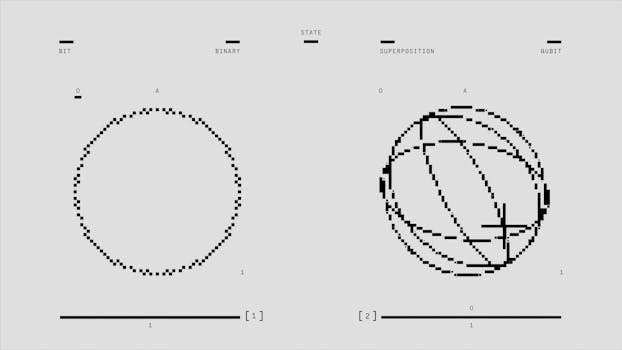
Understand the fundamental difference: classical bits are either 0 or 1, while quantum bits (qubits) can be 0, 1, or both simultaneously through superposition.

2
Superposition and Entanglement

Learn how superposition allows qubits to exist in multiple states at once, and how entanglement links qubits so their states are correlated, even when separated.

3
Quantum Gates and Algorithms

Discover how quantum gates manipulate qubit states, similar to logic gates in classical computers, forming the basis for quantum algorithms designed to exploit quantum phenomena.

4
Measurement and Collapse

Grasp the concept that once a qubit is measured, its superposition collapses to a definite classical state (0 or 1), yielding the computation's final result.

The Fundamental Shift: From Bits to Qubits and Beyond

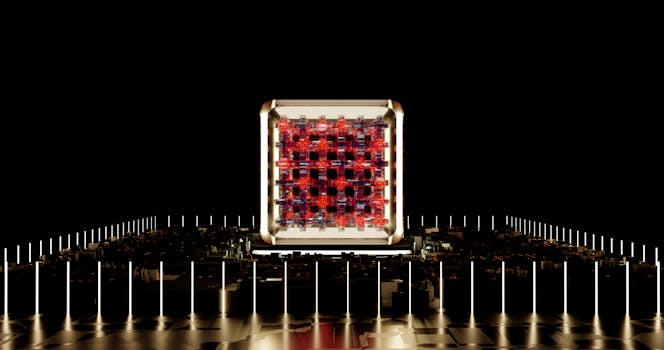
Close-up of vibrant digital art in red, green, and blue displayed on a monitor screen. Photo: Egor Komarov / Pexels
To truly grasp what is quantum computing explained, we must first journey back to the foundational difference between classical computing and its quantum counterpart. For decades, our digital world has been built upon the bedrock of classical bits. These are simple, binary units of information, existing in one of two definitive states: 0 or 1. Think of a light switch – it's either on or off, never both. Every email sent, every video streamed, every line of code executed by your smartphone or laptop relies on billions of these unambiguous bits flipping between these two states at incredible speeds. This binary certainty has powered an astonishing technological revolution, giving us the internet, artificial intelligence, and complex simulations. However, as we push the boundaries of scientific discovery and tackle problems of unprecedented complexity, the limitations of this classical paradigm become apparent. Quantum computing shatters this binary constraint by introducing the 'qubit' (quantum bit). Unlike its classical predecessor, a qubit harnesses the bizarre and counter-intuitive principles of quantum mechanics. The most crucial of these principles are superposition and entanglement. Superposition allows a qubit to exist not just as a 0 or a 1, but as both simultaneously, or more accurately, as a combination of both states. Imagine that light switch being both on and off at the same time, or spinning like a coin in the air before it lands. This isn't just a metaphor; it's a fundamental property that allows a single qubit to hold far more information than a classical bit. A system of two classical bits can be in one of four states (00, 01, 10, 11) at any given time. A system of two qubits, however, can exist in all four of those states simultaneously due to superposition. This exponential increase in information density is a game-changer. Then there's entanglement, an even stranger quantum phenomenon. When two or more qubits become entangled, they become intrinsically linked, sharing a common fate regardless of the physical distance separating them. If you measure the state of one entangled qubit, you instantly know the state of its entangled partner, even if it's light-years away. Einstein famously called this 'spooky action at a distance.' This interconnectedness allows quantum computers to perform operations on multiple qubits simultaneously in a highly correlated manner, leading to computational shortcuts that are impossible for classical machines. These two principles – superposition and entanglement – are the secret sauce that gives quantum computers their potential to solve problems that would take classical supercomputers billions of years, if they could solve them at all. Understanding these core concepts is the first step in appreciating the revolutionary potential of this emerging technology. Exploring the history of computing highlights just how profound this shift is.

How Quantum Computers Work: Beyond the Binary

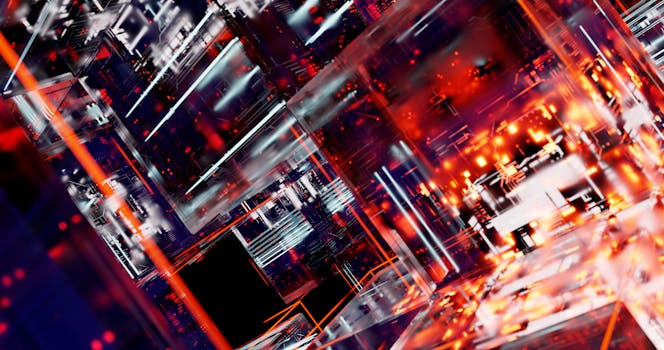
Detailed close-up of a circuit board showcasing electronic components in soft focus. Photo: Pok Rie / Pexels
Delving deeper into what is quantum computing explained, we need to understand the architectural and operational differences that set these machines apart. While classical computers use transistors as switches to process information, quantum computers rely on manipulating the quantum states of qubits. This is achieved through highly specialized hardware designed to maintain and control these delicate quantum states. Superconducting circuits, trapped ions, topological qubits, and photonic systems are just a few of the leading approaches to building quantum hardware, each with its own advantages and challenges. These systems operate at incredibly low temperatures, often near absolute zero (colder than deep space), and in environments isolated from external interference, because quantum states are extremely fragile and susceptible to 'decoherence' – the loss of their quantum properties due to interaction with the environment. The processing in a quantum computer isn't about simple logic gates like AND, OR, or NOT. Instead, it involves applying 'quantum gates' that rotate and entangle qubits in complex ways. These gates are mathematical operations that transform the quantum state of one or more qubits. For example, a Hadamard gate can put a qubit into superposition, while a CNOT (Controlled-NOT) gate can entangle two qubits. By applying a sequence of these quantum gates, a quantum algorithm can explore a vast number of possibilities simultaneously, leveraging superposition. When the computation is complete, a measurement is performed on the qubits. This act of measurement collapses the qubits' superpositions into definite classical states (0s and 1s), revealing the answer. Crucially, because the quantum algorithm has explored multiple pathways simultaneously, the probability of measuring the correct answer is significantly amplified. This probabilistic nature is another key distinction. A quantum computer doesn't always guarantee the correct answer on the first try; instead, it provides a probability distribution of possible answers. The goal of a well-designed quantum algorithm is to increase the probability of measuring the correct answer to near certainty. This iterative process of running the algorithm multiple times and analyzing the statistical output is often necessary. The real power comes from algorithms like Shor's algorithm for factoring large numbers or Grover's algorithm for searching unsorted databases, which can achieve exponential or quadratic speedups, respectively, over the best-known classical algorithms. These breakthroughs demonstrate that quantum computers are not just faster classical computers; they operate on fundamentally different principles, allowing them to solve problems in ways classical machines simply cannot. The engineering challenge lies in building stable, scalable quantum systems with enough qubits and low error rates to make these theoretical speedups a practical reality. This intricate dance between quantum mechanics and engineering is at the heart of the quantum revolution.

Transformative Applications and the Road Ahead for Quantum Computing
Abstract view of futuristic technology inspired circuitry in vivid colors. Photo: Pachon in Motion / Pexels
The implications of what is quantum computing explained extend far beyond theoretical physics labs, promising to revolutionize countless industries. The potential applications are vast and varied, touching almost every aspect of our lives. In medicine and pharmaceuticals, quantum computers could accelerate drug discovery by simulating molecular interactions with unprecedented accuracy, leading to new treatments for diseases like Alzheimer's, cancer, and HIV. They could design novel materials with specific properties, such as superconductors that operate at room temperature or highly efficient catalysts, transforming everything from energy production to manufacturing. Imagine materials that make batteries last weeks, or solar panels that capture almost all sunlight. Financial services stand to benefit immensely. Quantum algorithms could optimize complex portfolios, detect fraud with greater precision, and model financial markets with enhanced predictive power, providing a significant edge in a highly competitive sector. Artificial intelligence and machine learning will also see a paradigm shift. Quantum machine learning algorithms could process vast datasets exponentially faster, leading to more powerful AI models for image recognition, natural language processing, and personalized recommendations. This could unlock new levels of intelligence that are currently unimaginable with classical methods. Cryptography, the science of secure communication, is another critical area. While quantum computers pose a threat to current encryption standards (like RSA), they also offer the promise of 'post-quantum cryptography,' new encryption methods designed to be impervious to quantum attacks, ensuring our digital security in the quantum age. Understanding blockchain technology provides an interesting parallel in terms of disruptive potential. Despite this immense potential, quantum computing is still in its nascent stages. We are currently in the 'Noisy Intermediate-Scale Quantum' (NISQ) era, characterized by quantum computers with a limited number of qubits and significant error rates. Building fault-tolerant quantum computers with millions of stable qubits is a monumental engineering and scientific challenge. Researchers worldwide are working on improving qubit stability, reducing errors, and developing better ways to connect and control qubits. The development of quantum algorithms is also a rapidly evolving field, as scientists explore how to best harness quantum phenomena for practical problems. The journey from theoretical possibility to widespread practical application will be long and arduous, requiring breakthroughs in physics, engineering, and computer science. However, the rapid pace of innovation, coupled with significant investment from governments and tech giants, suggests that quantum computing is not a distant dream but a tangible future that will reshape our technological landscape in profound ways. Staying informed about these developments is crucial for anyone looking to understand the next wave of technological innovation.

Common Misconceptions and What Quantum Computing Isn't (Yet)

Abstract design showcasing computing fields with geometric and binary patterns in black and white. Photo: Google DeepMind / Pexels
As with any revolutionary technology, especially one as complex and abstract as quantum computing, there are numerous misconceptions that can cloud our understanding of what is quantum computing explained. It's crucial to address these to set realistic expectations and appreciate the true nature of this emerging field. Firstly, a common mistake is to think of a quantum computer as simply a 'faster classical computer.' While it's true that quantum computers can perform certain calculations exponentially faster, they are not universal speed machines. They excel at specific types of problems that leverage superposition and entanglement, such as factoring large numbers, simulating quantum systems, or optimizing complex systems. For everyday tasks like browsing the internet, word processing, or playing video games, classical computers will remain superior, more efficient, and far more cost-effective. Your laptop isn't going to be replaced by a quantum computer anytime soon; rather, quantum computers will act as powerful co-processors for highly specialized computations. Secondly, the idea that quantum computers will instantly break all current encryption is often overstated. While Shor's algorithm does pose a significant threat to widely used public-key encryption standards like RSA and ECC, this isn't an overnight collapse. Researchers are actively developing 'post-quantum cryptography' (PQC) algorithms that are designed to be resistant to attacks from future quantum computers. The transition to these new standards is already underway, a proactive measure to secure our digital future. It's a race, but one where humanity is actively working on the solution, not passively waiting for a breach. Thirdly, quantum computers are not magical devices that can solve any problem. They require specific algorithms tailored to quantum mechanics, and developing these algorithms is a highly specialized and challenging field. Not every problem has a quantum speedup, and for many, classical algorithms remain the most efficient approach. The current generation of quantum computers is also still highly error-prone and sensitive to environmental interference. These 'noisy' devices are powerful research tools, but they are far from being stable, fault-tolerant machines capable of running complex, real-world applications without significant error correction. The journey to 'quantum supremacy' – where a quantum computer performs a task provably beyond the capabilities of even the fastest classical supercomputers – is a significant milestone, but it does not mean quantum computers are ready for commercial deployment across the board. Understanding these nuances helps to frame the discussion around quantum computing with a grounded perspective, acknowledging both its incredible potential and its very real current limitations.

Comparison

FeatureQuantum ComputerClassical ComputerSupercomputer
Basic UnitQubitBitBit
Information States0, 1, and superposition0 or 10 or 1
Processing MethodQuantum gates, entanglementLogic gates, transistorsLogic gates, transistors
Speed for Specific Problems (e.g., factoring)Exponentially fasterSlowerFast, but limited
ParallelismIntrinsic (due to superposition)Simulated (via multiple cores)Simulated (via multiple cores)
Error RatesHigh (currently)LowLow
Operating EnvironmentExtremely cold, isolatedRoom temperature, ambientCooled, controlled

What Readers Say

"This article on what is quantum computing explained things so clearly! As a physicist, I appreciate the accuracy while making complex concepts accessible to a broader audience. Excellent work."

Dr. Anya Sharma · Boston, MA

"I've always been intimidated by quantum mechanics, but this explanation of quantum computing actually made sense. I now feel like I have a solid grasp of the basics and its potential."

Mark Johnson · Seattle, WA

"My team and I were struggling to articulate the difference between classical and quantum for a project. This article provided the perfect framework and helped us finalize our presentation with confidence."

Sarah Chen · Austin, TX

"A very comprehensive overview. While some parts were still quite dense, the analogies and structured breakdown of concepts really helped. It's a great starting point for anyone serious about understanding this field."

David Lee · San Francisco, CA

"As an investor looking into emerging tech, understanding what is quantum computing explained is crucial. This piece gave me the foundational knowledge to assess potential opportunities and risks more effectively."

Emily White · New York, NY

Frequently Asked Questions

What is the single most important concept to understand about quantum computing?

The most important concept is the qubit, which, unlike a classical bit, can exist in a superposition of both 0 and 1 simultaneously. This allows quantum computers to process vast amounts of information in parallel, leading to their unique computational power.

Is quantum computing going to replace all classical computers?

No, quantum computing is not expected to replace classical computers for general-purpose tasks. Instead, it will act as a powerful specialized tool to solve problems that are currently intractable for even the most powerful classical supercomputers, complementing existing computing infrastructure.

How do I get started learning more about quantum computing?

You can start by exploring online courses from platforms like Coursera or edX, reading introductory books on quantum mechanics and quantum computing, and experimenting with quantum programming environments like IBM Q Experience or Google's Cirq framework. Many universities also offer free introductory lectures.

Is quantum computing expensive, and will it ever be accessible to the average person?

Currently, quantum computing hardware is extremely expensive and complex, making it inaccessible for average individuals. However, cloud-based quantum computing services are making it more accessible to researchers and developers. As the technology matures, costs may decrease, but it's unlikely to become a consumer-level device in the near future.

How does quantum computing compare to artificial intelligence or machine learning?

Quantum computing is a different paradigm of computation, while AI and ML are computational fields that can run on classical computers. However, quantum computers have the potential to significantly accelerate and enhance AI/ML algorithms, leading to 'quantum machine learning' which could solve problems beyond classical AI's capabilities.

Who should be paying attention to quantum computing developments?

Anyone in fields like pharmaceuticals, materials science, finance, cybersecurity, logistics, and advanced manufacturing should be closely monitoring quantum computing developments. Additionally, governments and academic institutions are key stakeholders due to its strategic and research implications.

What are the biggest risks associated with quantum computing?

The primary risk is the potential to break current public-key encryption standards, which secure much of our digital communication. However, significant research is ongoing into 'post-quantum cryptography' to mitigate this threat. Other risks involve the ethical implications of its immense computational power.

What is the future trend for quantum computing in the next 5-10 years?

In the next 5-10 years, we can expect to see continued improvements in qubit stability and coherence, an increase in the number of qubits in experimental machines, and the development of more practical quantum algorithms. We will likely move beyond the NISQ era towards error-corrected quantum computing, leading to more tangible, real-world applications in specialized domains.

Understanding what is quantum computing explained is no longer just for scientists; it's essential for anyone looking to navigate the technological landscape of tomorrow. Dive deeper into this fascinating field and explore how it will shape our future.

Topics: quantum computing explainedquantum mechanicsqubitsquantum supremacyfuture technology
Leo List
Brampton weed
Adultwork