What is Cybersecurity and Why is it Important?
what is cybersecurity and why is it important

What is Cybersecurity and Why is it Important?

Explore the foundational principles of cybersecurity and its indispensable role in safeguarding our increasingly connected digital world.

Secure Your Digital Future

Key Takeaways

  • ✓ Cybersecurity protects digital systems, networks, and data from malicious attacks.
  • ✓ It's crucial for maintaining privacy, data integrity, and operational continuity for individuals and organizations.
  • ✓ The cost of cybercrime is projected to reach trillions of dollars annually.
  • ✓ A multi-layered approach involving technology, processes, and people is essential for effective cybersecurity.

How It Works

1
Identify & Assess Risks

Organizations first pinpoint valuable assets and potential vulnerabilities. This involves understanding what data needs protection and where the attack surface lies.

2
Implement Protective Measures

Next, various security controls are deployed, including firewalls, encryption, access controls, and anti-malware software. These measures act as barriers against threats.

3
Detect & Respond to Incidents

Continuous monitoring tools are used to detect suspicious activities or breaches in real-time. A rapid response plan is crucial to contain and mitigate any detected incidents.

4
Recover & Improve

After an incident, systems are restored, and lessons learned are integrated into security policies. This iterative process strengthens defenses against future attacks.

Defining Cybersecurity: The Digital Guardian
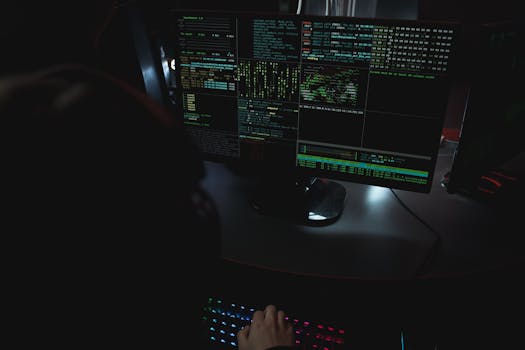
Dark room setup with code displayed on PC monitors highlighting cybersecurity themes. Photo: Tima Miroshnichenko / Pexels
In an increasingly interconnected world, understanding what cybersecurity is transcends mere technical jargon; it's a fundamental necessity for navigating the digital landscape safely. At its core, cybersecurity refers to the practice of protecting systems, networks, and programs from digital attacks. These cyberattacks are usually aimed at accessing, changing, or destroying sensitive information; extorting money from users; or interrupting normal business processes. It's an umbrella term encompassing a vast array of technologies, processes, and controls designed to protect information systems, computers, mobile devices, electronic systems, networks, and data from malicious attacks. Think of it as the digital equivalent of a fortress, constantly being built and reinforced to withstand evolving siege tactics. Without robust cybersecurity measures, our personal data, financial information, intellectual property, and even critical national infrastructure are vulnerable to exploitation and disruption. The scope of cybersecurity is incredibly broad, touching upon every aspect of our digital lives. From the personal emails we send to the massive databases held by corporations and governments, everything is a potential target. It involves preventative measures, such as installing antivirus software and using strong passwords, as well as reactive strategies, like incident response plans and data recovery protocols. The goal is not just to prevent breaches but also to minimize their impact when they do occur and to ensure business continuity. Cybersecurity professionals, often referred to as ethical hackers or white-hat hackers, work tirelessly to identify vulnerabilities before malicious actors can exploit them. They develop robust defenses, monitor networks for suspicious activity, and respond swiftly to any detected threats. This continuous cycle of defense, detection, and response is what keeps our digital world functioning. Furthermore, cybersecurity isn't just about technology; it's also about people and processes. A strong cybersecurity posture requires well-trained employees who understand the risks and follow best practices, as well as clear policies and procedures for handling sensitive information and responding to security incidents. For instance, an employee falling for a phishing scam can compromise an entire organization, regardless of how sophisticated its firewalls are. Therefore, human awareness and education are as vital as any technological solution. The evolution of cybersecurity has been rapid, mirroring the pace of technological advancement. What was considered cutting-edge protection a decade ago might be obsolete today. This dynamic environment necessitates constant learning, adaptation, and investment in new security paradigms. Understanding this foundational definition is the first step toward appreciating its profound importance in our modern society. Learn more about digital security advancements.

Why Cybersecurity is Indispensable in the Modern Era

Close-up of hands pressing a keypad on a wooden door, showcasing security and access entry. Photo: Andrei Kotovikov / Pexels
The question of 'why is cybersecurity important' is becoming increasingly self-evident as our lives become more intertwined with digital technology. Its importance stems from several critical factors, primarily the sheer volume and value of data now stored and transmitted digitally, coupled with the escalating sophistication of cyber threats. Every piece of personal information, from your social security number to your online banking details, is a valuable target for cybercriminals. For businesses, proprietary data, customer information, and operational control systems are all at risk. A single data breach can lead to devastating financial losses, irreparable reputational damage, legal liabilities, and even operational shutdowns. Consider the financial implications. The global cost of cybercrime is projected to reach trillions of dollars annually, a staggering figure that underscores the economic disruption caused by attacks. This includes the cost of repairing damaged systems, recovering lost data, notifying affected customers, paying regulatory fines, and the loss of revenue due to business interruption. Small and medium-sized businesses (SMBs) are particularly vulnerable, often lacking the resources and expertise of larger corporations to defend against sophisticated attacks. A significant breach can be an existential threat for an SMB, potentially leading to its closure. Beyond finances, the erosion of trust is a severe consequence. When personal data is compromised, individuals lose faith in the organizations responsible for protecting it. This can lead to customer churn, boycotts, and a general reluctance to engage digitally, slowing economic progress. Moreover, the importance of cybersecurity extends to national security and critical infrastructure. Power grids, water treatment plants, transportation systems, and healthcare facilities are increasingly reliant on interconnected digital systems. A successful cyberattack on any of these could have catastrophic real-world consequences, affecting millions of people. Governments worldwide are investing heavily in cybersecurity to protect against state-sponsored hacking, espionage, and cyber warfare, recognizing that digital vulnerabilities can pose as great a threat as conventional military ones. The rise of the Internet of Things (IoT) has further expanded the attack surface, with everything from smart home devices to industrial sensors becoming potential entry points for attackers. Each new connected device represents another vector that needs to be secured. Finally, cybersecurity is vital for maintaining individual privacy and freedom in the digital age. Without it, personal communications, medical records, and financial transactions could be exposed, leading to identity theft, fraud, and harassment. It empowers individuals to control their digital footprint and protects their fundamental right to privacy. As technology continues to advance and our reliance on digital systems deepens, the importance of robust and proactive cybersecurity measures will only continue to grow, making it an indispensable pillar of modern society.

Common Cyber Threats and Their Impact

Dark room setup with code displayed on PC monitors highlighting cybersecurity themes. Photo: Tima Miroshnichenko / Pexels
To truly appreciate what cybersecurity entails and why it's so important, one must understand the diverse landscape of cyber threats it aims to counter. The adversaries are varied, ranging from individual hackers and organized cybercrime syndicates to nation-state actors and hacktivist groups, each with different motives and capabilities. Recognizing these threats is the first step in building effective defenses. One of the most prevalent threats is 'malware,' a catch-all term for malicious software designed to disrupt, damage, or gain unauthorized access to computer systems. This includes viruses, worms, Trojans, spyware, and adware, each with its unique method of infection and payload. For example, a virus attaches itself to legitimate programs, while a worm can self-replicate and spread across networks. Trojans often masquerade as legitimate software to trick users into installing them, creating backdoors for attackers. 'Phishing' is another ubiquitous and highly effective threat, relying on social engineering to trick individuals into revealing sensitive information. This typically involves deceptive emails, messages, or websites that appear legitimate but are designed to steal credentials, financial details, or deploy malware. Spear phishing targets specific individuals or organizations, making the attack more personalized and harder to detect. The impact of successful phishing attacks can range from individual identity theft to large-scale corporate data breaches, leading to significant financial and reputational damage. Ransomware, a particularly insidious form of malware, encrypts a victim's files or locks their system, demanding a ransom (usually in cryptocurrency) for their release. The Colonial Pipeline attack in 2021, which disrupted fuel supplies across the southeastern US, highlighted the crippling potential of ransomware, affecting critical infrastructure and demonstrating real-world consequences beyond data loss. 'Denial-of-Service (DoS) and Distributed Denial-of-Service (DDoS) attacks' aim to make a machine or network resource unavailable to its intended users by temporarily or indefinitely disrupting services of a host connected to the Internet. While not directly stealing data, these attacks can cause significant operational downtime and financial losses for businesses reliant on online services. Insider threats, though less publicized, are equally dangerous. These come from current or former employees, contractors, or business associates who have legitimate access to an organization's systems and intentionally or unintentionally misuse that access. The impact can be severe, as insiders often know where the most valuable data resides and how to bypass existing security controls. Explore advanced threat detection methods. Beyond these, advanced persistent threats (APTs), zero-day exploits, and supply chain attacks represent the cutting edge of cyber warfare, often targeting high-value organizations and governments. APTs are stealthy and continuous computer hacking processes, often orchestrated by nation-states, targeting specific entities. Zero-day exploits leverage previously unknown software vulnerabilities, making them extremely difficult to defend against until a patch is released. Supply chain attacks compromise trusted software or hardware vendors, allowing attackers to infiltrate their customers' systems. Understanding this multifaceted threat landscape is crucial for developing resilient cybersecurity strategies that protect against the diverse and evolving dangers of the digital world.

Best Practices for Personal and Organizational Cybersecurity

Close-up view of a computer displaying cybersecurity and data protection interfaces in green tones. Photo: Tima Miroshnichenko / Pexels
Implementing effective cybersecurity measures is not solely the domain of IT departments; it's a shared responsibility that extends to every individual and organization. Adopting best practices is paramount to bolstering defenses against the ever-present threat of cyberattacks. For individuals, the foundation of personal cybersecurity starts with strong, unique passwords for every online account. Using a password manager can greatly simplify this, generating and storing complex passwords securely. Multi-factor authentication (MFA), such as a code sent to your phone or a biometric scan, adds a crucial second layer of security, making it significantly harder for attackers to gain access even if they compromise your password. Regular software updates are also critical, as these often include patches for newly discovered security vulnerabilities. Ignoring these updates leaves your devices exposed. Being vigilant about phishing attempts is another non-negotiable practice. Always scrutinize suspicious emails, texts, or calls, and avoid clicking on unknown links or downloading attachments from unverified sources. If in doubt, directly visit the organization's official website or contact them using independently verified contact information. Backing up important data regularly to an external hard drive or cloud service ensures that even if your device is compromised by ransomware or data loss, your precious information remains safe. Additionally, being mindful of what you share on social media can prevent cybercriminals from gathering information for social engineering attacks. For organizations, a comprehensive cybersecurity strategy involves a multi-layered approach. It begins with a thorough risk assessment to identify critical assets and potential vulnerabilities. Based on this, organizations should implement robust access controls, ensuring that employees only have access to the data and systems necessary for their roles. Network segmentation can limit the lateral movement of attackers within a network, containing potential breaches. Endpoint protection, including antivirus and anti-malware software on all devices, is essential. Regular security audits and penetration testing help identify weaknesses before malicious actors do. Employee training is arguably one of the most cost-effective cybersecurity measures. Regular awareness programs that educate staff about phishing, social engineering, and safe computing practices can turn employees from potential vulnerabilities into the first line of defense. Developing and regularly testing an incident response plan ensures that if a breach occurs, the organization can respond quickly and effectively to minimize damage and restore operations. Finally, staying informed about the latest cyber threats and evolving security technologies is crucial for maintaining a proactive defense posture. Cybersecurity is not a one-time setup but an ongoing commitment to protect digital assets and ensure operational resilience.

Comparison

FeatureEnterprise SolutionsSMB SolutionsPersonal Solutions
Scope of ProtectionFull network, data centers, cloud, endpointsNetwork, cloud services, endpointsSingle devices, personal cloud
CostHigh (complex, custom)Medium (subscription, managed)Low (free/low-cost software)
ComplexityVery High (dedicated teams)Medium (IT staff/MSPs)Low (user-friendly apps)
Threat Intelligence✓ (advanced, real-time)✓ (vendor-provided)✗ (basic)
Incident ResponseDedicated team, 24/7Managed Service Provider (MSP)Self-reliance/vendor support

What Readers Say

"Understanding what cybersecurity is and why it's important transformed how I protect my small business. This article broke down complex topics into actionable steps, leading to a much safer digital environment for my company and customers."

Sarah J. · Austin, TX

"As someone not tech-savvy, this explanation of cybersecurity was incredibly helpful. I now use a password manager and MFA on everything, feeling much more secure online."

Mark D. · Seattle, WA

"This article clarified the critical need for robust cybersecurity. After reading, our company implemented new employee training modules, resulting in a noticeable decrease in phishing click-through rates and improved overall security posture."

Jessica L. · New York, NY

"A very comprehensive overview, though I wish there were more specific product recommendations. Still, it provides a solid foundation for understanding what cybersecurity is and its undeniable importance."

David K. · Chicago, IL

"From personal privacy to national security, this piece eloquently explains why cybersecurity is paramount. It's a must-read for anyone living in our digital age, highlighting the constant evolution of threats."

Emily R. · San Francisco, CA

Frequently Asked Questions

What is the primary goal of cybersecurity?

The primary goal of cybersecurity is to protect digital assets—systems, networks, and data—from unauthorized access, damage, or theft. It aims to ensure the confidentiality, integrity, and availability (CIA triad) of information, mitigating risks posed by cyber threats and maintaining trust in digital operations.

Is cybersecurity only for large corporations?

Absolutely not. Cybersecurity is crucial for everyone, from individuals protecting personal data to small businesses safeguarding customer information, and large corporations defending intellectual property. While the scale and complexity of solutions may vary, the fundamental need for protection against cyber threats applies to all.

How can I improve my personal cybersecurity?

You can significantly improve personal cybersecurity by using strong, unique passwords and a password manager, enabling multi-factor authentication (MFA) everywhere possible, regularly updating your software, being wary of phishing attempts, and backing up your important data. Education and vigilance are key.

What is the cost of not having adequate cybersecurity?

The cost of inadequate cybersecurity can be immense, encompassing financial losses from data breaches, regulatory fines, reputational damage, loss of customer trust, operational downtime, and even the potential closure of a business. For individuals, it can lead to identity theft, financial fraud, and privacy invasion.

How does cybersecurity differ from information security?

While often used interchangeably, information security (InfoSec) is a broader concept that encompasses protecting all forms of information, whether digital or physical. Cybersecurity specifically focuses on protecting information and systems within the digital realm. Cybersecurity is a subset of information security.

Who should be concerned about cybersecurity?

Everyone should be concerned about cybersecurity. Individuals need to protect their personal data and privacy, businesses of all sizes must safeguard their operations and customer information, and governments are responsible for protecting national infrastructure and citizens' data. It's a universal concern in the digital age.

Are free antivirus programs sufficient for protection?

Free antivirus programs offer a basic level of protection against known threats, which is better than nothing. However, for more comprehensive security, especially against advanced persistent threats, zero-day exploits, and sophisticated malware, paid solutions often provide more robust features like real-time protection, firewall integration, and advanced threat intelligence. They are generally not sufficient on their own for significant protection.

What are the future trends in cybersecurity?

Future trends in cybersecurity include increased reliance on Artificial Intelligence (AI) and Machine Learning (ML) for threat detection and response, the growing importance of securing IoT devices, the expansion of cloud security, the challenge of quantum computing's impact on encryption, and a continued focus on human-centric security awareness and training.

Understanding what cybersecurity is and why it is important is no longer optional; it's a fundamental requirement for navigating our digital world safely. Take proactive steps today to secure your digital life and assets, ensuring protection against the ever-evolving landscape of cyber threats.

Topics: what is cybersecurity and why is it importantcyber security definitiondigital protectiononline safetycyber threats
Leo List

IE Escorts NO Escorts US Escorts NZ Escorts AU Escorts
Brampton weed
Adultwork EstrelaBet Vai de Bet R7 Bet Betão Galera Bet Rainbet Bet9ja Shop SportyBet BetKing Sisal Loto Foot Hollywoodbets YesPlay Odibets RushBet Jugabet BetWarrior BetCity MSport betPawa Fortebet