What is 5G Technology? Unlocking the Future
August 14, 2026 14 min read 2,879 words
5G is the fifth generation of cellular technology, promising unprecedented speed, reliability, and transformative capabilities.
Explore 5G Now
Understanding the Core: What is 5G Technology?
 Photo: Brett Sayles / Pexels
The advent of 5G technology marks a pivotal moment in the evolution of global connectivity, representing the fifth generation of cellular network standards. Building upon the foundations laid by 4G LTE, 5G isn't merely an incremental upgrade; it's a paradigm shift designed to support an entirely new ecosystem of connected devices and services. At its heart, 5G aims to deliver three primary improvements: significantly higher speeds, ultra-low latency, and massive capacity. These core capabilities are what truly differentiate it from its predecessors and position it as the backbone for future innovations across virtually every industry.
To fully grasp what 5G technology entails, we must look beyond just faster downloads. While peak speeds can theoretically reach up to 10 gigabits per second (Gbps), making streaming 8K video or downloading entire movies in seconds a reality, the real game-changer lies in its latency. 5G promises latency as low as 1 millisecond (ms), a near-instantaneous response time that is crucial for applications demanding real-time interaction, such as autonomous vehicles, remote surgery, and industrial automation. This minimal delay transforms how machines and humans can interact with digital systems, opening doors to possibilities previously confined to science fiction. Moreover, 5G's capacity to connect a massive number of devices simultaneously, estimated at millions per square kilometer, is essential for the burgeoning Internet of Things (IoT). Imagine smart cities where every street light, traffic sensor, and public utility is interconnected, or smart homes where appliances communicate seamlessly. This density capability ensures that the network can handle the exponential growth in connected devices without degradation in performance.
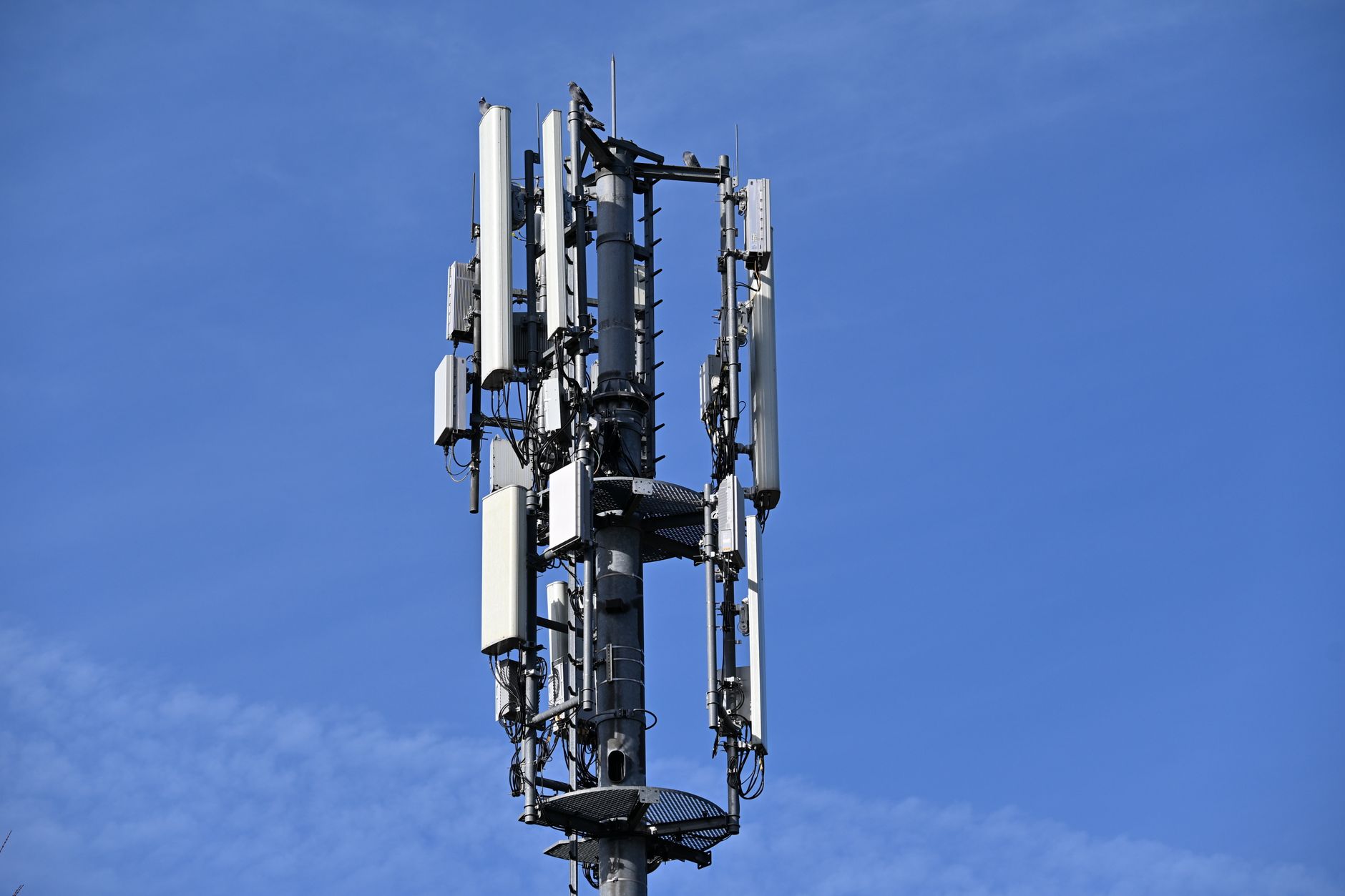
Beyond these headline features, 5G introduces several architectural innovations. It leverages a wider range of spectrum bands, including millimeter-wave (mmWave) frequencies for extremely high speeds in localized areas, and mid-band and low-band frequencies for broader coverage. Network slicing is another critical innovation, allowing carriers to create multiple virtual networks on a single physical 5G infrastructure. Each 'slice' can be customized with specific performance characteristics, such as guaranteed bandwidth and latency, to meet the unique demands of different applications – for instance, one slice for critical medical data and another for consumer entertainment. This flexibility makes 5G not just a faster network, but a highly adaptable and programmable one, capable of supporting diverse and demanding use cases. The transition to 5G also involves significant infrastructure upgrades, including the deployment of numerous small cell antennas and advanced Massive MIMO technology, which uses multiple antennas to improve signal quality and capacity. These technological advancements collectively define what 5G technology is and underscore its transformative potential, laying the groundwork for a truly interconnected and intelligent world. For a deeper dive into how these technologies are changing our world, explore more about
the impact of advanced connectivity.
The Transformative Impact of 5G on Industries and Daily Life
 Photo: Mathias Reding / Pexels
The widespread deployment and adoption of 5G technology are not just about faster smartphones; they promise to fundamentally reshape industries and profoundly influence our daily lives. Its unique combination of speed, low latency, and massive capacity will act as a catalyst for innovation across various sectors, creating efficiencies, enabling new services, and fostering economic growth. One of the most anticipated impacts is on the automotive industry. 5G is the bedrock for the development and deployment of truly autonomous vehicles. The ability to exchange vast amounts of data with other vehicles (V2V), infrastructure (V2I), and network services (V2N) in near real-time, with imperceptible latency, is critical for ensuring safety and efficiency in self-driving cars. This will not only improve road safety but also optimize traffic flow and revolutionize transportation logistics.
In the realm of healthcare, 5G's potential is equally transformative. Remote surgery, where a surgeon operates on a patient miles away using robotic instruments, becomes a viable reality due to ultra-low latency. Telemedicine will evolve beyond video calls, allowing for real-time monitoring of vital signs and remote diagnostics with high-resolution imaging. Wearable health devices will become more sophisticated, constantly feeding data to healthcare providers without lag, enabling proactive care and personalized treatment plans. The manufacturing sector stands to gain immensely from 5G through the concept of Industry 4.0. Factories can become 'smart factories,' where machines, robots, and sensors are interconnected, communicating instantly to optimize production lines, predict maintenance needs, and reduce downtime. This leads to greater automation, improved efficiency, and more flexible manufacturing processes. Retail, too, will see significant changes, from enhanced in-store experiences with augmented reality (AR) applications to more efficient inventory management and personalized customer service through connected devices.
Beyond these industrial applications, 5G will profoundly impact everyday consumer experiences. Immersive technologies like virtual reality (VR) and augmented reality (AR) will become mainstream, offering richer gaming experiences, more engaging educational content, and new forms of entertainment. Cloud gaming will reach unprecedented levels of responsiveness, effectively eliminating the need for expensive local hardware. Smart homes will become truly intelligent, with all devices communicating seamlessly and responsively, from security systems to energy management. Even public spaces will evolve into 'smart cities,' using 5G to manage traffic, monitor environmental conditions, enhance public safety, and deliver efficient municipal services. The ability to deploy high-speed, reliable connectivity anywhere, even in remote areas, will also bridge the digital divide, providing access to education, healthcare, and economic opportunities for underserved communities. The pervasive nature of 5G's capabilities means its impact will be felt everywhere, fundamentally altering how we work, live, and interact with the world around us.
Comparing 5G to Previous Generations and Its Future Potential
 Photo: Themba Mtegha / Pexels
To truly appreciate what 5G technology brings to the table, it’s essential to understand how it stacks up against its predecessors, particularly 4G LTE. Each generation of cellular technology has brought significant advancements, but 5G represents a leap rather than a step. 1G brought us analog voice calls, 2G introduced digital voice and basic data like SMS, 3G enabled mobile internet browsing and multimedia messaging, and 4G LTE delivered fast mobile broadband, making smartphone streaming and social media ubiquitous. 5G, however, is engineered not just for human communication, but primarily for machine-to-machine communication and the massive expansion of the Internet of Things (IoT).
The most striking difference lies in speed and latency. While 4G LTE typically offers download speeds in the tens to hundreds of megabits per second (Mbps) and latency around 50-100 milliseconds, 5G promises speeds up to 10 Gbps and latency as low as 1 ms. This isn't just about faster downloads; it's about enabling real-time applications that were previously impossible. For instance, a 4G network might be sufficient for streaming a movie, but it cannot support the instantaneous reactions required for a self-driving car to avoid an obstacle or for a surgeon to perform remote microsurgery. The capacity difference is also monumental. 4G networks can support thousands of connected devices per square kilometer; 5G is designed to connect millions. This massive increase in device density is crucial for the proliferation of IoT devices, from smart sensors in agriculture to connected industrial machinery, without overwhelming the network.
Looking ahead, the future potential of 5G technology is vast and still largely untapped. We are currently in the initial phases of its deployment, primarily focused on enhancing mobile broadband. However, as the infrastructure matures and more standalone 5G networks are built (rather than relying on 4G core networks), its true capabilities will be unleashed. This includes advanced network slicing for bespoke connectivity, further integration with artificial intelligence (AI) and edge computing, and the development of new applications that haven't even been conceived yet. Edge computing, in particular, will benefit immensely from 5G's low latency, allowing data processing to occur closer to the source (e.g., a smart factory or an autonomous vehicle) rather than in a distant data center. This reduces transmission time and enables faster decision-making, which is critical for time-sensitive applications. Furthermore, the evolution of 5G will pave the way for 6G research, pushing the boundaries even further in terms of speed, intelligence, and ubiquitous connectivity. The foundational technologies of 5G will continue to evolve, integrating with satellite communications, advanced sensor networks, and perhaps even holographic communication. The journey with 5G is just beginning, and its trajectory points towards an increasingly interconnected, intelligent, and automated world. Understanding these generational differences helps clarify why 5G is not just an upgrade, but a fundamental shift in how we interact with technology and how industries operate. For more insights into the broader technological landscape, consider exploring resources on
emerging tech trends.
Navigating the Challenges and Maximizing 5G's Potential
 Photo: alexander ermakov / Pexels
While the promise of 5G technology is immense, its widespread deployment and full utilization come with a unique set of challenges that need to be addressed. Understanding these hurdles is crucial for both consumers and businesses looking to maximize the benefits of this revolutionary network. One of the most significant challenges is infrastructure deployment. Unlike previous generations that largely relied on upgrading existing cell towers, 5G, especially its high-speed millimeter-wave (mmWave) variant, requires a much denser network of small cells. These small cells need to be installed on lampposts, buildings, and other urban furniture, which involves complex planning, permitting, and significant capital investment. The physical rollout is a monumental undertaking, particularly in sprawling urban and rural areas across the US.
Another key challenge is coverage. While 5G is rapidly expanding, nationwide ubiquitous coverage, especially for the fastest mmWave frequencies, is still a work in progress. These higher frequencies provide incredible speed but have limited range and are easily obstructed by buildings, trees, and even rain. This means that while you might experience blazing fast speeds in certain urban hotspots, coverage can be patchy or revert to slower mid-band or low-band 5G, or even 4G LTE, just a few blocks away. For consumers, this means understanding that '5G' on your phone doesn't always guarantee the highest speeds. For businesses, planning deployments of 5G-dependent applications requires careful consideration of available network quality and consistency.
Security and privacy are also paramount concerns. As 5G networks connect exponentially more devices, the attack surface for cyber threats expands dramatically. Ensuring the integrity and security of critical infrastructure, sensitive data, and connected devices becomes more complex. Robust security protocols, encryption, and continuous monitoring are essential to protect against vulnerabilities. Furthermore, the environmental impact of increased energy consumption by a denser network infrastructure and millions of new devices is a consideration, driving innovation in energy-efficient network components and sustainable practices.
Tips for maximizing 5G's potential:
* **Upgrade to 5G-compatible devices:** Ensure your smartphone, tablet, or IoT devices support 5G bands relevant to your carrier.
* **Check carrier coverage maps:** Before investing, consult your carrier's latest 5G coverage maps to understand availability in your key locations.
* **Understand different 5G types:** Differentiate between high-band (mmWave), mid-band, and low-band 5G to manage expectations for speed and coverage.
* **Leverage 5G for edge computing:** Businesses should explore how 5G's low latency can enable real-time data processing at the network edge, reducing reliance on centralized cloud servers.
* **Explore industry-specific applications:** Identify how 5G's unique features (e.g., network slicing, massive IoT connectivity) can solve specific challenges or create new opportunities in your sector.
* **Prioritize cybersecurity:** As you integrate more 5G-connected devices, invest in comprehensive cybersecurity measures to protect your network and data.
* **Stay informed about infrastructure development:** Keep an eye on local and national 5G rollout plans to anticipate when advanced 5G capabilities might become available in your area.
Addressing these challenges through continued investment, technological innovation, and collaborative efforts between governments, carriers, and businesses will be key to fully unlocking the transformative power of 5G technology.