What is 5G Network Technology? Your Ultimate Guide
what is 5G network technology

What is 5G Network Technology? Your Ultimate Guide

Dive deep into the next generation of wireless connectivity and understand its revolutionary potential for a hyper-connected world.

Explore 5G Now

Key Takeaways

  • ✓ 5G is the fifth generation of cellular technology, designed to deliver higher multi-Gbps peak speeds, ultra-low latency, and massive capacity.
  • ✓ It promises speeds up to 100 times faster than 4G LTE, with latency as low as 1 millisecond.
  • ✓ 5G utilizes three main frequency bands: low-band (wide coverage), mid-band (balance of speed and coverage), and high-band (mmWave, extreme speed in small areas).
  • ✓ Beyond smartphones, 5G is a foundational technology for IoT, AI, autonomous vehicles, and smart cities.

How It Works

1
New Radio (NR) Interface

5G introduces a new radio interface, 5G New Radio (NR), which is designed to be much more flexible and efficient than previous generations. This allows it to operate across a much wider range of frequencies and support diverse use cases.

2
Massive MIMO Antennas

Massive Multiple-Input Multiple-Output (MIMO) technology uses many more antennas than 4G to send and receive data simultaneously. This increases network capacity and efficiency, allowing more devices to connect at higher speeds.

3
Beamforming Technology

Beamforming directs wireless signals specifically to individual user devices, rather than broadcasting them in all directions. This concentrates the signal strength, leading to better reception, higher speeds, and reduced interference.

4
Network Slicing

Network slicing allows mobile operators to create multiple virtual networks on top of a single physical 5G infrastructure. Each 'slice' can be optimized for specific applications, such as ultra-reliable communication for self-driving cars or high-bandwidth for video streaming.

Understanding the Core of 5G: Speed, Latency, and Capacity

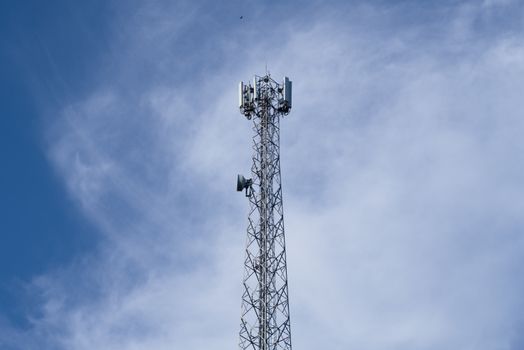
A tall cellular communication tower against a vivid blue sky, symbolizing modern technology. Photo: Ulrick Trappschuh / Pexels
To truly grasp what is 5G network technology, we must first delve into its fundamental pillars: unprecedented speed, ultra-low latency, and massive capacity. These aren't just incremental improvements; they represent a paradigm shift in how we interact with the digital world. **Speed:** Imagine downloading a full-length high-definition movie in mere seconds, or streaming 8K video without a single buffer. 5G promises theoretical peak speeds of up to 10 gigabits per second (Gbps), which is roughly 100 times faster than the average 4G LTE connection. While real-world speeds will vary depending on network congestion, location, and device, the leap from 4G is undeniably monumental. This incredible speed isn't just for faster downloads; it enables a whole new class of applications that were previously impossible due to bandwidth limitations. Think about instant access to cloud-based applications, real-time augmented reality experiences, and seamless virtual reality environments that feel truly immersive. The raw throughput of 5G means that data can flow almost instantaneously, paving the way for innovations across every sector. **Latency:** Perhaps even more crucial than speed for many emerging applications is 5G's ultra-low latency. Latency refers to the time it takes for data to travel from its source to its destination and back. 4G LTE typically has a latency of around 50-100 milliseconds (ms). 5G aims to reduce this to an astonishing 1 ms – virtually instantaneous. This near-zero delay is critical for applications where even a slight lag can have significant consequences. Consider autonomous vehicles, where real-time communication between cars, traffic infrastructure, and central systems is paramount for safety. Or remote surgery, where a surgeon's precise movements must be translated to robotic instruments without any perceptible delay. Low latency is also vital for responsive gaming, industrial automation, and haptic feedback systems, making remote interactions feel as if you are physically present. It transforms the potential of remote control and automation, enabling precision and reliability that were previously unattainable. **Capacity:** Beyond individual device performance, 5G is engineered for massive capacity. This means it can support a significantly larger number of connected devices simultaneously without experiencing a drop in performance. As the Internet of Things (IoT) proliferates, with everything from smart home appliances to industrial sensors coming online, the demand for network capacity is exploding. 4G networks were not designed to handle billions of interconnected devices. 5G, however, is built to accommodate this future, supporting up to a million devices per square kilometer. This massive capacity is achieved through advanced technologies like massive MIMO and beamforming, which allow the network to efficiently manage multiple connections. It’s not just about connecting more smartphones; it’s about creating an intelligent, interconnected ecosystem where every device can communicate reliably and efficiently. This robust capacity is a cornerstone for the development of smart cities, advanced manufacturing, and widespread IoT adoption, ensuring that as the number of connected devices grows, the network can keep pace. For a deeper dive into the technical underpinnings, explore how wireless communication protocols have evolved.

The Three Pillars of 5G Spectrum: Low-Band, Mid-Band, and mmWave

A tall metal communications tower stands against a backdrop of a clear blue sky with scattered clouds. Photo: Qeis Ismail / Pexels
Understanding what is 5G network technology also requires an appreciation for the diverse spectrum it operates on. Unlike previous generations that largely relied on a single frequency range, 5G cleverly leverages a combination of low-band, mid-band, and high-band (millimeter wave or mmWave) frequencies to deliver its promised capabilities. Each band has distinct characteristics and plays a crucial role in the overall 5G experience, offering a balance between coverage, speed, and capacity. **Low-Band 5G:** This is often referred to as the 'coverage layer' of 5G. Low-band frequencies, typically below 1 GHz, are excellent at traveling long distances and penetrating obstacles like walls and buildings. This makes them ideal for providing broad, wide-area coverage, similar to how 4G LTE operates. While low-band 5G offers speeds that are only marginally faster than enhanced 4G, its primary benefit is its expansive reach, ensuring that 5G signals can be accessed even in rural areas or deep indoors. It acts as the foundational layer, providing a consistent 5G experience across vast geographical regions, though without the extreme speeds associated with the higher bands. For many initial 5G deployments, low-band was the first to roll out, giving users their first taste of '5G' on their device indicator, even if the speed increase wasn't dramatic. **Mid-Band 5G:** Positioned as the 'sweet spot' for most users, mid-band frequencies (typically 2.5 GHz to 6 GHz) offer an optimal balance between speed and coverage. Mid-band 5G delivers significantly faster speeds than low-band, often in the hundreds of megabits per second (Mbps), and provides a good balance of signal penetration and range. This is where many users will experience the most noticeable improvements over 4G LTE in everyday scenarios. It's robust enough to cover urban and suburban areas effectively while still providing a substantial boost in bandwidth and lower latency. Mid-band is becoming the workhorse of 5G networks, enabling a variety of applications from improved mobile browsing and streaming to more reliable connectivity for businesses. Its ability to offer a compelling mix of performance and practicality makes it critical for widespread 5G adoption and utility. **High-Band 5G (mmWave):** Also known as millimeter wave, high-band 5G utilizes frequencies typically above 24 GHz, extending into the tens of gigahertz. This is where 5G's truly mind-boggling speeds—often multiple gigabits per second—are achieved, along with incredibly low latency. However, there's a trade-off: mmWave signals have a very short range and are highly susceptible to obstruction by buildings, trees, and even heavy rain. This makes mmWave deployments highly localized, requiring a dense network of small cell sites. You'll primarily find mmWave in dense urban centers, stadiums, airports, and other high-traffic areas where extreme capacity and speed are needed for specific applications like fixed wireless access or industrial IoT. While its coverage is limited, its performance in those specific areas is transformative, offering unparalleled bandwidth for data-intensive tasks. Understanding these distinct frequency bands is key to appreciating the complexity and versatility of 5G infrastructure and how network providers are strategically deploying them to cater to different user needs and environments. Each band contributes uniquely to the comprehensive 5G experience, ensuring both broad accessibility and peak performance where it matters most.

Transformative Applications: How 5G is Reshaping Industries

A modern solar-powered surveillance camera on a street pole amidst green foliage. Photo: Giant Asparagus / Pexels
The promise of what is 5G network technology extends far beyond faster smartphone downloads; it is a foundational technology poised to revolutionize countless industries and aspects of our daily lives. Its unique combination of high speed, ultra-low latency, and massive capacity unlocks a new era of innovation, enabling applications that were previously confined to science fiction. From healthcare to manufacturing, and from entertainment to transportation, 5G is the backbone for a hyper-connected, intelligent future. **Healthcare and Remote Medicine:** 5G is set to transform healthcare by enabling highly reliable and real-time remote medical services. With ultra-low latency, remote surgeries performed by robotic arms can become safer and more precise, allowing specialists to operate on patients across vast distances. High-bandwidth 5G facilitates the instant transfer of large medical images (like MRI scans) and patient data, accelerating diagnoses and consultations. Wearable health monitors can transmit vital signs continuously, enabling proactive health management and emergency response. Telemedicine will evolve significantly, offering immersive virtual consultations and remote patient monitoring with unprecedented fidelity, improving access to quality care, especially in underserved areas. This level of connectivity can also support smart hospitals, optimizing operations and patient care through connected devices and AI. **Autonomous Vehicles and Smart Transportation:** The future of transportation is inextricably linked with 5G. Autonomous vehicles require constant, ultra-low latency communication with each other (V2V – vehicle-to-vehicle), with traffic infrastructure (V2I – vehicle-to-infrastructure), and with central cloud systems (V2N – vehicle-to-network). This real-time data exchange is critical for navigation, collision avoidance, and optimizing traffic flow. 5G’s ability to handle massive amounts of data from sensors, cameras, and lidar ensures that self-driving cars can react instantly to their surroundings. Beyond individual vehicles, 5G will power smart traffic lights, intelligent public transport systems, and dynamic road management, leading to safer, more efficient, and less congested urban environments. The latency reduction is paramount here, as even a few milliseconds of delay can mean the difference between safety and an accident. **Industrial IoT (IIoT) and Smart Manufacturing:** The manufacturing sector is on the cusp of a major transformation driven by 5G. Industrial IoT, powered by 5G, will enable factories to become truly smart, with interconnected machines, sensors, and robots communicating in real-time. This allows for predictive maintenance, where machines signal potential failures before they occur, reducing downtime and costs. Automated guided vehicles (AGVs) can navigate complex factory floors with precision, and robotic arms can perform intricate tasks with remote human oversight. Network slicing, a key 5G feature, can create dedicated, ultra-reliable network segments for critical industrial processes, ensuring guaranteed quality of service. This leads to increased efficiency, higher productivity, and more flexible production lines, paving the way for Industry 4.0 and beyond. For more on how this impacts global supply chains, check out our piece on the future of logistics technology. **Augmented Reality (AR) and Virtual Reality (VR):** 5G's high bandwidth and low latency are essential for delivering truly immersive and untethered AR and VR experiences. Current AR/VR often relies on powerful local processing or wired connections due to the immense data requirements. 5G allows for much of the complex rendering and computation to be offloaded to the cloud, streaming high-fidelity virtual content to lightweight headsets with minimal lag. This opens up possibilities for remote collaboration, realistic training simulations, interactive entertainment, and new forms of digital tourism. Imagine attending a virtual concert with friends from across the globe, feeling truly present, or a surgeon practicing a complex procedure in a hyper-realistic virtual environment before operating on a patient. 5G makes these experiences seamless and accessible, removing the technical barriers that have hindered widespread AR/VR adoption.

Navigating the Challenges and Future Outlook of 5G Adoption

A woman engaged in virtual reality, wearing a headset and interacting with the virtual environment. Photo: SHVETS production / Pexels
While the benefits of what is 5G network technology are undeniable, its widespread adoption and full realization of its potential come with a unique set of challenges. Understanding these hurdles is crucial for assessing the current state and future trajectory of 5G deployment. Moreover, looking ahead, the evolution of 5G promises even more sophisticated capabilities that will continue to shape our connected world. **Deployment Challenges:** * **Infrastructure Costs:** Rolling out a comprehensive 5G network, especially with dense mmWave deployments, requires significant capital investment in new base stations, fiber optic backhaul, and small cell infrastructure. This is a massive undertaking for telecommunication companies, necessitating substantial financial commitments. * **Spectrum Availability and Allocation:** Access to the necessary radio spectrum is critical. Governments and regulatory bodies worldwide are working to allocate and auction off suitable frequency bands for 5G, but this process can be complex and time-consuming, affecting deployment timelines. * **Permitting and Siting:** Deploying the dense network of small cells required for mmWave 5G faces challenges with local permitting, zoning regulations, and aesthetic concerns. Securing approvals for thousands of new antenna sites in urban areas can be a slow and arduous process. * **Security Concerns:** As 5G connects a vast number of devices and critical infrastructure, robust security measures are paramount. Protecting against cyber threats, ensuring data privacy, and securing the network from state-sponsored attacks are ongoing challenges that require continuous innovation and vigilance. * **Power Consumption:** The increased density of 5G equipment and its enhanced processing capabilities can lead to higher power consumption compared to previous generations, raising concerns about operational costs and environmental impact. Efforts are underway to develop more energy-efficient 5G components and network designs. **Future Outlook: Beyond 5G (6G and More):** 5G is not the final destination. The telecommunications industry is already looking ahead to 6G, which is expected to emerge around 2030. While still in its early research phases, 6G is envisioned to push the boundaries even further, aiming for: * **Terabit-per-second (Tbps) speeds:** A thousand times faster than 5G, enabling instantaneous data transfer for even the most demanding applications. * **Sub-millisecond latency:** Further reducing delays to near-zero, crucial for truly immersive digital twin environments and real-time sensory experiences. * **Integrated Sensing and Communication:** 6G networks are expected to not only transmit data but also sense their environment, enabling hyper-accurate positioning, gesture recognition, and even environmental monitoring directly from the network infrastructure. * **AI-Native Networks:** Integrating artificial intelligence and machine learning deeply into the network design, making it self-optimizing, self-healing, and highly efficient. * **Holographic Communication and Digital Twins:** Enabling truly realistic holographic presence and creating comprehensive digital replicas of physical objects and environments for simulation and interaction. These future advancements highlight that the journey of wireless connectivity is continuous. Each generation builds upon the last, addressing new challenges and enabling previously unimaginable possibilities. The robust foundation laid by 5G will be instrumental in paving the way for these subsequent innovations, continuously redefining the boundaries of our connected world. **Tips for Maximizing Your 5G Experience:** * **Check Coverage:** Use your carrier's coverage maps to see where 5G is available in your area and which bands (low, mid, mmWave) are deployed. * **Upgrade Your Device:** Ensure your smartphone or device is 5G-enabled and supports the specific 5G bands your carrier uses. * **Update Software:** Keep your device's operating system and carrier settings updated to ensure optimal 5G performance and access to the latest network enhancements. * **Consider a 5G Plan:** Some carriers offer specific 5G data plans or features that might unlock higher speeds or additional benefits. * **Location Matters:** Remember that mmWave 5G is highly directional and susceptible to obstructions. For the fastest speeds, ensure you have a clear line of sight to a 5G small cell.

Comparison

Feature5G4G LTE3G
Peak Speed (Theoretical)Up to 10 GbpsUp to 1 GbpsUp to 42 Mbps
Latency1-5 ms50-100 ms100-500 ms
Devices per sq. km1,000,000+10,000+1,000+
Primary Use CasesIoT, AR/VR, Autonomous Driving, Smart Cities, Remote SurgeryMobile Internet, Video Streaming, Social MediaVoice Calls, Basic Data, Texting

What Readers Say

"I was skeptical about what is 5G network technology at first, but the speeds are genuinely incredible. My downloads are instant, and video calls are crystal clear, even in crowded areas. It's a game-changer for working remotely."

Sarah J. · Austin, TX

"Having 5G has made a huge difference for my business. Transferring large files to the cloud is so much faster, and I've experienced zero lag during critical remote presentations. It truly elevates productivity."

Mark T. · Seattle, WA

"Before 5G, my mobile gaming experience was often frustrating due to lag. Now, with what is 5G network technology, the latency is so low that my games run flawlessly. It's like having a console in my pocket, completely changing how I play."

Emily R. · Miami, FL

"While the speeds are fantastic in downtown areas, I've noticed that 5G coverage can still be a bit spotty in some suburban neighborhoods. It's definitely an improvement over 4G, but I'm looking forward to more consistent coverage across the board."

David L. · Denver, CO

"My smart home devices are so much more responsive with 5G. The increased capacity means everything from my security cameras to my smart thermostat operates seamlessly, without any connectivity hiccups. It's made my smart home truly intelligent."

Jessica M. · San Francisco, CA

Frequently Asked Questions

What is 5G network technology primarily designed to improve?

5G network technology is primarily designed to improve three key areas: significantly higher speeds (up to 10 Gbps), ultra-low latency (as low as 1 ms), and massive capacity, allowing more devices to connect simultaneously. These improvements enable a new generation of applications and services beyond what 4G could support.

Is 5G safe for human health?

Leading health organizations and scientific bodies, including the World Health Organization (WHO) and the FCC, have stated that current scientific evidence does not indicate any adverse health effects from 5G exposure at levels below international guidelines. 5G operates on radio frequencies similar to previous generations, but with more efficient use of spectrum.

How do I get 5G on my phone?

To get 5G, you need a 5G-compatible smartphone, a 5G-enabled data plan from your mobile carrier, and to be in an area with 5G network coverage. Once these conditions are met, your phone should automatically connect to the available 5G network.

Does 5G cost more than 4G?

Initially, some carriers offered premium 5G plans. However, as 5G becomes more widespread, it's increasingly included in standard data plans without an additional surcharge. The cost largely depends on your specific carrier and chosen data package, often aligning with high-tier 4G plans.

How does 5G compare to Wi-Fi 6?

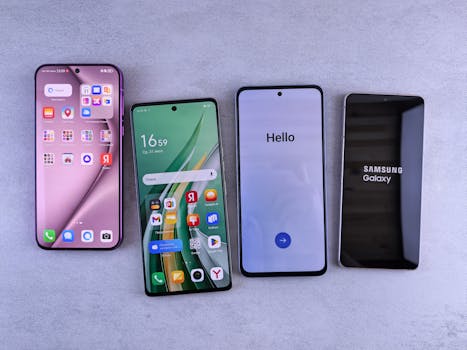
Both 5G and Wi-Fi 6 are advanced wireless technologies designed for speed and capacity. 5G is a cellular wide-area network technology, offering mobility and broad coverage, while Wi-Fi 6 is a local area network technology, typically used indoors. They are complementary, with 5G handling connectivity on the go and Wi-Fi 6 providing high-speed local connections.

Who should use 5G network technology?

Anyone seeking faster download/upload speeds, lower latency for gaming or real-time applications, and more reliable connectivity in dense areas will benefit from 5G. It's also crucial for industries developing IoT solutions, autonomous vehicles, smart cities, and advanced AR/VR experiences.

Are there any risks with 5G, such as privacy or security concerns?

As with any advanced network technology, privacy and security are ongoing concerns. 5G networks are designed with enhanced security features, but the increased number of connected devices and data transfer points means robust cybersecurity measures are essential. Service providers and users must remain vigilant against potential threats.

What is the future trend for 5G network technology?

The future trend for 5G involves its continued expansion and refinement, particularly in mid-band deployment, enabling more widespread access to high speeds. It will also see deeper integration with AI and edge computing, paving the way for advanced applications like truly smart cities, ubiquitous IoT, and the development of 6G technology.

Ready to experience the future of connectivity? Explore how what is 5G network technology can transform your digital life, from lightning-fast streaming to powering the next generation of smart devices. Don't get left behind – embrace the power of 5G today.

Topics: what is 5G network technology5G benefits5G speed5G applicationsfuture of connectivity
Leo List
Brampton weed
Adultwork EstrelaBet Vai de Bet R7 Bet Betão Galera Bet Rainbet Bet9ja Shop SportyBet BetKing Sisal Loto Foot Hollywoodbets YesPlay Odibets RushBet Jugabet BetWarrior BetCity MSport betPawa Fortebet