Top Smartwatches with GPS Tracking: Your Ultimate Guide
top smartwatches with gps tracking

Top Smartwatches with GPS Tracking: Your Ultimate Guide

Unlock unparalleled accuracy and freedom with the best GPS-enabled smartwatches for every lifestyle and adventure.

Find Your Perfect GPS Watch

Key Takeaways

  • ✓ Integrated GPS offers standalone location tracking without a phone.
  • ✓ Essential for runners, hikers, cyclists, and outdoor enthusiasts.
  • ✓ GPS smartwatches often include advanced health and fitness metrics.
  • ✓ Battery life varies significantly based on GPS usage and model.

How It Works

1
Satellite Signal Acquisition

The smartwatch's internal GPS receiver listens for signals from multiple orbiting GPS satellites. It uses these signals to triangulate its precise position on Earth.

2
Data Processing & Display

Once location data is acquired, the smartwatch's processor calculates metrics like speed, distance, elevation, and displays them in real-time. This information is often shown on the watch face or through dedicated apps.

3
Activity Recording & Mapping

Throughout your activity, the GPS continuously records your route. This data is stored and can be synced to companion apps on your smartphone for detailed analysis, mapping, and sharing.

4
Advanced Features & Safety

Many GPS smartwatches offer features like turn-by-turn navigation, 'back to start' routing, and even emergency SOS functionality using your exact GPS coordinates. These enhance both performance and safety.

Understanding GPS in Smartwatches: More Than Just Location
Smartwatch with a blank green screen displayed on a light background, suitable for mockups. Photo: Deise Elen / Pexels
In today's fast-paced world, staying connected and knowing your precise location is more crucial than ever, especially for those who lead active lifestyles or prioritize personal safety. This is where smartwatches with integrated GPS tracking shine. Far beyond simply telling time, these sophisticated devices offer a suite of functionalities that leverage satellite technology to provide accurate positioning, track your movements, and enhance your overall well-being. But what exactly does 'GPS in a smartwatch' entail, and why is it such a game-changer? At its core, GPS (Global Positioning System) in a smartwatch works by receiving signals from a constellation of satellites orbiting Earth. These signals allow the device to calculate its exact latitude, longitude, and altitude. Unlike smartphone-tethered GPS, which often relies on your phone's GPS, an integrated GPS smartwatch can perform this function independently, meaning you can leave your phone at home and still accurately track your run, hike, or bike ride. This autonomy is a primary reason why these devices have become indispensable for athletes, adventurers, and anyone seeking greater freedom in their outdoor pursuits. Beyond basic location tracking, modern GPS smartwatches integrate this data with a host of other sensors to provide a comprehensive picture of your activity. Accelerometers measure steps and movement, gyroscopes detect orientation, and heart rate monitors track your cardiovascular effort. When combined with GPS data, these sensors can accurately calculate metrics like pace, distance, elevation gain, and even map your exact route. For runners, this means precise split times and distance markers; for hikers, it's knowing exactly how much elevation you've conquered; and for cyclists, it's a detailed record of your speed and route. The precision offered by these devices is paramount for serious training and performance analysis. Furthermore, GPS smartwatches often come equipped with advanced navigation features. This can include pre-loaded maps, turn-by-turn directions, and a 'back to start' function, which can be a literal lifesaver if you get lost on an unfamiliar trail. Some higher-end models even offer advanced metrics like stride length, ground contact time, and vertical oscillation, giving athletes an unparalleled insight into their biomechanics. The data collected by these devices isn't just for review; it's often used to provide personalized coaching, suggest recovery times, and even predict race performance. The seamless integration of these features transforms a simple timepiece into a powerful personal assistant and safety device. Understanding the underlying technology allows users to fully leverage the capabilities of these cutting-edge tech gadgets and choose a device that truly meets their needs.

Key Features to Look for in GPS Smartwatches
A sleek digital smartwatch with a blue interface against an abstract blurred background. Stylish and modern. Photo: MOHI SYED / Pexels
Choosing the right GPS smartwatch can be overwhelming given the plethora of options available on the market. To make an informed decision, it's crucial to understand the key features that differentiate these devices and how they align with your specific needs. The ideal smartwatch for a marathon runner might be different from one suited for a casual walker or someone primarily focused on emergency tracking. One of the most critical aspects is GPS accuracy and speed of acquisition. While all GPS smartwatches aim for precision, some chipsets and antenna designs are superior. Look for watches that support multiple satellite systems (like GLONASS, Galileo, or BeiDou) in addition to GPS, as this can significantly improve accuracy and reduce the time it takes to get a signal, especially in challenging environments like urban canyons or dense forests. Faster acquisition means less waiting before you start your activity, and multi-system support ensures more reliable tracking. Reviewers often highlight how quickly a watch locks onto a signal, which is a good indicator of its performance. Battery life is another paramount consideration, particularly for endurance athletes or those planning multi-day adventures. GPS usage is a significant power drain, so a watch that boasts 7-10 days of battery in smartwatch mode might only offer 10-20 hours with continuous GPS tracking. If you're running ultras, hiking long trails, or want to minimize charging frequency, prioritize models with extended GPS battery life, possibly those offering ultra-low power modes. Some watches even allow for 'GPS modes' that adjust tracking frequency to conserve battery, sacrificing a tiny bit of precision for significantly longer endurance. Durability and water resistance are also vital, especially for outdoor use. Look for watches with robust casings (e.g., stainless steel, titanium, or reinforced polymers) and scratch-resistant displays (Gorilla Glass, Sapphire). Water resistance ratings are crucial; 5 ATM (50 meters) is generally sufficient for swimming and showering, but 10 ATM (100 meters) offers more peace of mind for water sports. Consider the watch's intended use – a delicate fashion smartwatch won't hold up to the same rigor as a purpose-built adventure watch. Beyond the core GPS functionality, consider the additional health and fitness sensors. Most modern smartwatches include optical heart rate monitors, but some offer advanced metrics like blood oxygen (SpO2) tracking, ECG capabilities, skin temperature sensors, and even stress monitoring. These features can provide invaluable insights into your overall health, recovery, and sleep patterns. For athletes, metrics like VO2 Max estimation, training load, and recovery advisors can be incredibly beneficial. The ecosystem of the watch – its companion app, third-party integrations (Strava, MyFitnessPal), and availability of watch faces and apps – also plays a crucial role in the overall user experience. Finally, don't overlook smart features. While GPS is the primary focus, a good GPS smartwatch still offers notifications, music control, contactless payments (NFC), and sometimes even cellular connectivity for calls and messages without your phone. The balance between robust GPS capabilities and convenient smart features will define the best choice for your lifestyle. Prioritize the features that directly impact your primary use case, whether it's hardcore training, casual tracking, or safety.

Top Smartwatches with GPS Tracking: A Detailed Review
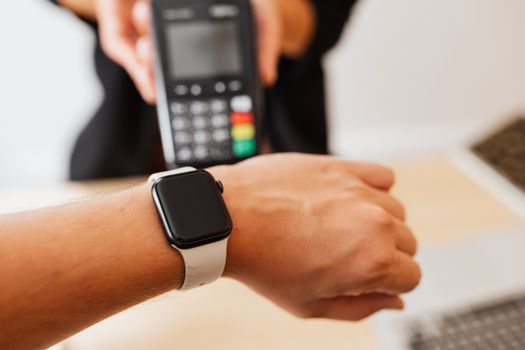
Person making a contactless payment using a smartwatch at a cashless checkout counter. Photo: www.kaboompics.com / Pexels
When it comes to selecting the absolute top smartwatches with GPS tracking, several brands consistently stand out for their accuracy, feature sets, and reliability. These devices cater to a wide range of users, from elite athletes to casual fitness enthusiasts and those prioritizing safety. **Garmin Forerunner Series (e.g., Forerunner 965, 265):** Garmin is arguably the gold standard for GPS sports watches, and their Forerunner series exemplifies this. Known for industry-leading GPS accuracy, robust multi-band GPS support (L1 and L5 frequencies), and comprehensive training metrics, these watches are a runner's dream. They offer incredibly detailed insights into performance, recovery, and training load, along with excellent battery life even with continuous GPS. The higher-end models like the 965 feature vibrant AMOLED displays, built-in mapping, music storage, and contactless payments. Their ecosystem is deep, integrating seamlessly with Garmin Connect for extensive data analysis. While primarily sport-focused, they still provide smart notifications and basic smartwatch functionality. For serious athletes, a Garmin Forerunner is often the go-to choice. **Apple Watch Ultra 2:** Apple's entry into the high-end adventure watch market, the Ultra 2, is a formidable competitor. Boasting dual-frequency GPS (L1 and L5), it offers exceptional accuracy, especially in challenging environments. The Ultra 2's immense, bright display, customizable Action Button, and extreme durability (titanium casing, 100m water resistance) make it ideal for outdoor adventures. It integrates seamlessly with the vast Apple ecosystem, offering a full suite of smart features, advanced health monitoring (ECG, SpO2, temperature sensing), and cellular connectivity options. For iPhone users who want a feature-rich smartwatch that also excels at GPS tracking for a variety of activities, the Ultra 2 is a strong contender, blending premium smart features with serious outdoor capabilities. Its battery life, while improved, still falls short of some dedicated sports watches during multi-day GPS activities. **Samsung Galaxy Watch 6 Classic:** For Android users seeking a premium smartwatch experience with solid GPS capabilities, the Galaxy Watch 6 Classic is an excellent choice. While not as specialized for hardcore endurance sports as Garmin, it offers reliable GPS tracking for everyday runs, walks, and cycling, coupled with comprehensive health monitoring including ECG, body composition analysis, and advanced sleep tracking. Its rotating bezel provides an intuitive way to navigate Wear OS, and its integration with the Samsung ecosystem and Google services (Maps, Wallet) is seamless. The Galaxy Watch 6 Classic excels as a daily driver that can handle your fitness tracking needs, providing a balanced blend of smart features and activity monitoring. Its battery life is generally a full day with typical usage and GPS workouts. **Coros Pace 3 / Vertix 2:** Coros has rapidly gained a reputation for outstanding GPS accuracy and phenomenal battery life, particularly in their Vertix series. The Pace 3 offers multi-band GPS in a more affordable and lightweight package, making it a compelling option for runners and triathletes. Coros watches are known for their intuitive interface, robust build quality, and an impressive suite of training tools. The Vertix 2, while pricier, offers unparalleled battery life (up to 140 hours in standard GPS mode) and global offline mapping, making it perfect for extreme adventurers and multi-day expeditions. Their focus is primarily on performance and outdoor exploration, making them a strong alternative to Garmin for dedicated athletes. For those who prioritize extreme battery life and precise tracking over extensive smart features, Coros is a top-tier choice. Exploring these options can help you narrow down the best wearable technology for your specific needs.

Maximizing Your GPS Smartwatch: Tips & Common Mistakes

To truly get the most out of your GPS smartwatch, understanding best practices and avoiding common pitfalls is essential. These devices are powerful tools, but their effectiveness can be significantly enhanced or hampered by how you use them. **Tips for Maximizing Performance:** * **Keep Firmware Updated:** Manufacturers frequently release software updates that improve GPS accuracy, battery life, and add new features. Regularly check for and install these updates to ensure your watch is performing optimally. * **Allow for GPS Acquisition Time:** Before starting an activity, give your watch a moment to acquire a strong GPS signal. Standing still in an open area for 30-60 seconds can dramatically improve the accuracy of your initial track. Starting too quickly can result in 'GPS drift' or an inaccurate starting point. * **Use Multi-Band/Multi-GNSS:** If your watch supports it, enable multi-band GPS (L1+L5) or multi-GNSS (GPS, GLONASS, Galileo, BeiDou). This uses more satellites and frequencies, leading to superior accuracy, especially in challenging environments like cities with tall buildings or dense tree cover. * **Calibrate Sensors:** Periodically calibrate your watch's altimeter and compass if it has these features. Accurate sensor data complements GPS by providing better elevation profiles and directional guidance. * **Manage Battery Life:** Understand your watch's various GPS modes. If you need extended battery life for a long event, use a 'UltraTrac' or low-power GPS mode that records data less frequently. For shorter, high-precision activities, use the most accurate mode. Turn off unnecessary features like continuous SpO2 tracking or always-on display when not needed. * **Protect Your Device:** Invest in a screen protector and a sturdy case, especially if you engage in demanding activities. A damaged screen or sensor can compromise the watch's functionality. **Common Mistakes to Avoid:** * **Ignoring Battery Life Warnings:** Don't start a long activity with critically low battery. GPS is a significant power drain, and your watch might die mid-activity, losing valuable data. * **Not Syncing Regularly:** Sync your watch with its companion app frequently. This not only backs up your activity data but also often updates the watch's 'EPO' (Extended Prediction Orbit) or 'GPS Assist Data,' which helps it acquire satellite signals much faster. * **Over-reliance on Auto-Pause:** While convenient, auto-pause can sometimes be inaccurate, especially in areas with poor GPS signal or during brief stops. For critical activities, manually pausing and resuming can provide a more accurate record. * **Wearing Too Loosely/Tight:** For accurate heart rate and other biometric data, ensure your watch is snug but comfortable on your wrist. A loose fit can lead to inaccurate readings. * **Forgetting Charging Cables:** Forgetting your proprietary charging cable during a trip is a common frustration. Always pack it, especially for multi-day excursions where charging opportunities might be limited. * **Ignoring Data Analysis:** The real power of a GPS smartwatch lies in the data it collects. Don't just record activities; review them. Analyze your pace, elevation, heart rate zones, and recovery metrics to inform your training and improve performance.

Comparison

FeatureGarmin Forerunner 965Apple Watch Ultra 2Coros Vertix 2
GPS AccuracyExcellent (Multi-band)Excellent (Dual-frequency)Exceptional (Dual-frequency)
Battery Life (GPS)Up to 31 hoursUp to 17 hoursUp to 140 hours
DisplayAMOLEDAlways-On Retina AMOLEDMemory-in-Pixel LCD
Smart FeaturesGood (Music, Payments)Excellent (Cellular, Apps)Basic (Notifications)
DurabilityGorilla Glass DX, Fiber-reinforced polymerSapphire, TitaniumSapphire, Titanium
Target UserSerious Runners/TriathletesiPhone Users, AdventurersExtreme Adventurers/Endurance

What Readers Say

"My Garmin Forerunner 965 has been a game-changer for my trail running. The GPS tracking is incredibly precise, even in dense forests, and the battery life is stellar for long mountain runs. It's truly one of the top smartwatches with GPS tracking for outdoor athletes."

Sarah J. · Boulder, CO

"The Apple Watch Ultra 2 is everything I wanted. I can leave my phone behind for my bike rides and still have accurate GPS, cellular, and all my smart features. It's rugged and reliable, making it perfect for my active lifestyle."

Mark D. · Austin, TX

"After struggling with GPS dropouts on other watches, my Coros Pace 3 has been a revelation. Every single run's map is perfectly accurate, and the battery lasts forever. It helped me shave minutes off my marathon time with its reliable data."

Emily R. · Seattle, WA

"My Samsung Galaxy Watch 6 Classic offers a great balance. The GPS is solid for my daily walks and occasional jogs, and I love the integrated smart features like Google Pay. It's not a hardcore sports watch, but for everyday use and fitness, it's fantastic."

David K. · Miami, FL

"As a hiker and backpacker, the Coros Vertix 2's insane battery life and offline maps have been invaluable. I've tracked multi-day trips without needing to charge, and the GPS never failed me. It's built like a tank and a must-have for serious outdoor adventures."

Jessica L. · Portland, OR

Frequently Asked Questions

What is the most accurate GPS smartwatch?

The most accurate GPS smartwatches typically feature multi-band (L1+L5) or dual-frequency GPS, which allows them to receive signals from multiple satellite constellations simultaneously. Devices like the Garmin Forerunner 965, Apple Watch Ultra 2, and Coros Vertix 2 are known for their exceptional accuracy, especially in challenging environments like urban canyons or dense forests.

Do I need my phone for GPS tracking on a smartwatch?

No, not if your smartwatch has integrated GPS. Smartwatches with built-in GPS can track your location, distance, and pace independently, allowing you to leave your phone at home during activities. Smartwatches that lack integrated GPS will rely on your phone's GPS for tracking.

How do I extend the battery life of my GPS smartwatch?

To extend battery life, you can enable lower-power GPS modes (if available), reduce the frequency of GPS tracking, turn off unnecessary sensors (like continuous SpO2), dim the screen, disable always-on display, and limit smart notifications. Keeping your watch's firmware updated also helps optimize power consumption.

Are GPS smartwatches worth the investment?

For active individuals, athletes, or anyone prioritizing personal safety and detailed activity tracking, GPS smartwatches are absolutely worth the investment. They provide precise data for training analysis, offer navigation and safety features, and can motivate a healthier lifestyle. The value depends on your specific needs and how much you utilize their advanced functionalities.

How do GPS smartwatches compare to fitness trackers?

GPS smartwatches offer a significantly more robust feature set than basic fitness trackers. While both track activity, smartwatches provide integrated GPS for standalone tracking, more advanced health metrics, larger displays for notifications and apps, and often cellular connectivity. Fitness trackers are generally simpler, smaller, and less expensive, focusing primarily on basic step and sleep tracking.

Who should consider buying a GPS smartwatch?

Anyone engaged in outdoor activities like running, cycling, hiking, or swimming will benefit immensely from a GPS smartwatch. They are also ideal for individuals focused on detailed fitness tracking, performance improvement, or those who want enhanced safety features like emergency SOS without carrying a phone.

Can GPS smartwatches be used for navigation in remote areas?

Yes, many high-end GPS smartwatches are excellent for navigation in remote areas. Look for models with pre-loaded topographic maps, turn-by-turn navigation, and 'back to start' features. Devices like the Coros Vertix 2 or Garmin Fenix series are specifically designed for robust outdoor navigation and exploration.

What are the future trends for GPS smartwatches?

Future trends include even greater GPS accuracy through advanced chipsets and satellite systems, longer battery life, more sophisticated health sensors (e.g., non-invasive glucose monitoring), enhanced AI-driven coaching and recovery insights, and seamless integration with augmented reality for navigation and training overlays.

Choosing the right GPS smartwatch can elevate your fitness journey, enhance your outdoor adventures, and provide peace of mind through advanced safety features. With the detailed insights provided on these top smartwatches with GPS tracking, you're now equipped to make an informed decision that perfectly aligns with your lifestyle and goals. Embrace the freedom and precision that a high-quality GPS smartwatch offers.

Topics: top smartwatches with gps trackingbest GPS watchesfitness smartwatchesGPS for runningwearable tech navigation
Leo List
Brampton weed
Adultwork EstrelaBet Vai de Bet R7 Bet Betão Galera Bet Rainbet Bet9ja Shop SportyBet BetKing Sisal Loto Foot Hollywoodbets YesPlay Odibets RushBet Jugabet BetWarrior BetCity MSport betPawa Fortebet