Master Your Home Clean: The Ultimate Robot Vacuum Cleaner with Mapping Guide
Unlock the secrets to effortless cleaning with advanced robot vacuum technology, mapping your way to a pristine home.
Explore Smart CleaningKey Takeaways
- ✓ Mapping technology significantly improves cleaning efficiency and coverage.
- ✓ Lidar and vSLAM are primary mapping technologies used.
- ✓ Users can define no-go zones and specific cleaning areas.
- ✓ Advanced models integrate with smart home ecosystems.
How It Works
Upon its first run, the robot uses sensors (Lidar, camera, or both) to navigate and create a detailed, digital blueprint of your home's layout. This map identifies walls, furniture, and obstacles.
With the map established, the robot plans an optimal, systematic cleaning path, avoiding random bouncing. This ensures comprehensive coverage and prevents redundant cleaning of already spotless areas.
The generated map is accessible through a smartphone app, allowing users to define virtual boundaries, no-go zones, and specific areas for targeted cleaning. You gain precise control over where and when your robot cleans.
As the robot cleans, it continuously updates its map to account for new obstacles or changes in furniture placement. This adaptive intelligence ensures efficient cleaning even in dynamic home environments.
The Evolution of Smart Cleaning: Why Mapping Matters
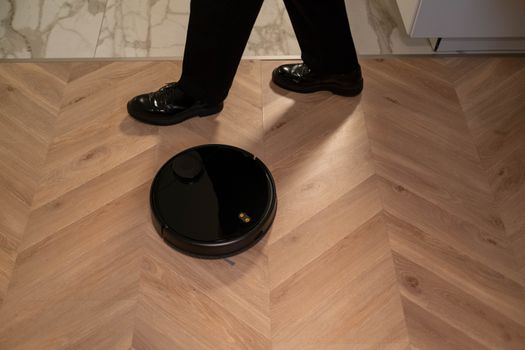 Photo: cottonbro studio / Pexels
The introduction of mapping capabilities changed everything. Imagine giving your cleaning device a blueprint of your home before it even starts. That's essentially what mapping technology provides. By creating a digital representation of your living space, these advanced robots can systematically navigate, plan efficient cleaning routes, and ensure comprehensive coverage. This isn't just about avoiding obstacles; it's about understanding the entire environment. Mapping allows the robot to know where it has been, where it needs to go, and the most efficient way to get there. This intelligence drastically reduces cleaning time, conserves battery life, and most importantly, delivers a consistently cleaner home.
The primary mapping technologies employed by modern robot vacuums are Lidar (Light Detection and Ranging) and vSLAM (visual Simultaneous Localization and Mapping). Lidar-based systems use a spinning laser to emit light and measure the time it takes for the light to return after hitting an object. This creates a highly accurate, 360-degree view of the room, even in complete darkness. VSLAM, on the other hand, utilizes cameras to capture visual data and identify distinguishing features in the environment, creating a map based on these visual landmarks. Some premium models even combine both technologies for enhanced accuracy and reliability.
The benefits extend beyond just efficient navigation. A detailed map, accessible via a smartphone app, empowers users with unprecedented control. You can define virtual no-go zones, preventing the robot from entering specific areas like a child's playpen or a pet's feeding station. Conversely, you can designate specific rooms or zones for targeted cleaning, sending the robot to tackle a spill in the kitchen without cleaning the entire house. This level of customization ensures that the robot cleans exactly where and when you need it to, adapting seamlessly to your lifestyle. Furthermore, with the map, you can often track the robot's progress in real-time, see where it has cleaned, and even receive reports on its cleaning sessions. This transparency adds another layer of convenience and peace of mind, making the smart home experience truly integrated and effortless. The shift from random cleaning to intelligent, mapped navigation is arguably the single most important advancement in robot vacuum technology, transforming them from mere gadgets into indispensable smart home appliances.
Deep Dive into Mapping Technologies: Lidar vs. vSLAM
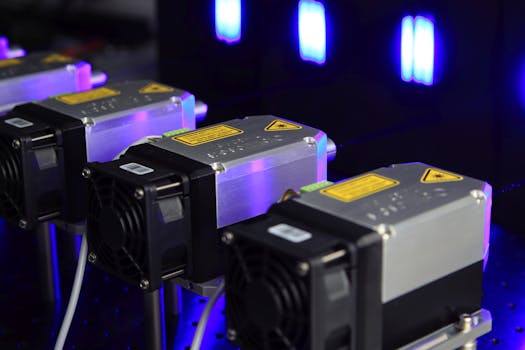 Photo: Opt Lasers from Poland / Pexels
Lidar, or Light Detection and Ranging, is often considered the gold standard for robot vacuum navigation. It works by emitting pulsed laser beams and measuring the time it takes for these beams to return after reflecting off objects. By calculating these time differences, the robot can determine distances to surrounding surfaces with remarkable precision, constructing a detailed 3D point cloud that translates into a highly accurate 2D map. The primary advantage of Lidar is its independence from ambient light. It can map and navigate flawlessly in complete darkness, under furniture, or in dimly lit rooms, making it incredibly reliable regardless of the time of day or lighting conditions. Lidar maps are typically very stable and consistent, allowing for precise room recognition, effective boundary setting, and multi-floor mapping capabilities. The downside, if any, is that the rotating turret housing the Lidar sensor can make some robots slightly taller, potentially preventing them from cleaning under very low furniture.
VSLAM, or Visual Simultaneous Localization and Mapping, utilizes one or more cameras to capture images of the environment. It then processes these images to identify unique visual features, such as corners, patterns, and textures. By tracking how these features move and change as the robot navigates, vSLAM can simultaneously build a map of the environment and determine its own position within that map. VSLAM-based robots are often sleeker and shorter because they don't require a protruding Lidar turret. They excel at recognizing specific objects and can sometimes offer more advanced object avoidance features by visually identifying items like cables or pet waste. However, vSLAM's performance is heavily dependent on lighting conditions. It struggles in very dark rooms or areas with uniform, featureless surfaces (like a large, plain white wall). Glare from direct sunlight or reflections can also confuse the system, potentially leading to navigation errors or incomplete mapping.
Some high-end robot vacuums integrate both Lidar and vSLAM technologies, leveraging the strengths of each to overcome their individual limitations. This hybrid approach allows for highly accurate mapping in all lighting conditions while also enhancing object recognition and avoidance. For example, Lidar might provide the foundational map, while vSLAM adds a layer of visual intelligence for identifying smaller obstacles or differentiating between types of flooring. When selecting your robot, consider your home's layout, lighting, and specific needs. If you have a complex layout, dark rooms, or need multi-floor mapping, Lidar or a hybrid system might be preferable. If aesthetics and cleaning under very low furniture are paramount, and your home is generally well-lit, a robust vSLAM system could be an excellent choice. Ultimately, both technologies offer a significant upgrade over non-mapping robot vacuums, delivering a smarter, more efficient cleaning experience.
Unlocking Advanced Features: Personalizing Your Clean
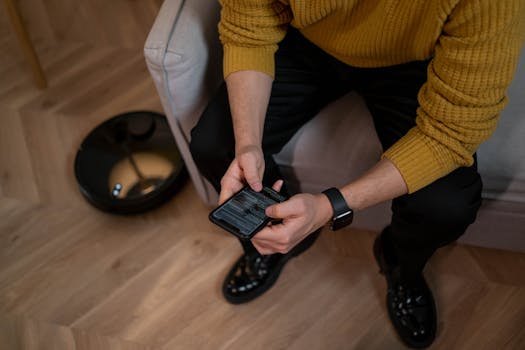 Photo: cottonbro studio / Pexels
One of the most impactful features enabled by mapping is the ability to set **virtual no-go zones and invisible walls**. Through the companion smartphone app, you can precisely draw lines or areas on your home's map that the robot will strictly avoid. This is incredibly useful for protecting delicate items, preventing the robot from getting stuck in cluttered areas, or keeping it out of specific rooms like a home office during a video call. No more physical barriers or closing doors; just a few taps on your phone. Similarly, you can define **clean zones or spot cleaning areas**. Have a high-traffic area in the living room that needs more frequent attention, or a sudden spill in the kitchen? You can simply select that specific zone on the map and send the robot directly there for a targeted clean, saving time and battery life compared to cleaning the entire floor.
**Multi-floor mapping** is another game-changer for homes with more than one level. Instead of having to remap every time you move the robot to a different floor, advanced models can store multiple maps. This means you can simply pick up the robot, place it on a new floor, and it will automatically recognize its location and use the corresponding map, complete with all your pre-defined zones and boundaries. This feature significantly enhances convenience for multi-story homes.
Furthermore, mapping allows for **scheduled cleaning specific to rooms or zones**. You can program your robot to clean the kitchen every morning after breakfast, the living room three times a week, and the bedrooms on weekends. This level of granularity ensures that different areas of your home receive the appropriate cleaning frequency based on their usage, all without manual intervention. Some robots even offer **customizable cleaning modes per room**, allowing you to set higher suction power for carpeted bedrooms and a quieter mode for the kitchen while you're still awake.
Integration with **smart home ecosystems** like Amazon Alexa and Google Assistant is also greatly enhanced by mapping. With a mapped home, you can issue voice commands like, "Alexa, tell the robot to clean the kitchen," or "Hey Google, send the vacuum to the living room." This hands-free control adds another layer of convenience, making the robot a seamless part of your connected home. The data gathered from mapping can also inform other smart home devices, creating a more cohesive automated environment. For instance, some advanced systems can even detect when you're away from home and initiate a cleaning cycle automatically. These sophisticated features, all underpinned by robust mapping technology, truly elevate the robot vacuum from a mere gadget to an intelligent, indispensable helper that adapts to your unique living space and cleaning preferences.
Choosing Your Perfect Robot Vacuum Cleaner with Mapping: Tips & Common Mistakes
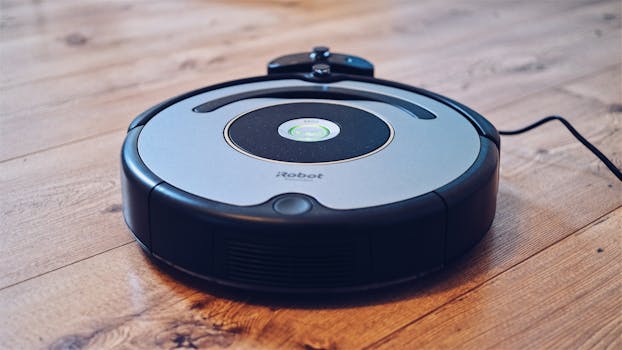 Photo: Jens Mahnke / Pexels
Tips for Choosing:
- Assess Your Home Layout: For complex layouts, multiple rooms, or multi-story homes, Lidar-based or hybrid mapping systems are generally superior for accuracy and multi-floor support. For smaller, open-plan homes with consistent lighting, a robust vSLAM model might suffice.
- Consider Floor Types: If you have a mix of carpets and hard floors, look for models with automatic carpet boost and strong suction. If you have pets, ensure it has tangle-free brushes and good hair-handling capabilities.
- App Features: A good app is critical. Look for features like custom no-go zones, clean zones, multi-floor mapping, cleaning history, and scheduling options. Intuitive interface is key.
- Battery Life & Recharge/Resume: For larger homes, a longer battery life is essential. Ensure the robot can automatically return to its base to recharge and then resume cleaning exactly where it left off.
- Maintenance & Consumables: Factor in the cost and availability of replacement brushes, filters, and dust bags (especially for self-emptying models).
- Smart Home Integration: If you have a smart home ecosystem, check for compatibility with Alexa, Google Assistant, or other platforms for voice control and automation.
- Budget: Mapping robots span a wide price range. Define your budget and prioritize features that are most important to you within that range.
Common Mistakes to Avoid:
- Underestimating Mapping Importance: Don't compromise on mapping. Random navigation robots are significantly less efficient and effective than mapping ones.
- Ignoring App Functionality: A powerful robot is only as good as its control interface. A clunky or limited app can severely diminish the user experience.
- Overlooking Obstacle Avoidance: While mapping helps navigation, good object avoidance (especially for pet waste or cables) prevents headaches. Read reviews specifically on this.
- Not Checking Dustbin Size: For larger homes or pet owners, a small dustbin means more frequent emptying. Self-emptying docks can mitigate this but add to the cost.
- Forgetting About Noise Levels: Some robots can be quite loud, especially on maximum suction. Check decibel ratings if noise is a concern.
- Skipping Initial Setup: Take the time to properly prepare your home for the first mapping run (clear clutter, open doors). This ensures an accurate initial map.
- Not Updating Firmware: Manufacturers frequently release firmware updates that improve navigation, add features, and fix bugs. Keep your robot's software up to date.
Comparison
| Feature | Premium Mapping Robot | Mid-Range Mapping Robot | Basic Robot (No Map) |
|---|---|---|---|
| Mapping Technology | Lidar & VSLAM (Hybrid) | Lidar or Advanced VSLAM | Random/Bumper Sensor |
| Navigation Efficiency | Optimal, Systematic Paths | Systematic, Good Coverage | Haphazard, Inconsistent |
| App Control Features | No-go Zones, Multi-floor, Room-specific Cleaning | No-go Zones, Spot Cleaning | Basic Start/Stop/Schedule |
| Object Avoidance | Advanced AI (Pet waste, cables) | Good (Larger objects) | Basic (Bumps into objects) |
| Self-Emptying Dock | ✓ | ✗ (Optional on some) | ✗ |
| Price Range | High | Medium | Low |
What Readers Say
"My new robot vacuum cleaner with mapping is a game-changer! I love being able to set no-go zones around my dog's water bowl and target specific rooms for cleaning. The app is so intuitive."
Sarah J. · Austin, TX"The Lidar mapping on this vacuum is incredibly accurate. It never misses a spot and navigates my complex layout flawlessly, even under dim lighting. Best tech purchase this year."
Mark D. · Seattle, WA"With two kids and a dog, our floors were constantly dirty. This robot vacuum cleaner with mapping keeps our home consistently clean, saving me hours each week. It's truly life-changing!"
Emily R. · Denver, CO"The mapping works great for my single-story apartment. Sometimes it struggles with very dark corners, but overall, the ability to specify cleaning areas is a huge convenience."
David L. · Boston, MA"Moving to a multi-story house, I needed a vacuum that could handle different levels. This robot's multi-floor mapping feature is fantastic; I just move it and it knows exactly where it is."
Jessica M. · Phoenix, AZFrequently Asked Questions
What is the primary benefit of a robot vacuum cleaner with mapping?
The primary benefit is significantly improved cleaning efficiency and coverage. Mapping allows the robot to create a digital blueprint of your home, enabling systematic navigation, avoiding missed spots, and allowing for customizable cleaning zones and no-go areas, resulting in a more thorough and intelligent clean.
Will a robot vacuum with mapping get stuck as often as older models?
No, robot vacuums with mapping are designed to get stuck far less often. Their ability to 'see' and understand the environment allows them to plan optimal routes, identify potential obstacles in advance, and navigate around them more intelligently than older, non-mapping models that rely on random bumping.
How do I set up no-go zones on my robot vacuum with mapping?
Setting up no-go zones is typically done through the robot's companion smartphone app. Once the robot has created a map of your home, you can open the app, select the map, and then draw virtual lines or exclusion zones directly on the map where you don't want the robot to clean. These settings are then saved and applied to future cleaning cycles.
Are robot vacuums with mapping worth the higher cost?
For most users, yes, the higher cost is justified. The enhanced efficiency, comprehensive coverage, customizable cleaning options (like virtual walls and zone cleaning), and overall convenience offered by mapping technology provide a significantly superior cleaning experience compared to basic, non-mapping robots, saving time and frustration in the long run.
How does a robot vacuum cleaner with mapping compare to a traditional upright vacuum?
A robot vacuum with mapping offers daily, autonomous cleaning that a traditional upright cannot. While an upright provides deeper, more powerful cleaning for specific tasks, the robot maintains cleanliness consistently without manual effort. They complement each other, with the robot handling daily upkeep and the upright for deeper, occasional cleans.
Who should consider buying a robot vacuum cleaner with mapping?
Anyone seeking a more convenient, efficient, and hands-free approach to daily floor cleaning should consider one. This includes busy professionals, pet owners, individuals with multi-room or multi-story homes, and those who appreciate smart home technology and personalized control over their cleaning routines.
Is the mapping data from my robot vacuum secure?
Reputable brands prioritize data security, encrypting mapping data and storing it securely. Always choose well-known manufacturers and review their privacy policies regarding data collection and usage. Most mapping data is used internally to improve robot performance and is not shared without explicit user consent.
What are the future trends for robot vacuum mapping technology?
Future trends include even more advanced AI for object recognition and avoidance (e.g., identifying specific items like socks or pet waste), deeper integration with smart home systems for predictive cleaning based on user presence, and enhanced multi-robot coordination for larger homes or commercial spaces, creating a truly autonomous cleaning ecosystem.
Embrace the future of home cleaning by investing in a robot vacuum cleaner with mapping. Experience unparalleled efficiency, smart navigation, and personalized control over your spotless home, giving you back valuable time and peace of mind. Upgrade your clean today!