✓ 5G offers speeds up to 100 times faster than 4G, with theoretical peaks of 10 Gbps.
✓ Latency with 5G can be as low as 1 millisecond, crucial for real-time applications.
✓ 5G enables massive connectivity, supporting up to one million devices per square kilometer.
✓ Enhanced Mobile Broadband (eMBB), Ultra-Reliable Low Latency Communications (URLLC), and Massive Machine Type Communications (mMTC) are 5G's three main service categories.
How It Works
1
Millimeter Wave (mmWave) Frequencies
5G utilizes higher frequency bands (mmWave) for significantly faster speeds and greater bandwidth. These short-range signals require more base stations but deliver unparalleled performance.
2
Massive MIMO Technology
Massive Multiple-Input, Multiple-Output (MIMO) employs many more antennas on base stations than 4G. This allows for simultaneous communication with multiple users, improving efficiency and capacity.
3
Beamforming Techniques
Beamforming directs radio signals precisely towards individual devices, rather than broadcasting them broadly. This enhances signal strength, reduces interference, and extends coverage efficiency.
4
Network Slicing
Network slicing allows mobile operators to create multiple virtual networks atop a single physical 5G infrastructure. Each 'slice' can be optimized for specific applications, like IoT or mission-critical services, ensuring tailored performance.
Unleashing Unprecedented Speed and Low Latency with 5G
Photo: Brett Sayles / Pexels
The advent of 5G marks a pivotal moment in the evolution of mobile technology, primarily driven by its capacity to deliver unprecedented speeds and significantly lower latency. Unlike its predecessors, 5G isn't just an incremental upgrade; it's a foundational shift that redefines what's possible in mobile communication. With theoretical peak speeds reaching up to 10 gigabits per second (Gbps), 5G is poised to make buffering a relic of the past, even for the most demanding applications. To put this into perspective, downloading a full-length high-definition movie that might take several minutes on a 4G network could be completed in mere seconds with 5G. This dramatic increase in data throughput will fundamentally alter how we consume content, interact with cloud services, and utilize bandwidth-intensive applications on our mobile devices. Imagine streaming 8K video seamlessly, engaging in cloud gaming with zero lag, or instantly backing up massive files to remote servers – these are not distant dreams but immediate realities enabled by 5G.
Beyond raw speed, 5G's ultra-low latency is equally, if not more, transformative. Latency, the delay between sending and receiving information, is drastically reduced to as little as 1 millisecond (ms) in optimal 5G conditions. This is a game-changer for applications requiring instantaneous feedback and real-time control. Consider augmented reality (AR) and virtual reality (VR) experiences: the current latency on 4G can often lead to motion sickness or a disjointed user experience. With 5G's near-instantaneous response, AR/VR applications can become truly immersive, responsive, and indistinguishable from reality, opening up new frontiers in entertainment, education, and professional training. Similarly, for critical applications like remote surgery, autonomous vehicles, or industrial automation, where every millisecond counts, 5G provides the crucial responsiveness needed to ensure safety, precision, and reliability. This combination of high speed and low latency isn't just about faster downloads; it's about enabling entirely new paradigms of interaction and functionality for mobile users, creating a more responsive, efficient, and interconnected digital world. The underlying 5G infrastructure is designed to support these advancements, paving the way for a truly transformative mobile experience.
Transforming Industries and Enabling the IoT Ecosystem
Photo: Erik Mclean / Pexels
The impact of 5G on mobile technology extends far beyond individual user experience; it is poised to revolutionize entire industries and serve as the backbone for the burgeoning Internet of Things (IoT) ecosystem. With its capacity for massive machine-type communications (mMTC), 5G can simultaneously support up to one million connected devices per square kilometer, a monumental leap from 4G's capabilities. This immense density support is critical for the widespread deployment of IoT devices, from smart city sensors and connected agricultural equipment to industrial automation and smart home appliances. Imagine a city where every streetlight, traffic signal, and public transport vehicle is constantly communicating real-time data, optimizing traffic flow, conserving energy, and enhancing public safety. Or a factory floor where thousands of sensors monitor machinery health, predict maintenance needs, and adjust production lines autonomously, all communicating wirelessly and reliably over a 5G network.
In manufacturing, 5G enables the concept of Industry 4.0, facilitating truly smart factories where robots, machines, and systems communicate in real-time with ultra-low latency. This allows for flexible production lines, predictive maintenance, and enhanced worker safety through AR/VR applications. For healthcare, 5G opens doors for remote patient monitoring with high-fidelity data transmission, tele-surgery with real-time haptic feedback, and efficient management of hospital equipment. Agriculture can benefit from precision farming, where drones and sensors powered by 5G monitor crop health, soil conditions, and livestock, optimizing resource use and increasing yields. The logistics and transportation sectors will see innovations like autonomous vehicles communicating with each other and roadside infrastructure, intelligent traffic management systems, and highly efficient supply chain tracking. These transformative applications are not merely about connecting more devices; they are about generating vast amounts of data, enabling artificial intelligence and machine learning to derive actionable insights, and creating efficiencies that were previously unattainable. 5G is the essential conduit for this interconnected future, providing the reliable, high-bandwidth, and low-latency network foundation required for these complex and data-intensive operations to flourish and redefine societal and industrial landscapes.
Redefining Mobile Experiences: AR, VR, and Cloud Gaming
Photo: Tima Miroshnichenko / Pexels
The profound impact of 5G on mobile technology is perhaps most vividly experienced in the realm of immersive technologies and entertainment, particularly augmented reality (AR), virtual reality (VR), and cloud gaming. These applications, which demand enormous bandwidth, ultra-low latency, and robust connectivity, have long been constrained by the limitations of previous mobile networks. 5G shatters these barriers, ushering in a new era of mobile immersion that was once confined to high-end PCs or dedicated consoles.
For AR and VR, 5G's combination of high speed and minimal latency is revolutionary. Current mobile AR/VR experiences can suffer from noticeable lag, pixelation, and a lack of real-time responsiveness, breaking the sense of immersion. With 5G, the processing burden for complex AR/VR environments can be offloaded to powerful cloud servers, with the rendered data streamed back to the mobile device almost instantaneously. This 'edge computing' capability, facilitated by 5G, means mobile AR glasses or VR headsets can be lighter, more comfortable, and less battery-intensive, as they no longer need to house powerful local processors. Imagine walking down a street with AR glasses overlaying real-time navigation, historical facts about buildings, or interactive advertisements directly into your field of vision, all without any perceptible delay. Or participating in a fully immersive VR meeting with colleagues from across the globe, feeling truly present in a shared virtual space. The applications extend from interactive education and training simulations to dynamic retail experiences and advanced design visualization. Mobile computing is evolving rapidly to meet these demands.
Cloud gaming is another sector poised for massive growth thanks to 5G. The promise of playing console-quality games on any mobile device, without the need for expensive hardware or lengthy downloads, has been tantalizing but often hampered by network performance. 5G’s high bandwidth ensures that game streams are delivered in pristine quality, even at 4K resolution, while its ultra-low latency eliminates the frustrating input lag that plagues cloud gaming over slower connections. Players can execute commands and see the results on-screen with virtually no delay, making competitive online gaming viable on mobile for the first time. This democratizes access to high-fidelity gaming, allowing users to seamlessly switch between devices – from a smartphone on the go to a tablet at home – and pick up their game exactly where they left off, all without compromise. The convergence of 5G, edge computing, and these immersive technologies is not just enhancing existing mobile experiences; it's creating entirely new ones, blurring the lines between the physical and digital worlds and making our mobile devices more powerful gateways to interactive content than ever before.
Challenges and Future Outlook of 5G Adoption
Photo: Ulrick Trappschuh / Pexels
While the transformative impact of 5G on mobile technology is undeniable, its widespread adoption and full potential are not without significant challenges. One of the primary hurdles is the extensive infrastructure required for comprehensive 5G coverage, particularly for millimeter-wave (mmWave) deployments. These high-frequency signals offer incredible speeds but have a shorter range and are easily obstructed by buildings, trees, and even rain. This necessitates a much denser network of small cells and base stations compared to 4G, representing a massive investment in urban and suburban areas. Rural areas, where population density is low, pose an even greater challenge for cost-effective 5G deployment, leading to concerns about a potential 'digital divide' if access isn't equitable.
Another challenge lies in cybersecurity. With more devices connected and vast amounts of data flowing through 5G networks, the attack surface for cyber threats expands exponentially. Securing this complex ecosystem, from the core network to individual IoT devices, requires robust new security protocols and constant vigilance. Privacy concerns also arise with the increased collection and analysis of data from connected devices. Furthermore, the global supply chain for 5G equipment has faced political and economic tensions, impacting deployment timelines and costs. From a consumer perspective, the availability and affordability of 5G-enabled devices and data plans are crucial for mass adoption. While many flagship smartphones now support 5G, older devices will need to be upgraded, and data plans must remain competitive to encourage migration.
Looking ahead, the future of 5G is incredibly promising despite these obstacles. Continued innovation in antenna technology, network slicing, and edge computing will further optimize 5G performance and expand its capabilities. We can expect to see the full realization of services like widespread autonomous driving, advanced telemedicine, and truly smart cities as the infrastructure matures. The integration of AI and machine learning will make 5G networks more intelligent and self-optimizing, capable of dynamically allocating resources based on demand. Furthermore, research into 6G is already underway, promising even higher speeds, lower latency, and potentially new forms of communication, such as holographic calls. The current phase of 5G deployment is just the beginning; its evolution will continue to redefine mobile technology, connecting us in ways we are only just beginning to imagine, and profoundly shaping our digital future for decades to come.
Comparison
Feature
5G
4G LTE
3G
Peak Speed (Theoretical)
10 Gbps
100 Mbps - 1 Gbps
1-10 Mbps
Latency
1-5 ms
50-100 ms
100-500 ms
Connected Devices/km²
1,000,000+
100,000
10,000
Key Applications
AR/VR, IoT, Autonomous Vehicles
Video Streaming, Mobile Browsing
Basic Internet, Voice Calls
Network Architecture
Small Cells, mmWave, Massive MIMO
Macro Cells, LTE-Advanced
Macro Cells, HSPA
What Readers Say
★★★★★
"The impact of 5G on my mobile technology is night and day. My downloads are instant, and I can game on the go without any lag whatsoever. It's truly a game-changer for my productivity and entertainment."
Sarah J. · Austin, TX
★★★★★
"As a developer, the low latency of 5G has opened up new possibilities for AR applications. Testing my projects on a 5G device is incredibly smooth and responsive, which was impossible before."
Michael R. · Seattle, WA
★★★★★
"I used to dread public Wi-Fi, but with 5G, my phone is faster than most hotspots. I can stream 4K content effortlessly and conduct video calls with perfect clarity, even in crowded areas."
Emily P. · Miami, FL
★★★★★
"While the speeds are incredible, I've noticed 5G coverage can still be a bit spotty in certain indoor locations. However, when I have a strong signal, the difference from 4G is phenomenal, especially for large file transfers."
David L. · Denver, CO
★★★★★
"For my small business, the impact of 5G on mobile technology means I can run my entire operation from my tablet. Cloud access is instant, and I can process orders and communicate with my team seamlessly from anywhere."
Jessica T. · Chicago, IL
Frequently Asked Questions
What is the biggest impact of 5G on mobile technology for everyday users?
For everyday users, the biggest impact is significantly faster download and upload speeds, leading to instant streaming, quicker app downloads, and smoother video calls. The reduced latency also enhances experiences in mobile gaming and augmented reality applications, making them far more responsive and immersive than ever before.
Is 5G safe for my health?
Leading scientific organizations and regulatory bodies, including the World Health Organization (WHO) and the FCC, state that there is no conclusive evidence of health risks from 5G technology when operating within established safety guidelines. 5G, like previous generations, uses non-ionizing radiation, which is different from X-rays and does not damage DNA.
How do I get 5G on my mobile device?
To get 5G, you need three things: a 5G-compatible smartphone, a 5G-enabled plan from your mobile carrier, and to be in an area with 5G network coverage. Most new flagship phones released in the last few years support 5G, and carriers are rapidly expanding their networks.
Is 5G going to be more expensive than 4G?
Initially, 5G plans and devices might have been slightly more expensive. However, as 5G adoption increases and competition grows, the cost difference between 4G and 5G plans is diminishing. Many carriers now offer 5G access as a standard feature on most unlimited data plans, making it more accessible.
How does 5G compare to Wi-Fi 6?
Both 5G and Wi-Fi 6 offer significant speed and efficiency improvements. 5G is primarily designed for wide-area mobile connectivity provided by cellular carriers, offering seamless mobility. Wi-Fi 6 is for local area networks, typically in homes or offices, offering high speeds within a limited range. They are complementary technologies, with Wi-Fi 6 often acting as an extension of 5G indoors.
Who benefits most from the impact of 5G on mobile technology?
Beyond general consumers, industries like manufacturing (Industry 4.0), healthcare (telemedicine, remote surgery), transportation (autonomous vehicles), and entertainment (AR/VR, cloud gaming) stand to benefit immensely. Anyone requiring high bandwidth, ultra-low latency, and massive device connectivity will see the most transformative advantages.
What are the environmental concerns associated with 5G deployment?
Environmental concerns primarily revolve around energy consumption due to the increased number of base stations and edge computing facilities. However, 5G networks are also designed to be more energy-efficient per bit of data transferred than 4G. The industry is actively working on greener solutions and optimizing network operations to mitigate environmental impact.
What is the future trend for 5G and mobile technology?
The future trend for 5G and mobile technology involves deeper integration with AI and edge computing, leading to even more intelligent and responsive networks. We can expect enhanced immersive experiences, wider adoption of IoT, and the development of new applications in areas like haptic communication and truly ubiquitous connectivity, paving the way for 6G.
The impact of 5G on mobile technology is not just about faster speeds; it's a paradigm shift that redefines connectivity and innovation. Embrace the future of mobile and unlock new possibilities for personal and professional life. Explore 5G today and experience the next generation of digital transformation.

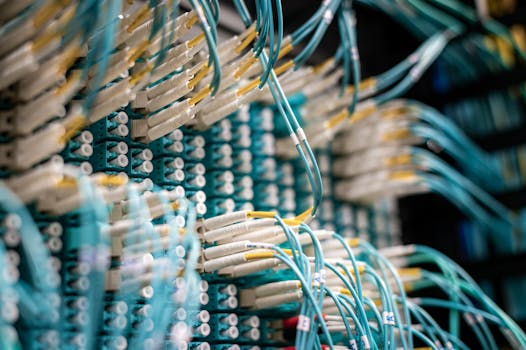 Photo: Brett Sayles / Pexels
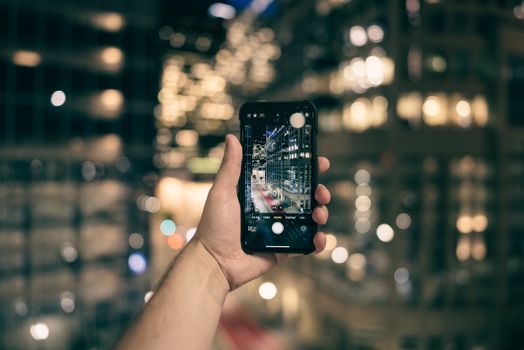 Photo: Erik Mclean / Pexels
 Photo: Tima Miroshnichenko / Pexels
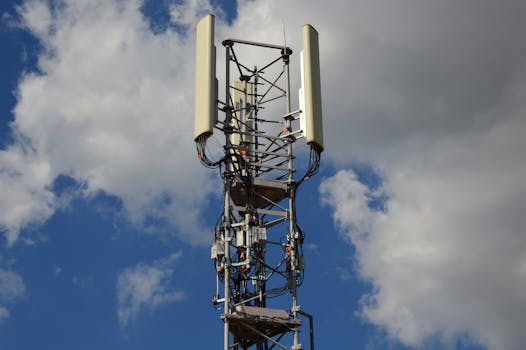 Photo: Ulrick Trappschuh / Pexels