How to Choose a Gaming Laptop: Your Ultimate Buying Guide
Navigate the complex world of gaming laptops to find the perfect machine for your epic adventures and competitive edge.
Find Your Perfect Gaming LaptopKey Takeaways
- ✓ GPU is the single most important component for gaming performance.
- ✓ Screen refresh rate significantly impacts gameplay fluidity.
- ✓ SSD storage is crucial for fast game loading times.
- ✓ Thermal management dictates sustained performance and longevity.
How It Works
Before diving into specs, understand what games you'll play and how much you're willing to spend. This sets a realistic foundation for your search.
Focus on the graphics card first, then the processor, and finally sufficient RAM. These three dictate the core gaming experience and performance.
Consider screen size, resolution, and refresh rate for visual immersion. Choose fast SSD storage for quick boot times and game loads, complementing your core components.
Don't overlook cooling efficiency, a comfortable keyboard for long sessions, and the laptop's overall build quality and weight for your lifestyle needs.
Understanding Core Components: GPU, CPU, and RAM for Optimal Performance
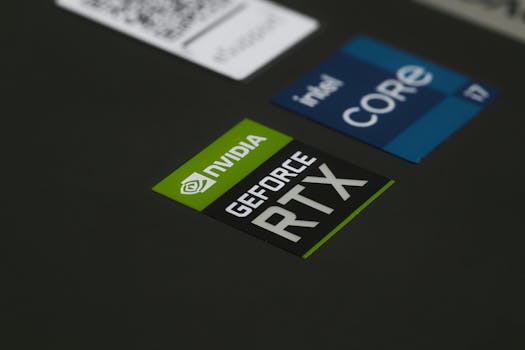 Photo: Ruben Boekeloo / Pexels
Display, Storage, and Cooling: Enhancing Your Gaming Experience
Keyboard, Portability, and Build Quality: Beyond Raw Power
Common Mistakes to Avoid When Buying a Gaming Laptop
Comparison
| Feature | High-End (Enthusiast) | Mid-Range (Performance) | Budget (Entry-Level) |
|---|---|---|---|
| GPU | RTX 4080/4090 or RX 7900M | RTX 4060/4070 or RX 6700M/6800M | RTX 3050/4050 or RX 6600M |
| CPU | Intel i9 (13th Gen+) or Ryzen 9 (7000 Series+) | Intel i7 (12th Gen+) or Ryzen 7 (6000 Series+) | Intel i5 (12th Gen+) or Ryzen 5 (6000 Series+) |
| RAM | 32GB DDR5 | 16GB DDR4/DDR5 | 8-16GB DDR4 |
| Storage | 1TB+ NVMe PCIe Gen4 SSD | 512GB-1TB NVMe PCIe Gen3/4 SSD | 256GB-512GB NVMe PCIe Gen3 SSD |
| Display | 1440p/4K 120Hz+ (G-Sync) | 1080p/1440p 144Hz-240Hz | 1080p 60Hz-120Hz |
| Cooling | Advanced w/ Vapor Chamber | Robust dual-fan system | Standard dual-fan system |
| Price Range | $2000+ | $1200 - $2000 | $800 - $1200 |
What Readers Say
"This guide truly simplified how to choose a gaming laptop for me. I finally understood the difference between GPU TGP and model numbers, which helped me avoid a costly mistake and get a laptop that performs exactly as I needed."
Alex R. · Austin, TX"Before reading this, I was overwhelmed by the specs. The breakdown of CPU vs. GPU importance was a game-changer. I ended up with a fantastic mid-range laptop that handles all my favorite titles flawlessly."
Samantha P. · Orlando, FL"I followed the advice on prioritizing a high refresh rate display and it made a huge difference in my competitive gaming. My K/D ratio has actually improved thanks to the smoother visuals. Highly recommend this comprehensive guide!"
Marcus L. · Seattle, WA"The guide was incredibly thorough, especially on cooling and storage. While I still found the sheer number of options daunting, the framework provided here gave me a solid starting point to narrow down my choices. A very helpful resource."
Jessica M. · Denver, CO"As someone who travels for work but loves gaming, the portability section was key. I found a great balance between performance and weight, allowing me to game on the go without breaking my back. Excellent advice on how to choose a gaming laptop."
Kevin S. · Boston, MAFrequently Asked Questions
What is the most important component when choosing a gaming laptop?
For pure gaming performance, the Graphics Processing Unit (GPU) is unequivocally the most important component. It dictates frame rates, graphical fidelity, and resolution capabilities. While the CPU, RAM, and display are also crucial, a powerful GPU will have the greatest impact on your in-game experience.
Is 8GB of RAM enough for a gaming laptop?
While some older or less demanding games might run on 8GB of RAM, it is generally considered the absolute minimum for modern gaming. For a smooth experience, especially with multiple applications open or demanding AAA titles, 16GB of RAM is strongly recommended as the sweet spot.
How do I know if a gaming laptop has good cooling?
Assessing cooling can be tricky from specs alone. Look for reviews from reputable tech websites that perform thermal testing under sustained load. They will often report CPU and GPU temperatures and any instances of thermal throttling. Laptops with larger chassis, multiple fans, and advanced cooling technologies (like vapor chambers) generally perform better.
What's a reasonable budget for a good gaming laptop?
A 'good' gaming laptop can range significantly based on your definition. For entry-level gaming, expect to spend $800-$1200. A mid-range laptop offering excellent 1080p performance typically falls between $1200-$2000. High-end, future-proof machines with premium features can cost $2000 or more.
Should I get a 1080p or 1440p screen for gaming?
For most gamers, especially those prioritizing high frame rates in competitive games, a 1080p screen with a high refresh rate (144Hz+) is an excellent choice, as it's less demanding on the GPU. A 1440p screen offers sharper visuals but requires a more powerful GPU to maintain high frame rates, making it suitable for high-end systems or more visually oriented single-player experiences.
Who should consider buying a gaming laptop instead of a desktop?
A gaming laptop is ideal for individuals who need portability without sacrificing gaming performance. This includes students, frequent travelers, or anyone with limited space who wants a single machine for both work/school and high-fidelity gaming. If you rarely move your setup, a desktop often offers better value and upgradability.
Are gaming laptops prone to overheating?
Gaming laptops generate significant heat due to their powerful components packed into a small chassis. While modern designs have improved cooling, some models can still experience high temperatures or thermal throttling under heavy load. It's crucial to research reviews on a specific model's thermal performance to avoid issues, and using a cooling pad can also help.
What are the future trends in gaming laptops?
Future trends include continued advancements in power efficiency and performance for GPUs and CPUs, leading to thinner and lighter designs without sacrificing power. Expect more widespread adoption of faster RAM (DDR5) and PCIe Gen5 SSDs, higher refresh rate 1440p and even 4K displays, and further integration of AI-powered features like DLSS and FSR for enhanced visuals and frame rates.
Armed with this comprehensive guide on how to choose a gaming laptop, you're now ready to make an informed decision. Take your time, compare options, and invest in a machine that will bring your virtual worlds to life and elevate your gaming experience to new heights.