✓ 5G utilizes higher frequency bands (mmWave) for unprecedented speeds.
✓ Massive MIMO antennas are key to 5G's increased capacity and efficiency.
✓ Network slicing allows dedicated virtual networks for specific applications.
✓ 5G reduces latency to near real-time, critical for autonomous systems.
How It Works
1
Enhanced Radio Access Network (RAN)
5G introduces new radio technologies like New Radio (NR) and utilizes a denser network of smaller cell sites, often called small cells. This ensures broader coverage and higher capacity, especially in urban areas.
2
Utilizing Diverse Spectrum Bands
Unlike previous generations, 5G operates across a wider range of spectrum, including low-band (for coverage), mid-band (for speed and coverage balance), and high-band (mmWave for extreme speeds over shorter distances).
3
Advanced Antenna Technologies
Key innovations include Massive Multiple-Input, Multiple-Output (Massive MIMO) and beamforming. Massive MIMO allows base stations to handle many users simultaneously, while beamforming directs signals precisely to devices, improving efficiency and reducing interference.
4
Virtualized and Cloud-Native Core Network
The 5G core network is software-defined and cloud-native, enabling network slicing and Mobile Edge Computing (MEC). This virtualization allows for flexible resource allocation and brings computing closer to the user for lower latency.
The Fundamental Architecture of 5G Networks
Photo: Ulrick Trappschuh / Pexels
Understanding how 5G technology works begins with its fundamental architecture, which represents a significant departure from previous generations like 4G LTE. At its core, 5G is not just about faster speeds; it's about a complete paradigm shift in network design, focusing on ultra-low latency, massive connectivity, and unprecedented reliability. The architecture is broadly divided into two main components: the Radio Access Network (RAN) and the Core Network. The RAN is the part of the network that connects end-user devices, like your smartphone or an IoT sensor, to the rest of the network. In 5G, the RAN is far more complex and distributed than in 4G. It incorporates a mix of traditional macro cells, which provide broad coverage, alongside a dense deployment of 'small cells.' These small cells are compact, low-power base stations that can be installed on lampposts, building facades, or even inside buildings. Their proximity to users is crucial for delivering the high bandwidth and low latency that 5G promises, especially in urban environments where demand is highest. The 5G RAN also introduces the concept of New Radio (NR), which is the global standard for the 5G air interface. NR is designed to be highly flexible, capable of operating across a vast range of frequency bands, from sub-1 GHz to millimeter-wave (mmWave) frequencies above 24 GHz. This flexibility allows operators to tailor their network deployments to specific needs, using lower bands for widespread coverage and higher bands for capacity in dense areas. The evolution of wireless technology has led to this sophisticated new design. The 5G Core Network, on the other hand, is the brain of the operation, managing data, routing traffic, and handling user authentication. Unlike the hardware-centric core of 4G, the 5G Core is built on a cloud-native, service-based architecture (SBA). This means that network functions are implemented as software components running on virtualized servers, often in data centers. This virtualization brings immense benefits, including scalability, agility, and programmability. Network operators can dynamically allocate resources, introduce new services rapidly, and even create 'network slices' – dedicated virtual networks tailored for specific applications or industries. For instance, an autonomous vehicle network slice would prioritize ultra-low latency and high reliability, while an IoT sensor network slice might prioritize massive connectivity and low power consumption. This modular and software-defined approach is what truly sets 5G apart, enabling it to support a diverse range of use cases far beyond mobile broadband, from smart cities to industrial automation.
Spectrum Utilization and Advanced Antenna Technologies
Photo: Craig Dennis / Pexels
A key differentiator in how 5G technology works compared to its predecessors lies in its ingenious use of the radio spectrum and revolutionary antenna technologies. While earlier generations primarily relied on a relatively narrow range of frequencies, 5G embraces a much broader and more diverse spectrum landscape, often categorized into three main bands: low-band, mid-band, and high-band (millimeter wave). Low-band 5G, typically below 1 GHz, offers excellent coverage and penetration through obstacles, making it ideal for rural areas and widespread geographical reach. However, its capacity and speed are comparable to, or slightly better than, advanced 4G LTE. Mid-band 5G, operating in the 2.5 GHz to 6 GHz range, strikes a balance between coverage and capacity. This 'sweet spot' is crucial for urban and suburban areas, providing significantly faster speeds and lower latency than low-band, capable of supporting many users simultaneously. High-band 5G, known as millimeter wave (mmWave), operates at frequencies above 24 GHz, often up to 39 GHz or even higher. This is where the truly eye-watering speeds and ultra-low latency of 5G come into play. The trade-off, however, is that mmWave signals have a very short range and are easily blocked by obstacles like buildings, trees, and even heavy rain. To compensate for these limitations, mmWave deployments require a very dense network of small cells. This multi-spectrum approach allows 5G networks to deliver a tiered service, optimizing performance for different environments and use cases. Beyond spectrum, 5G leverages groundbreaking antenna technologies to maximize efficiency and capacity. The most prominent of these is Massive MIMO (Multiple-Input, Multiple-Output). While MIMO has been around since 4G, Massive MIMO scales it up dramatically. Instead of a few antennas, 5G base stations can incorporate dozens or even hundreds of tiny antennas. Each of these antennas can transmit and receive signals independently, creating multiple parallel data streams. This allows a single base station to serve many users simultaneously on the same frequency band, dramatically increasing network capacity and spectral efficiency. Another critical antenna technology is beamforming. With beamforming, instead of broadcasting signals in all directions, the base station uses its array of antennas to direct narrow, focused beams of radio energy precisely towards individual user devices. Think of it like a spotlight instead of a floodlight. This focused transmission reduces interference, improves signal quality, and extends the effective range of higher frequency signals, particularly mmWave. Beamforming dynamically adjusts the direction of these beams as users move, ensuring a continuous and robust connection. These advanced antenna techniques, combined with intelligent spectrum management, are fundamental to how 5G technology works to deliver its promised performance metrics, transforming the landscape of wireless communication and opening doors to innovative applications that demand unprecedented levels of speed, capacity, and responsiveness.
Network Slicing and Mobile Edge Computing: The Intelligence Behind 5G
The intelligence and adaptability that define how 5G technology works are largely driven by two pivotal concepts: network slicing and Mobile Edge Computing (MEC). These innovations move beyond simply delivering faster data to fundamentally changing how network resources are managed and where data processing occurs, unleashing the full potential of a truly connected world. Network slicing is arguably one of the most transformative features of 5G. Leveraging the software-defined and virtualized nature of the 5G Core, network slicing allows operators to create multiple, independent virtual networks on top of a single physical infrastructure. Each 'slice' can be custom-tailored with specific characteristics – such as bandwidth, latency, reliability, and security – to meet the unique requirements of different applications, services, or industries. Imagine a hospital requiring an ultra-reliable, low-latency slice for remote surgery or real-time patient monitoring, completely isolated from general internet traffic. Simultaneously, a smart factory might need a slice optimized for massive IoT connectivity, enabling thousands of sensors and robots to communicate seamlessly without interference or delay. Meanwhile, consumer mobile broadband could operate on another slice, prioritizing high bandwidth for video streaming and web browsing. This ability to create dedicated, isolated, and optimized network environments on demand is revolutionary. It moves away from the 'one-size-fits-all' approach of previous generations, enabling businesses and developers to access network capabilities that precisely match their needs, fostering innovation across diverse sectors. The future of telecommunications heavily relies on such flexible infrastructure. Complementing network slicing is Mobile Edge Computing (MEC), also known as Multi-access Edge Computing. MEC brings computation and data storage closer to the source of data generation – the 'edge' of the network, often at or near the 5G base station itself. Traditionally, data from your device would travel all the way to a centralized cloud data center for processing and then back again. This round trip introduces latency, which is acceptable for many applications but detrimental for others. MEC drastically reduces this latency by performing processing locally. For instance, in an autonomous vehicle scenario, critical sensor data needs to be processed and acted upon in milliseconds to ensure safety. Sending this data to a distant cloud and waiting for a response is simply not feasible. With MEC, the vehicle's data can be analyzed by servers located just miles, or even hundreds of feet, away, enabling near real-time decision-making. Beyond autonomous vehicles, MEC is vital for augmented reality (AR) and virtual reality (VR) applications that demand instantaneous rendering, industrial automation requiring immediate feedback from machinery, and smart city applications managing traffic flow or public safety in real-time. By distributing computing power to the network edge, MEC not only lowers latency but also reduces bandwidth consumption on the core network and enhances data security by keeping sensitive information closer to its origin. Together, network slicing and MEC represent the intelligent backbone of 5G, transforming it from a mere speed upgrade into a versatile platform capable of supporting a new era of connected innovation.
Overcoming Challenges and Looking Towards the Future of 5G
While the promise of how 5G technology works is immense, its widespread deployment and full realization of its potential come with significant challenges. Understanding these hurdles is crucial for appreciating the ongoing efforts to make 5G ubiquitous and truly transformative. One of the primary challenges is the sheer infrastructure investment required. Deploying a dense network of small cells, especially for millimeter-wave (mmWave) 5G, means installing many more antennas than for previous generations. This involves securing new sites, obtaining permits, and laying fiber optic backhaul to connect these cells, all of which are costly and time-consuming. Regulatory hurdles and public perception, particularly concerning antenna aesthetics and perceived health concerns (despite scientific consensus on safety), can also slow down deployment. Another significant challenge lies in the complex interoperability between different generations of cellular technology. 5G networks often operate in a Non-Standalone (NSA) mode, meaning they still rely on existing 4G LTE infrastructure for their core network, primarily using 5G NR for the radio access. Moving to Standalone (SA) 5G, with a fully 5G-native core, is essential for unlocking features like ultra-low latency and network slicing, but this transition is complex and ongoing. The device ecosystem is also a factor; for users to experience the full benefits of 5G, they need 5G-compatible devices, which are becoming more common but still represent an upgrade cycle for many. Moreover, securing the complex, distributed, and software-defined 5G network is a paramount concern. The increased attack surface due to virtualization and edge computing demands advanced cybersecurity measures.
Looking ahead, the future of 5G is incredibly bright, with several key trends shaping its evolution:
* **Enhanced Mobile Broadband (eMBB):** Continued improvements in speed and capacity for consumer applications, leading to richer media experiences and new forms of entertainment like cloud gaming and immersive VR.
* **Ultra-Reliable Low-Latency Communications (URLLC):** This is where 5G truly shines beyond just speed. URLLC is critical for mission-critical applications such as autonomous vehicles, remote surgery, industrial automation (Industry 4.0), and smart grid management, demanding latency measured in milliseconds and extremely high reliability.
* **Massive Machine-Type Communications (mMTC):** Designed to connect billions of IoT devices efficiently. This will enable smart cities with interconnected sensors for traffic, environmental monitoring, and waste management; smart agriculture with precision farming; and vast arrays of connected devices in homes and industries.
* **Integration with AI and Machine Learning:** AI will play an increasingly vital role in optimizing 5G networks, predicting traffic patterns, allocating resources dynamically, and enhancing security.
* **Open RAN (O-RAN):** A movement towards disaggregated and open radio access network architectures, fostering greater innovation, vendor diversity, and potentially lower deployment costs.
Ultimately, the journey of 5G is one of continuous evolution. As challenges are overcome and new standards emerge, 5G will become the invisible, intelligent fabric underpinning not just our communication, but the very infrastructure of our digital society, enabling applications and services that are only just beginning to be imagined. It's a foundational technology that will drive innovation for decades to come, creating new industries and transforming existing ones.
Comparison
Feature
5G
4G LTE
Wi-Fi 6
Peak Speed (theoretical)
Up to 10 Gbps
Up to 1 Gbps
Up to 9.6 Gbps
Latency (typical)
1-5 ms
30-50 ms
20-30 ms
Connectivity Density
1M devices/km²
100K devices/km²
Hundreds of devices per access point
Network Slicing
✓
✗
✗
Mobile Edge Computing
✓
✗
✗
What Readers Say
★★★★★
"Understanding how 5G technology works has completely changed my perspective on what my phone can do. The speeds are incredible, making buffering a thing of the past for streaming and large downloads."
Sarah J. · Austin, TX
★★★★★
"As an IT professional, delving into how 5G technology works reveals its true power. The low latency and network slicing capabilities are game-changers for enterprise applications, not just consumer use."
Mark D. · Seattle, WA
★★★★★
"I was skeptical about the hype, but after learning how 5G technology works, I appreciate the engineering. My home internet is now faster and more reliable thanks to a 5G fixed wireless solution, achieving 500 Mbps consistently."
Emily R. · Boston, MA
★★★★★
"The explanation of how 5G technology works was insightful, especially regarding mmWave limitations. While my city has 5G, the coverage isn't always consistent, showing there's still work to be done on infrastructure density."
David L. · Denver, CO
★★★★★
"For my work in IoT development, understanding the principles of how 5G technology works, particularly mMTC, is crucial. It's clear that 5G will be the backbone for connecting billions of devices, enabling truly smart environments."
Chen W. · San Jose, CA
Frequently Asked Questions
What are the main components that explain how 5G technology works?
5G technology works through a combination of a new radio access network (RAN) based on New Radio (NR) and a cloud-native, service-based core network. It leverages a wider range of spectrum bands (low, mid, and high-band/mmWave) and advanced antenna technologies like Massive MIMO and beamforming. Key architectural principles like network slicing and Mobile Edge Computing (MEC) are also fundamental.
Is 5G technology safe for health?
Extensive research by organizations like the World Health Organization (WHO) and the Federal Communications Commission (FCC) indicates that 5G technology, operating within established safety guidelines, is safe and does not pose a health risk. The radiofrequency exposure levels are well below international limits.
How can I get 5G on my phone?
To get 5G on your phone, you need a 5G-compatible smartphone and a mobile plan from a carrier that offers 5G service in your area. Ensure your device's software is up to date, and in your phone's settings, verify that 5G is enabled for cellular data.
Is 5G significantly more expensive than 4G?
Initially, 5G plans might have been slightly more expensive or required premium tiers. However, as 5G deployment expands, many carriers are including 5G access in standard plans at no additional cost. The value proposition often comes from enhanced speeds and capacity rather than a direct price hike.
How does 5G compare to Wi-Fi 6?
While both 5G and Wi-Fi 6 offer significant speed improvements, they serve different purposes. 5G is a wide-area cellular network designed for mobile connectivity over large distances and provides licensed spectrum reliability. Wi-Fi 6 is for local area wireless networking, typically within a home or office, using unlicensed spectrum. They are complementary technologies, with Wi-Fi 6 often offloading traffic from 5G indoors.
Who benefits most from how 5G technology works?
Everyone benefits from how 5G technology works, but some groups more profoundly. Consumers get faster downloads and streaming. Businesses gain from enhanced IoT, cloud integration, and private networks. Industries like manufacturing, healthcare, and transportation benefit from ultra-low latency for automation and real-time control. Developers can create new applications leveraging its unique capabilities.
What are the security implications of 5G networks?
5G networks incorporate advanced security features, but their distributed and software-defined nature also introduces new security considerations. Increased attack surfaces, the virtualization of network functions, and the proliferation of IoT devices demand robust security protocols, end-to-end encryption, and continuous monitoring to protect data integrity and user privacy.
What comes after 5G, and how does it build on 5G technology?
The next generation after 5G is commonly referred to as 6G, expected around 2030. 6G will build upon 5G's foundations by pushing speeds into the terabit-per-second range, further reducing latency, and integrating new technologies like AI, holographic communications, and advanced sensing. It aims to create a truly intelligent, pervasive, and immersive communication environment.
Understanding how 5G technology works reveals a powerful, flexible, and intelligent network poised to redefine our digital interactions. Embrace the future of connectivity and explore the transformative applications enabled by 5G today.

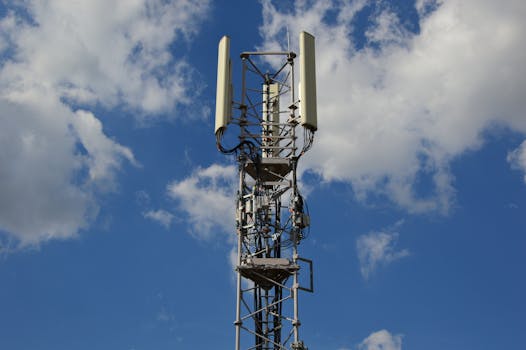 Photo: Ulrick Trappschuh / Pexels
 Photo: Craig Dennis / Pexels