
How Do Self-Driving Cars Work? The Tech Behind Autonomous Vehicles
Dive deep into the fascinating world of autonomous driving and understand the cutting-edge innovations making it a reality.
Explore the FutureKey Takeaways
- ✓ Self-driving cars use a combination of sensors, cameras, radar, and lidar to perceive their environment.
- ✓ Advanced AI algorithms process sensor data to create a real-time 3D map of the surroundings.
- ✓ Path planning involves predicting the movement of other road users and determining a safe trajectory.
- ✓ Autonomous vehicles operate on a spectrum, from Level 0 (no automation) to Level 5 (full automation).
- ✓ Continuous software updates and vast amounts of real-world data are crucial for improving autonomous capabilities.
How It Works
An array of sensors (cameras, radar, lidar, ultrasonics) continuously scans the vehicle's surroundings. This data captures everything from road markings to pedestrians.
High-definition maps, GPS, and sensor data are combined to precisely determine the vehicle's exact position. This is critical for accurate navigation.
AI algorithms analyze the perceived environment and predict the behavior of other vehicles, cyclists, and pedestrians. This allows for proactive decision-making.
Based on perception, localization, and prediction, the car's computer plans a safe and efficient path. It then issues commands to the steering, acceleration, and braking systems.
The Sensor Suite: Eyes and Ears of an Autonomous Vehicle
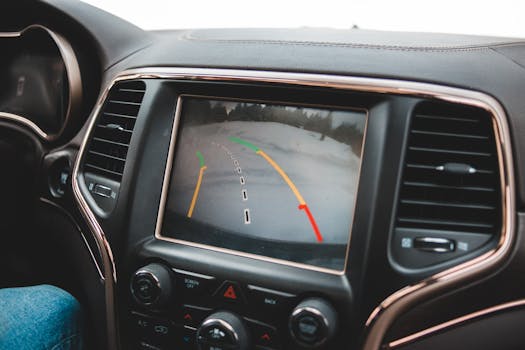 Photo: Erik Mclean / Pexels
The Brains of the Operation: AI and Machine Learning in Autonomous Driving
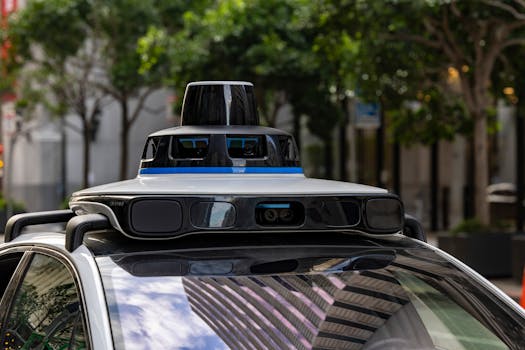 Photo: Stephen Leonardi / Pexels
Localization, Mapping, and Path Planning: Navigating the Digital World
 Photo: Kindel Media / Pexels
Challenges and Future Outlook: The Road Ahead for Autonomous Driving
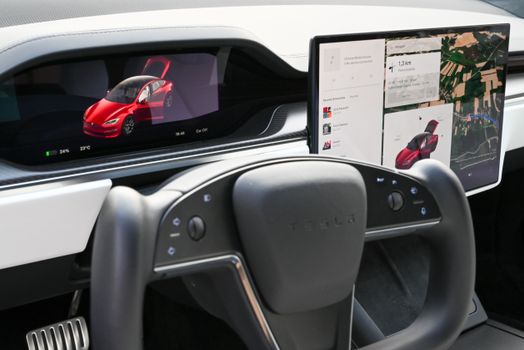 Photo: Vladimir Srajber / Pexels
- Handling 'edge cases' and unpredictable scenarios.
- Developing consistent regulatory and legal frameworks.
- Building and maintaining public trust.
- Reducing hardware costs and improving energy efficiency.
- Adapting to and potentially influencing infrastructure development.
Comparison
| Feature | Human Driver | Level 3 Autonomous | Level 5 Autonomous |
|---|---|---|---|
| Perception Range | Limited by sight | Extended by sensors | 360°, all-weather |
| Reaction Time | Variable (human) | Milliseconds (system) | Milliseconds (system) |
| Fatigue/Distraction | Susceptible | Reduced (system handles) | None (system handles) |
| Environmental Limits | Good in most | Some limitations (weather) | Designed for all |
| Decision Making | Intuitive/Emotional | Algorithmic (with human fallback) | Algorithmic (solely) |
| Driver Responsibility | Full | Shared (driver monitors) | None (vehicle handles) |
What Readers Say
"This article brilliantly explains how do self driving cars work, breaking down complex tech into understandable concepts. I finally get the difference between lidar and radar!"
Sarah J. · Austin, TX"As an engineer, I found the depth on AI and machine learning in self-driving cars to be incredibly insightful. It's a fantastic resource for anyone curious about the future of transport."
Mark D. · Seattle, WA"Before reading this, I was skeptical about self-driving cars. Now I understand the layers of safety and redundancy involved, making me feel much more comfortable about the technology."
Emily R. · Boston, MA"Great overview, though I wish there was a bit more detail on the ethical considerations of autonomous decision-making. Still, a very comprehensive explanation of how do self driving cars work."
David K. · San Francisco, CA"My son is obsessed with cars, and this article helped me explain the basics of autonomous vehicles to him in a way he could grasp. Very helpful and well-written!"
Linda P. · Phoenix, AZFrequently Asked Questions
What are the main components that enable self-driving cars?
Self-driving cars rely on a sophisticated combination of sensors (cameras, radar, lidar, ultrasonic), powerful onboard computers running advanced AI and machine learning algorithms, high-definition digital maps, and precise GPS localization. These components work together to perceive the environment, understand the vehicle's position, predict outcomes, and plan safe driving maneuvers.
Are self-driving cars safe to use?
The safety of self-driving cars is a primary focus of development. While no system is 100% foolproof, autonomous vehicles are designed with multiple layers of redundancy and are rigorously tested in simulations and real-world scenarios. Proponents argue they can significantly reduce accidents caused by human error, fatigue, or distraction, ultimately making roads safer. However, challenges like 'edge cases' still exist.
How do self-driving cars 'see' in the dark or bad weather?
Self-driving cars overcome limitations of human vision by using a diverse sensor suite. Radar and lidar sensors are particularly effective in low-light, fog, or heavy rain conditions where cameras struggle. Radar uses radio waves to detect objects and measure speed, while lidar uses lasers to create 3D maps, allowing the vehicle to 'see' its environment even when human visibility is compromised.
How much do self-driving cars cost, and are they available to buy now?
Currently, fully Level 5 autonomous vehicles (where the car handles all driving in all conditions) are not yet available for purchase by the general public. Many vehicles offer Level 2 and some Level 3 features (like advanced cruise control or highway pilot systems) which add to the vehicle's price. The cost of full autonomy will depend on the technology's maturity and economies of scale, but initial deployments for robotaxis or specialized fleets are proving expensive.
What's the difference between self-driving and assisted driving?
Assisted driving (Level 0-2) refers to features like adaptive cruise control or lane-keeping assist, where the human driver remains fully responsible for monitoring and controlling the vehicle. Self-driving (Level 3-5) implies the vehicle can perform driving tasks independently under certain or all conditions, with Level 3 requiring driver readiness to intervene and Level 5 requiring no human input whatsoever.
Who should consider using autonomous vehicle technology?
As autonomous vehicle technology develops, early adopters will likely include those who frequently commute long distances, individuals with mobility challenges, or those interested in leveraging their travel time for other activities. Eventually, widespread adoption could benefit urban planning, logistics, and public transportation, offering safer and more efficient mobility solutions for everyone.
What are the biggest risks associated with self-driving cars?
The biggest risks include system failures, cybersecurity threats (hacking), and the inability to perfectly handle unpredictable 'edge cases' in driving scenarios. There are also ethical dilemmas concerning how an autonomous vehicle should react in unavoidable accident situations. Developers are working tirelessly to mitigate these risks through rigorous testing, redundant systems, and advanced AI training.
What does the future hold for self-driving cars?
The future of self-driving cars is expected to unfold gradually, with increasing levels of autonomy becoming available over time. We'll likely see more Level 3 and 4 systems in operation, particularly in controlled environments like ride-sharing fleets and commercial trucking. Ultimately, Level 5 autonomy aims to revolutionize transportation, offering enhanced safety, reduced congestion, and entirely new mobility experiences.
Understanding how do self driving cars work reveals a future where technology redefines mobility. Embrace this exciting evolution and stay informed about the innovations shaping our roads. The journey towards fully autonomous transportation is an incredible testament to human ingenuity.