
How Do Self-Driving Cars Work? The Tech Behind Autonomy
Explore the complex systems and cutting-edge innovations enabling vehicles to drive themselves, promising a future of safer roads.
Discover the TechKey Takeaways
- ✓ Self-driving cars use a combination of sensors, cameras, radar, and LIDAR to perceive their environment.
- ✓ Artificial intelligence (AI) and machine learning algorithms process sensor data to make driving decisions.
- ✓ Levels of autonomy range from Level 0 (no automation) to Level 5 (full automation in all conditions).
- ✓ Sensor fusion combines data from multiple sensors to create a comprehensive and robust understanding of the surroundings.
How It Works
Vehicles gather vast amounts of data about their surroundings using an array of sophisticated sensors. This includes identifying other vehicles, pedestrians, traffic signs, and road markings.
High-definition maps and GPS are combined with real-time sensor data to precisely determine the vehicle's position. This allows the car to understand its exact location on the road.
AI algorithms analyze the perceived environment and predict the likely actions of other road users. This proactive approach helps the car anticipate potential hazards and plan accordingly.
Based on perception, localization, and prediction, the car's central computer plots a safe and efficient path. It then executes these plans by controlling steering, acceleration, and braking.
The Sensory Organs: How Autonomous Vehicles See and Hear
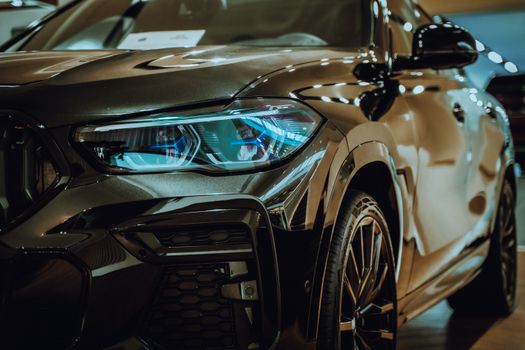 Photo: Boris Ivas / Pexels
The Brains of the Operation: AI, Machine Learning, and Sensor Fusion
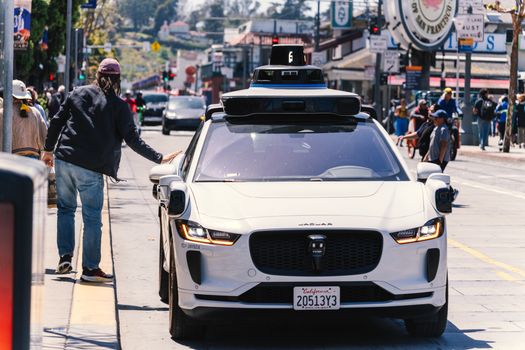 Photo: Abhishek Navlakha / Pexels
Navigating the Road: Localization, Mapping, and Control Systems
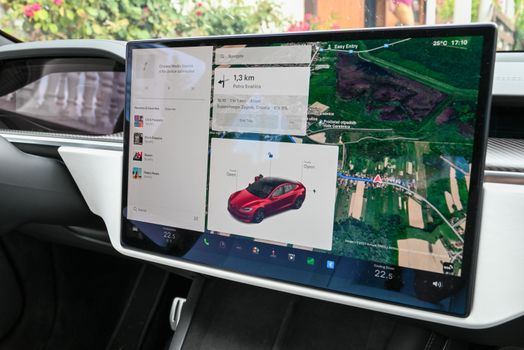 Photo: Vladimir Srajber / Pexels
Challenges and the Road Ahead for Autonomous Driving
 Photo: Erik Mclean / Pexels
Comparison
| Feature | LIDAR | Radar | Cameras | Ultrasonic |
|---|---|---|---|---|
| Range | Medium-Long | Long | Medium | Short |
| Resolution | High (3D point cloud) | Low (speed/distance) | High (visual detail) | Very Low (proximity) |
| Weather Performance | Affected by heavy rain/fog | Good in bad weather | Poor in bad weather | Good in bad weather |
| Object Classification | Good (shape/size) | Poor (generic object) | Excellent (types/colors) | Poor (presence only) |
| Cost | High | Medium | Low | Very Low |
What Readers Say
"Understanding how do self-driving cars work was a mystery to me, but this article broke it down perfectly. I feel much more informed about the technology and its potential now."
Sarah J. · Austin, TX"The depth of explanation on sensor fusion and AI was fantastic. It really highlighted the complexity and ingenuity behind how self-driving cars work to keep us safe."
Mark T. · San Jose, CA"I was skeptical about autonomous vehicles, but learning about the redundant sensor systems and predictive algorithms made me realize the incredible safety measures. This clarified how do self-driving cars work in detail."
Emily R. · Chicago, IL"Great overview, though I'd love even more detail on the ethical AI programming. Still, a very comprehensive look at how do self-driving cars work and their current state."
David L. · Seattle, WA"As someone in the tech industry, I appreciate the clear breakdown of LIDAR vs. Radar. This article is a valuable resource for anyone curious about how self-driving cars work."
Jessica M. · Miami, FLFrequently Asked Questions
What are the main components that make self-driving cars work?
Self-driving cars primarily rely on a combination of advanced sensors (cameras, radar, LIDAR, ultrasonic), powerful artificial intelligence (AI) and machine learning algorithms for data processing, high-definition (HD) maps for localization, and sophisticated control systems to execute driving commands. These components work in concert to perceive, understand, and navigate the environment.
Are self-driving cars safe?
The safety of self-driving cars is a primary focus of development. They are designed with multiple redundant systems and are trained on billions of miles of driving data to minimize errors. While no system is 100% foolproof, proponents argue that autonomous vehicles have the potential to significantly reduce accidents caused by human error, fatigue, or distraction, ultimately making roads safer.
How do self-driving cars navigate in bad weather?
Navigating in bad weather (rain, snow, fog) is a significant challenge. Self-driving cars use sensor fusion, combining data from various sensors like radar (which performs well in adverse weather) with cameras and LIDAR, to maintain perception. Developers are continuously working on improving algorithms and sensor capabilities to enhance performance and safety in all weather conditions.
How much do self-driving cars cost?
Currently, fully autonomous vehicles (Level 4 or 5) are not widely available for consumer purchase. The cost of integrating the advanced sensor suites, powerful processors, and specialized software is substantial, adding tens of thousands of dollars to the vehicle price. As technology matures and production scales, costs are expected to decrease, making them more accessible in the future.
How do self-driving cars compare to advanced driver-assistance systems (ADAS)?
ADAS features like adaptive cruise control or lane-keeping assist are partial automation (Level 1-2) that assist the human driver, who remains fully responsible. Self-driving cars (Level 3-5) are designed to perform dynamic driving tasks independently, with Level 5 requiring no human intervention at all. The key difference lies in the level of human supervision required and the car's ability to handle complex driving situations autonomously.
Who should consider using self-driving cars?
In the future, self-driving cars could benefit a wide range of individuals, including those who cannot drive due to age or disability, commuters seeking to reclaim travel time, and logistics companies looking to optimize efficiency and safety. They also hold promise for reducing traffic congestion and parking challenges in urban areas.
What are the risks associated with self-driving cars?
Risks include potential software glitches, sensor limitations in extreme conditions, cybersecurity vulnerabilities, and the challenge of navigating unpredictable human behavior. There are also ethical dilemmas concerning accident scenarios and the complex legal frameworks surrounding liability. Developers are rigorously testing and refining systems to mitigate these risks.
What is the future trend for self-driving cars?
The future trend for self-driving cars points towards increasing levels of autonomy, with a gradual rollout of Level 3 and 4 vehicles in specific operational design domains. Continued advancements in AI, sensor technology, and mapping will enhance capabilities, while regulatory clarity and public acceptance will be critical for widespread adoption, potentially leading to fully autonomous Level 5 vehicles in the long term.
Now that you understand how do self-driving cars work, you're equipped with knowledge about this transformative technology. Stay informed as these innovations continue to reshape our world, promising a future of smarter, safer, and more efficient transportation for everyone.