✓ Quantum computing leverages superposition and entanglement for exponential processing power.
✓ Early applications focus on drug discovery, material science, and financial modeling.
✓ Major tech giants and governments are heavily investing in quantum research.
✓ Quantum supremacy has been demonstrated, but practical, fault-tolerant quantum computers are still years away.
How It Works
1
Quantum Principles
Unlike classical bits (0 or 1), quantum bits (qubits) can exist in multiple states simultaneously (superposition). This allows for vastly more complex calculations.
2
Entanglement Power
Entanglement links qubits, meaning the state of one instantly influences another, regardless of distance. This interconnectedness enables parallel processing of information.
3
Quantum Algorithms
Specialized algorithms like Shor's and Grover's are designed to exploit quantum phenomena. These algorithms can solve certain problems exponentially faster than classical computers.
4
Error Correction
Qubits are highly fragile and prone to errors. Significant research is focused on developing robust error correction mechanisms to maintain quantum coherence and ensure reliable computation.
Revolutionizing Drug Discovery and Material Science with Quantum Power
Photo: Pachon in Motion / Pexels
The quest for new drugs and materials has historically been a lengthy, expensive, and often serendipitous process, limited by the computational power available to simulate molecular interactions at a fundamental level. Classical computers struggle to accurately model the complex quantum mechanical behaviors of even relatively small molecules, let alone large proteins or novel compounds. This is where the future of quantum computing applications shines brightest. Quantum computers are inherently designed to mimic and process information in ways that directly reflect the quantum nature of the universe. By leveraging qubits to represent atomic and molecular states, they can simulate chemical reactions and material properties with unprecedented accuracy and speed. Imagine a pharmaceutical company needing to identify a new drug candidate for a virulent disease. Instead of synthesizing and testing thousands of compounds in a lab, a quantum computer could simulate the binding affinity of millions of potential molecules to a target protein, predicting which ones are most likely to be effective. This would dramatically shorten the drug discovery pipeline, reducing costs and bringing life-saving treatments to market much faster. Furthermore, quantum simulations could lead to the development of personalized medicine, tailoring treatments based on an individual's unique genetic makeup and how specific drugs would interact with their biological systems. The implications for healthcare are profound.
Beyond pharmaceuticals, the field of material science stands to be completely transformed. Developing new materials with specific properties – say, superconductors that work at room temperature, highly efficient catalysts, or lighter, stronger alloys for aerospace – currently involves extensive trial and error. Quantum computers could simulate the electronic structure of materials, predicting their properties before they are ever synthesized. This would accelerate the discovery of novel materials with bespoke characteristics, opening doors to innovations in energy storage (e.g., more efficient batteries), manufacturing, and even everyday electronics. For instance, designing more efficient solar cells requires understanding complex quantum processes at the nanoscale. Quantum algorithms could optimize material designs to maximize energy conversion, leading to widespread adoption of renewable energy. The ability to precisely model quantum phenomena means we could engineer materials from the ground up, designing them atom by atom to exhibit desired functionalities. This level of control and predictive power is simply beyond the reach of even the most powerful supercomputers today, making quantum computing an indispensable tool for future scientific and industrial advancement. The race is on to build quantum computers capable of tackling these grand challenges, with substantial investments from governments and private enterprises alike, signaling a strong belief in their transformative potential.
Transforming Finance and Logistics with Quantum Optimization
Photo: Leeloo The First / Pexels
The financial sector is a realm of immense complexity, characterized by vast datasets, intricate models, and the constant need for rapid, accurate decision-making. From portfolio optimization to fraud detection and risk assessment, current computational methods often rely on approximations and heuristics due to the sheer scale of the problems. The future of quantum computing applications promises to revolutionize these areas by offering superior capabilities for optimization and pattern recognition. Quantum annealing and other quantum optimization algorithms can explore an exponentially larger number of possible solutions to complex problems simultaneously, identifying optimal strategies that are currently intractable for classical computers. For example, in portfolio management, investors aim to maximize returns while minimizing risk, balancing a multitude of assets with varying volatilities and correlations. A quantum computer could analyze these interdependencies and suggest optimal asset allocations in real-time, adapting to market fluctuations with unprecedented agility. This could lead to more stable and profitable investment strategies, benefiting individual investors and large financial institutions alike.
Fraud detection is another critical application. Financial institutions process billions of transactions daily, and identifying anomalous patterns indicative of fraud is a monumental task. While classical machine learning algorithms are used, they can be slow and may miss subtle, evolving fraud schemes. Quantum machine learning algorithms, leveraging the power of superposition and entanglement, could identify complex, multi-dimensional patterns in transaction data far more efficiently. This would enable faster and more accurate detection of fraudulent activities, saving billions of dollars annually and enhancing security for consumers. Furthermore, in algorithmic trading, quantum computers could analyze market data, news sentiment, and economic indicators with incredible speed to execute trades at optimal moments, potentially generating significant alpha.
The logistics and supply chain industries also face enormous optimization challenges. Companies must manage vast networks of suppliers, manufacturers, distributors, and retailers, aiming to minimize costs, reduce delivery times, and maximize efficiency. Problems such as the 'traveling salesman problem' – finding the shortest route visiting multiple cities – become computationally intractable for classical computers as the number of cities increases. Quantum computers, with their ability to handle combinatorial explosions, could solve these complex routing and scheduling problems in seconds or minutes, optimizing delivery routes for global shipping, managing inventory across vast warehouses, and streamlining manufacturing processes. This would lead to significant cost savings, reduced carbon footprints, and improved customer satisfaction through faster and more reliable deliveries. Imagine a global shipping company using quantum algorithms to instantly re-route thousands of containers in response to unforeseen events like weather disruptions or port closures, minimizing delays and maximizing resource utilization. The ability to process and optimize such vast datasets will usher in a new era of efficiency and resilience across global supply chains, fundamentally changing how goods and services move around the world.
Advancing Artificial Intelligence and Cybersecurity with Quantum Leaps
Photo: Darlene Alderson / Pexels
The symbiotic relationship between quantum computing and artificial intelligence (AI) is set to define the next generation of technological innovation. While classical AI has made incredible strides, particularly in machine learning and deep learning, it often encounters computational bottlenecks when dealing with extremely large datasets or highly complex models. The future of quantum computing applications promises to supercharge AI capabilities by providing the computational horsepower needed to overcome these limitations. Quantum machine learning (QML) algorithms can process data in entirely new ways, potentially leading to breakthroughs in areas such as pattern recognition, natural language processing, and image analysis. For instance, training deep neural networks, especially those with billions of parameters, requires immense computational resources and time. Quantum computers could accelerate this training process by exploring the vast parameter space more efficiently, leading to more sophisticated and capable AI models. This could result in AI systems that can understand human language with greater nuance, recognize objects in images with higher accuracy, and make more intelligent decisions in complex environments. Moreover, quantum computers could enable the development of truly novel AI architectures that are not possible on classical machines, opening up entirely new avenues for AI research and application. This synergy will redefine what's possible in AI.
In cybersecurity, quantum computing presents both a significant threat and a powerful defense. On one hand, quantum computers, particularly those capable of running Shor's algorithm, pose a direct threat to most modern encryption standards. Public-key cryptography, which underpins secure communications, financial transactions, and internet security, relies on the computational difficulty of factoring large numbers. Shor's algorithm can factor these numbers exponentially faster than any classical computer, meaning current encryption protocols like RSA and ECC could be broken by a sufficiently powerful quantum computer. This necessitates a global transition to post-quantum cryptography (PQC) – encryption methods designed to be resistant to quantum attacks. Governments and security agencies worldwide are actively researching and standardizing PQC algorithms to safeguard future communications.
On the other hand, quantum computing also offers revolutionary tools for enhancing cybersecurity. Quantum cryptography, such as Quantum Key Distribution (QKD), provides an intrinsically secure method for exchanging cryptographic keys. QKD leverages the principles of quantum mechanics to detect any eavesdropping attempt, as observing quantum states inevitably disturbs them. This allows two parties to establish a shared secret key with provable security, making it impossible for an unauthorized third party to intercept the key without being detected. Furthermore, quantum-enhanced anomaly detection could bolster network security by identifying subtle intrusions or malware patterns that classical systems might miss. Quantum random number generators (QRNGs) can produce truly random numbers, which are crucial for strong encryption and security protocols, unlike pseudo-random numbers generated by classical computers. Thus, while quantum computing introduces new cybersecurity challenges, it also provides the most robust solutions, fundamentally reshaping the landscape of digital security in the coming decades.
Challenges and the Road Ahead for Quantum Computing Development
Photo: Nicolas Foster / Pexels
Despite the immense promise of the future of quantum computing applications, the field is still in its nascent stages, grappling with significant technical and engineering challenges. One of the foremost hurdles is the inherent fragility of qubits. Unlike classical bits, which are robust and stable, qubits are incredibly sensitive to environmental noise – temperature fluctuations, electromagnetic interference, and even stray vibrations can cause them to 'decohere,' losing their quantum properties and introducing errors into computations. Maintaining quantum coherence for long enough to perform complex calculations requires extreme conditions, such as temperatures colder than deep space, and elaborate shielding. Building quantum computers that are both powerful and fault-tolerant – meaning they can correct errors faster than they occur – is a monumental engineering feat.
Another major challenge is scalability. Current quantum computers typically feature a relatively small number of qubits, often in the tens or low hundreds. While this is sufficient for demonstrating quantum supremacy on specific, narrow problems, achieving practical applications that can outperform classical computers for real-world scenarios will likely require thousands, if not millions, of stable and interconnected qubits. Scaling up these systems while maintaining coherence and connectivity is a complex task that demands innovations in hardware design, materials science, and cryogenic engineering. Furthermore, the development of robust error correction codes and architectures is crucial. Without effective error correction, the error rate in current quantum systems is too high for reliable, long-duration computations.
Beyond hardware, the software and algorithmic landscape for quantum computing is also evolving rapidly. Developing quantum algorithms that can fully exploit the capabilities of quantum hardware for practical applications is an ongoing area of intense research. The transition from classical computational thinking to quantum parallelism requires a paradigm shift in how problems are formulated and solved. A skilled workforce capable of programming and operating these complex machines is also essential, necessitating significant investment in education and training. Researchers are focused on developing user-friendly programming languages, compilers, and development environments to make quantum computing more accessible. Despite these challenges, the progress in the field has been remarkable, with steady advancements in qubit quality, connectivity, and algorithmic development. The road ahead is long, but the potential rewards are so vast that governments, academic institutions, and tech giants are pouring resources into overcoming these hurdles, driven by the vision of a quantum-powered future. The collaborative efforts across these sectors suggest a strong likelihood of overcoming many of these challenges in the coming decades, gradually ushering in an era where quantum computing becomes a powerful, practical tool for solving humanity's most complex problems.
**Key Challenges in Quantum Computing:**
* **Qubit Stability and Coherence:** Maintaining quantum states for sufficient time is extremely difficult.
* **Error Rates:** Qubits are prone to errors, requiring sophisticated error correction.
* **Scalability:** Building systems with thousands to millions of interconnected, stable qubits.
* **Hardware Engineering:** Developing robust, reliable, and cost-effective quantum processors.
* **Algorithm Development:** Creating new algorithms that leverage quantum properties for practical applications.
* **Software Ecosystem:** Building user-friendly tools and programming languages for quantum systems.
* **Workforce Development:** Training scientists and engineers with expertise in quantum information science.
Comparison
Feature
Quantum Computing
Classical Supercomputing
Neuromorphic Computing
Computational Paradigm
Qubit (Superposition, Entanglement)
Bit (0 or 1)
Spiking Neurons
Problem Solving Focus
Optimization, Simulation, AI
High-Performance Numerical Tasks
Pattern Recognition, Machine Learning
Best for
Drug Discovery, Material Science, Cryptography
Weather Forecasting, Big Data Analysis
Real-time AI, Sensor Processing
Energy Efficiency
Potentially high for specific tasks
Very high for general tasks
Extremely high for AI tasks
Current Maturity
Early stage (NISQ era)
Mature, widely used
Emerging, niche applications
What Readers Say
★★★★★
"The insights into the future of quantum computing applications in medicine were incredibly detailed and inspiring. As a biochemist, I can truly see how this technology will accelerate drug discovery by decades. A must-read for anyone in scientific research."
Dr. Evelyn Reed · Boston, MA
★★★★★
"This article provided a comprehensive overview of quantum computing's potential in finance. The explanations of optimization algorithms were particularly helpful for understanding how it could impact our trading strategies."
Mark Chen · San Francisco, CA
★★★★★
"I was skeptical about the immediate impact of quantum computing, but this piece clearly outlined the specific applications and realistic timelines. It helped me understand the profound shifts coming in cybersecurity and AI, leading me to enroll in a quantum fundamentals course."
Sarah Davis · Austin, TX
★★★★★
"A very informative article, though I would have appreciated a bit more on the specific hardware implementations being pursued by different companies. Still, the breakdown of challenges and the future outlook was excellent."
Alex Rodriguez · Seattle, WA
★★★★★
"As a logistics expert, the section on supply chain optimization resonated deeply. The idea of quantum algorithms solving complex routing problems in real-time could fundamentally transform global trade and significantly reduce operational costs."
Priya Sharma · New York, NY
Frequently Asked Questions
When will practical quantum computing applications become widely available?
While experimental quantum computers exist today, widely available and fault-tolerant quantum computers capable of solving complex, real-world problems that classical computers cannot are still likely 5-15 years away. The 'NISQ' (Noisy Intermediate-Scale Quantum) era is currently demonstrating proofs of concept, but significant engineering challenges remain before broad commercial adoption.
Is quantum computing a threat to current cybersecurity?
Yes, future quantum computers, particularly those capable of running Shor's algorithm, pose a significant theoretical threat to current public-key encryption methods like RSA. However, extensive research is underway to develop 'post-quantum cryptography' (PQC) solutions that are resistant to quantum attacks, ensuring future data security.
How can I learn more about quantum computing?
Many universities now offer courses in quantum information science. Online platforms like Coursera, edX, and IBM Quantum Experience provide introductory courses, programming tutorials, and access to quantum simulators and real quantum hardware. Starting with the basics of quantum mechanics and linear algebra is a good foundation.
What is the estimated cost of developing quantum computing applications?
The cost of developing quantum computing applications is currently very high, primarily due to the expense of quantum hardware, specialized expertise, and the ongoing research and development required. However, as the technology matures and becomes more accessible through cloud-based quantum services, costs are expected to decrease, making it more feasible for businesses to explore.
How does quantum computing compare to classical supercomputing?
Classical supercomputers excel at complex numerical computations and big data processing using traditional bits. Quantum computers, using qubits, are designed to solve specific types of problems (like optimization, simulation, and certain AI tasks) that are intractable for classical computers, leveraging quantum phenomena for exponential speedups. They are complementary, not replacements.
Who should be preparing for the future of quantum computing applications?
Researchers in chemistry, materials science, and pharmaceuticals should start exploring quantum simulation. Financial institutions should investigate quantum optimization for portfolio management and risk assessment. Cybersecurity professionals must prepare for post-quantum cryptography. Any industry dealing with complex optimization or large-scale data analysis will eventually be impacted.
Are there any ethical considerations for quantum computing?
Yes, ethical considerations include the potential for quantum computers to break current encryption, raising concerns about data privacy and national security. There are also questions about equitable access to this powerful technology and its potential impact on employment. Responsible development and governance are crucial as the field advances.
What are the most exciting future trends in quantum computing?
Exciting trends include the development of fault-tolerant quantum computers, advancements in quantum machine learning for AI, the integration of quantum sensors for enhanced precision, and the exploration of quantum networks for secure communication. The increasing collaboration between industry, academia, and government is also accelerating progress.
The future of quantum computing applications holds the key to solving some of humanity's most intractable problems. By understanding its potential and preparing for its integration, individuals and industries can position themselves at the forefront of this transformative technological revolution. Start exploring the quantum realm today and redefine what's possible.
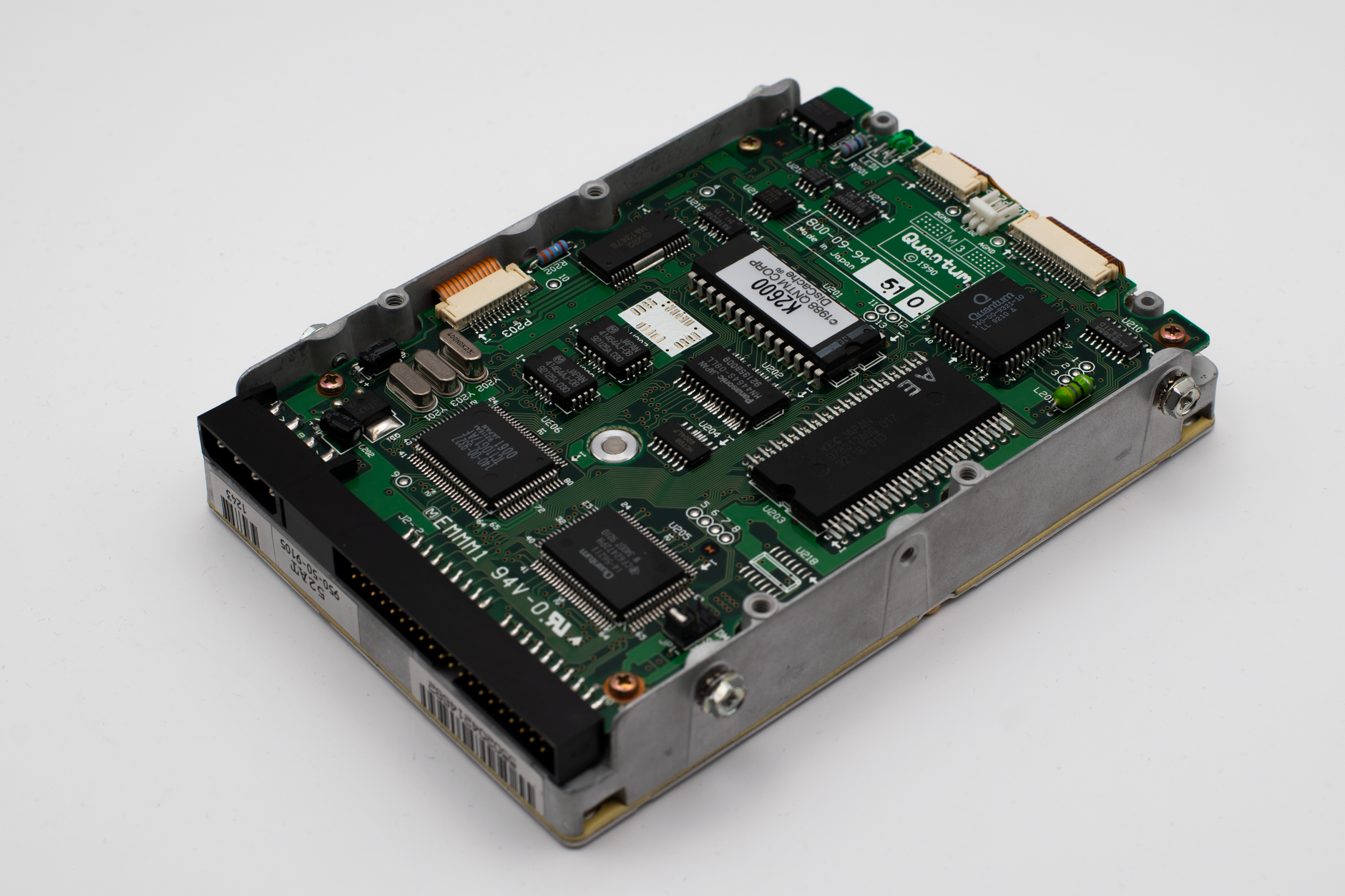
 Photo: Pachon in Motion / Pexels
 Photo: Leeloo The First / Pexels
 Photo: Darlene Alderson / Pexels
 Photo: Nicolas Foster / Pexels