The Future of Augmented Reality Applications Unveiled
Dive into how AR will revolutionize work, play, and daily interactions, creating a seamless blend of digital and physical.
Discover AR's EvolutionKey Takeaways
- ✓ AR market projected to reach over $300 billion by 2024.
- ✓ Spatial computing is the next frontier, blending digital content with the physical world.
- ✓ AR will move beyond smartphones to smart glasses and contact lenses.
- ✓ Enterprise adoption of AR is accelerating, driving efficiency and innovation.
How It Works
AR devices use cameras, sensors, and GPS to map the physical world in real-time. This creates a digital understanding of your surroundings.
Sophisticated software then generates virtual objects, information, or interactive elements. These digital assets are precisely anchored to real-world locations or objects.
The digital overlay is rendered and displayed to the user through a screen or optical lens. This is done in real-time, matching the user's perspective and movement.
Users can interact with these virtual elements through gestures, voice commands, or touch. The system provides immediate visual and sometimes auditory feedback, creating an immersive experience.
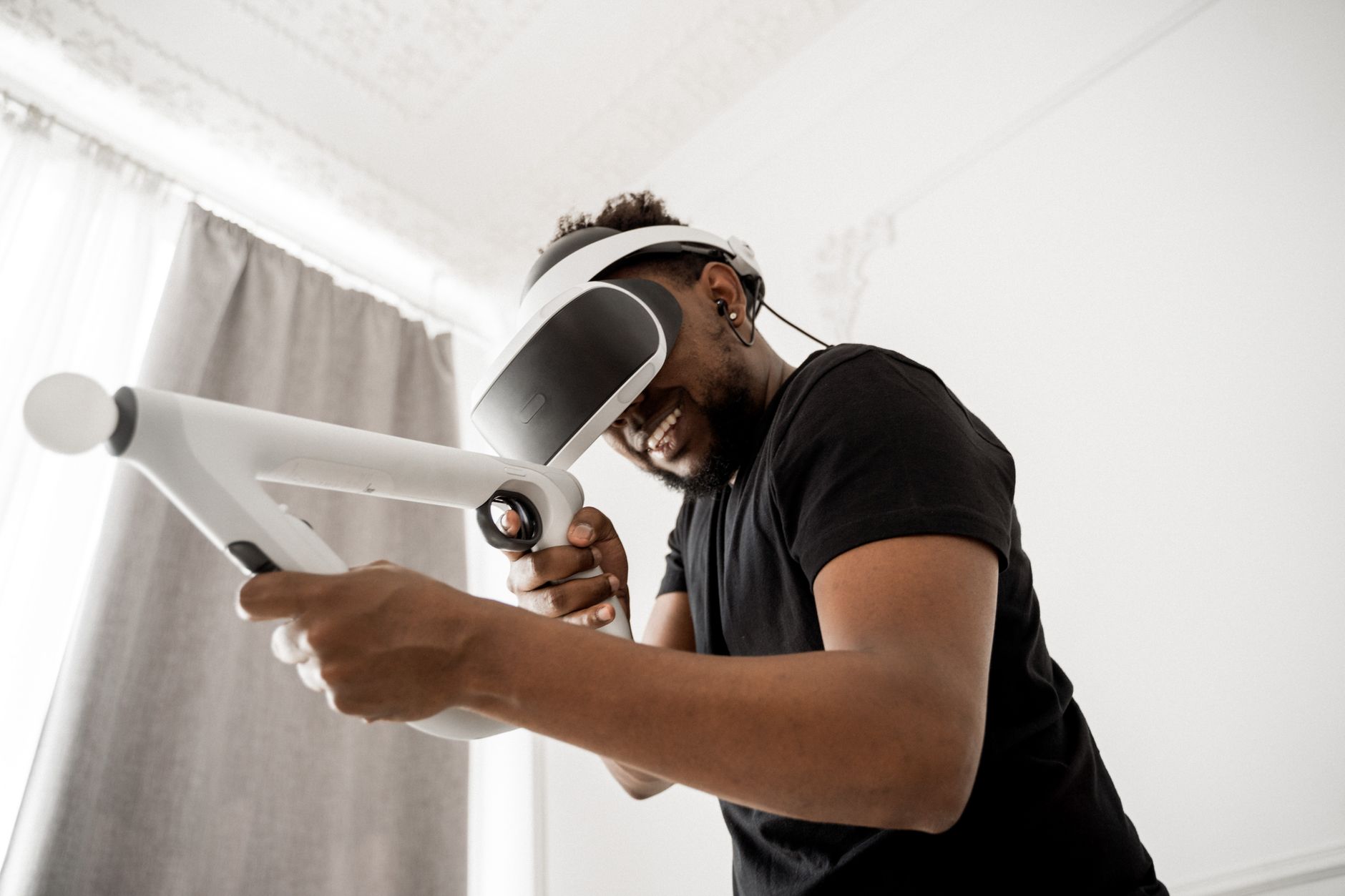
The Dawn of Ubiquitous Spatial Computing: Augmented Reality Beyond Screens
 Photo: TREEDEO.ST / Pexels
Transforming Industries: Enterprise Adoption and Specialized AR Solutions
 Photo: Sergey Sergeev / Pexels
AR in Daily Life: Enhancing Education, Retail, and Personal Experiences
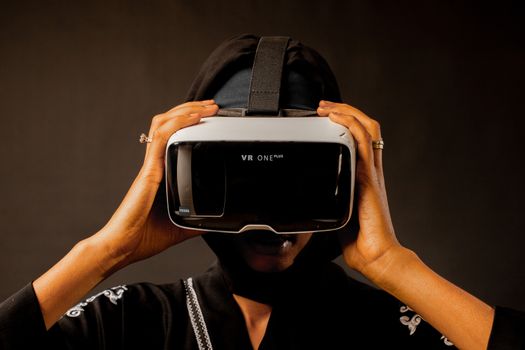 Photo: Ila Bappa Ibrahim / Pexels
Challenges and Ethical Considerations for AR's Widespread Future
 Photo: Ann H / Pexels
Comparison
| Feature | Smartphones (Current AR) | Dedicated AR Glasses (Emerging) | AR Contact Lenses (Future) |
|---|---|---|---|
| Portability/Discretion | High (already carried) | Medium (visible device) | Very High (invisible) |
| Field of View | Limited (small screen) | Medium to Wide (optical lens) | Full (natural vision) |
| Hands-Free Operation | No (requires holding) | Yes (gesture/voice) | Yes (eye tracking/thought) |
| Immersive Experience | Low (looking through window) | Medium (integrated overlay) | High (seamless integration) |
| Battery Life | Variable (shared with phone) | Improving (dedicated power) | Challenging (micro-power) |
| Processing Power | Good (phone CPU) | Excellent (dedicated chip) | Extremely Advanced (micro-chip) |
| Cost (Current Est.) | N/A (already owned) | High ($500-$3000+) | Very High (R&D phase) |
| Ease of Use | High (familiar interface) | Moderate (new interactions) | Potentially High (intuitive) |
What Readers Say
"I used an early AR prototype for architectural visualization, and it completely changed how we present designs. Clients could walk through a virtual building on-site – the future of augmented reality applications in design is phenomenal."
Alex Chen · San Francisco, CA"As a surgeon, the potential for AR overlays during complex procedures is game-changing. Real-time anatomical guidance means greater precision and reduced risk for patients. I'm excited for its widespread medical adoption."
Dr. Lena Sharma · Boston, MA"I tried an AR navigation app on a trip, and it projected directions right onto the street ahead. No more looking down at my phone! It made exploring so much more intuitive and immersive."
Mark Johnson · Austin, TX"While current AR glasses are still a bit bulky, the experience of having digital information appear seamlessly in my field of vision is incredibly powerful. I can see how this will become indispensable once the hardware refines."
Sophia Rodriguez · Seattle, WA"For industrial maintenance, AR is already saving us thousands. Our technicians can troubleshoot complex machinery with remote expert assistance via AR, cutting down travel time and errors dramatically. This is the real impact of the future of augmented reality applications."
David Lee · New York, NYFrequently Asked Questions
What is spatial computing and how does it relate to AR?
Spatial computing is an emerging paradigm where digital information and interactions are integrated directly into our three-dimensional physical world, rather than being confined to screens. AR is a core component of spatial computing, enabling us to see and interact with digital content overlaid onto reality, making it context-aware and spatially relevant.
Will AR replace smartphones entirely?
It's unlikely AR will entirely replace smartphones in the short term. Rather, AR devices like smart glasses are expected to augment and eventually integrate with smartphone functionalities, offering a more seamless, hands-free way to access information and interact with digital content. Smartphones may evolve into powerful companion devices for AR glasses.
How will AR change how we work?
AR will transform work by providing context-aware information, hands-free guidance, and remote collaboration tools. This means improved efficiency in manufacturing, enhanced training simulations, more precise medical procedures, and dynamic data visualization, leading to increased productivity and innovation across nearly all industries.
Is augmented reality expensive to implement for businesses?
Initial investment in AR hardware and software can be significant, especially for custom enterprise solutions. However, the return on investment often comes from increased efficiency, reduced errors, improved training outcomes, and enhanced customer experiences. As the technology matures, costs are expected to decrease, making it more accessible for businesses of all sizes.
What's the difference between Augmented Reality (AR) and Virtual Reality (VR)?
AR overlays digital information onto the real world, enhancing your perception of reality while still allowing you to see and interact with your physical surroundings. VR, on the other hand, creates a completely immersive, simulated environment that replaces your view of the real world, transporting you to a different digital space.
Who should be preparing for the future of augmented reality applications?
Everyone from consumers to businesses and educators should be aware of AR's trajectory. Developers should learn spatial computing principles, businesses should explore pilot programs for efficiency gains, and individuals can start experimenting with existing AR apps to understand its potential impact on daily life and professional fields.
Are there any privacy risks associated with widespread AR use?
Yes, privacy is a significant concern. AR devices collect extensive data about users and their environments. Ethical development and strong regulatory frameworks are crucial to ensure this data is collected responsibly, secured against breaches, and used transparently, protecting individual privacy while leveraging AR's benefits.
What are the next big trends in AR hardware?
The next big trends in AR hardware include miniaturization for more discreet and fashionable smart glasses, advancements in display technology for wider fields of view and higher resolution, improved battery life, and integration of advanced sensors and AI for more intelligent, context-aware experiences. The ultimate goal is AR contact lenses.
The future of augmented reality applications is not a distant dream, but a rapidly unfolding reality that promises to redefine how we live, work, and interact. Embrace this transformative technology and prepare for a world where digital information seamlessly blends with our physical environment, opening up unprecedented possibilities and experiences. Explore the potential of AR today.