
Explain Blockchain Technology for Beginners: Your Ultimate Guide
Unlock the mysteries of decentralized digital ledgers and discover how this revolutionary tech is reshaping our world.
Start Learning NowKey Takeaways
- ✓ Blockchain is a decentralized, distributed digital ledger.
- ✓ Transactions are grouped into 'blocks' and linked cryptographically.
- ✓ It's immutable, meaning once recorded, data cannot be altered.
- ✓ Used in cryptocurrencies like Bitcoin, but its applications extend far beyond.
How It Works
A participant initiates a transaction, like sending cryptocurrency or recording data. This transaction is then broadcast to the network.
Network computers (nodes) verify the transaction's legitimacy. They check for authenticity, digital signatures, and sufficient funds or permissions.
Once verified, multiple transactions are bundled together to form a new 'block'. This block also contains a cryptographic hash of the previous block.
The newly created block is added to the existing blockchain, permanently linking it to all prior blocks. This process makes the ledger immutable.
Understanding the Core Concepts of Blockchain
 Photo: Leeloo The First / Pexels
Next, let's talk about 'blocks'. Think of these as pages in our digital notebook. Each page (block) contains a list of transactions – perhaps financial transfers, records of ownership, or any other data. Once a page is filled with transactions, it's sealed and given a unique digital fingerprint, known as a 'cryptographic hash'. This hash is a complex code generated from all the data within that block. This fingerprint is then included in the next page, creating an unbreakable chain. If even a tiny piece of data in an old block were to be altered, its hash would change, breaking the chain and immediately alerting the network to a potential tamper. This 'chain' of cryptographically linked blocks is what gives blockchain its name and its incredible integrity.
The concept of 'immutability' is another critical aspect. Once a block is added to the blockchain, it cannot be changed or deleted. This is because any alteration would invalidate the block's hash and, consequently, all subsequent blocks in the chain. This makes blockchain an incredibly secure and trustworthy record-keeping system. For example, in a financial transaction, once recorded on the blockchain, there's no way for either party to later claim the transaction didn't happen or was for a different amount. This permanence is revolutionary for many industries. Learn more about the technical underpinnings of digital ledgers.
Finally, 'consensus mechanisms' are how the decentralized network agrees on the validity of new blocks and transactions. Since there's no central authority, the computers in the network must collectively agree that a new block is legitimate before it's added. The most famous consensus mechanism is 'Proof of Work' (PoW), used by Bitcoin. In PoW, computers (miners) compete to solve a complex mathematical puzzle. The first one to solve it gets to add the new block to the chain and is rewarded. This process is energy-intensive but highly secure. Other mechanisms, like 'Proof of Stake' (PoS), offer different approaches to achieving consensus with potentially less energy consumption. Understanding these core concepts is the first step in truly grasping how this innovative technology functions and why it holds so much promise for various applications beyond just cryptocurrencies.
Beyond Bitcoin: Diverse Applications of Blockchain Technology
 Photo: Morthy Jameson / Pexels
Another powerful application lies in digital identity and data security. Traditional identity systems rely on central authorities that are vulnerable to breaches. Blockchain offers the potential for self-sovereign identity, where individuals control their personal data and grant access selectively. This could revolutionize how we interact with online services, making our digital lives more secure and private. Think about voting systems, where blockchain could provide a tamper-proof record of every vote, ensuring election integrity and making results verifiable by anyone. This could restore faith in democratic processes by eliminating doubts about manipulation.
In healthcare, blockchain can secure patient records, making them accessible only to authorized personnel while maintaining an immutable audit trail of who accessed what data and when. This enhances privacy, streamlines data sharing between providers (with patient consent), and could even accelerate medical research by enabling secure, anonymized data aggregation. For intellectual property, blockchain can provide irrefutable proof of creation and ownership for artists, musicians, and inventors, protecting their works from unauthorized use and simplifying royalty distribution.
Even in real estate, blockchain can streamline property transactions, reduce paperwork, and increase trust. Land registries could be moved onto a blockchain, making ownership transfers faster, cheaper, and more secure by eliminating intermediaries and providing a transparent record of titles. This also reduces the risk of fraudulent property claims. Furthermore, smart contracts, self-executing agreements whose terms are directly written into code on the blockchain, are opening up new possibilities. These contracts automatically execute when predefined conditions are met, without the need for intermediaries. This has implications for legal agreements, insurance claims, and automated business processes, promising greater efficiency and reduced costs. The potential to disrupt and innovate across industries is immense, far exceeding its initial association with digital currencies.
The Mechanics: How Blocks are Created and Linked
 Photo: Pachon in Motion / Pexels
Once a group of verified transactions accumulates, they are bundled together by a special type of node called a 'miner' (in Proof of Work systems) or a 'validator' (in Proof of Stake systems). This bundle of transactions, along with other metadata like a timestamp and a reference to the previous block's hash, forms a 'candidate block'. The miner then undertakes a computationally intensive task: finding a 'nonce' (a random number) that, when combined with the block's data, produces a cryptographic hash that meets specific criteria (e.g., starts with a certain number of zeros). This process is known as 'mining' and is purposefully difficult, requiring significant computing power and energy. It's designed to make it extremely expensive and impractical to tamper with past transactions.
The first miner to successfully find the correct nonce broadcasts their newly formed block to the entire network. Other nodes then verify this new block, checking the validity of the transactions within it and confirming that the hash meets the required criteria. If the majority of the network agrees that the block is valid, it is then added to their copy of the blockchain. This consensus mechanism ensures that all participants maintain an identical and accurate version of the ledger. The new block's hash now serves as a unique identifier and is included in the header of the next block to be created, forming an unbroken, chronological chain. Explore the different types of consensus mechanisms.
This continuous process of transaction verification, block creation, and cryptographic linking is what makes blockchain so robust. Because each block contains the hash of the preceding block, any attempt to alter a past transaction would necessitate recalculating the hash of that block and every subsequent block in the chain – a monumental, practically impossible task given the network's collective computing power. This 'chaining' of blocks, secured by cryptography and maintained by a distributed network, is the ingenious mechanism that underpins the security and immutability of blockchain technology.
Navigating the Blockchain Landscape: Tips and Challenges
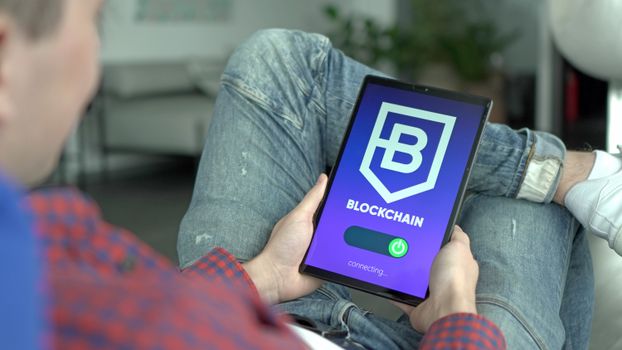 Photo: Morthy Jameson / Pexels
- Start Small and Learn Continuously: The blockchain space is rapidly evolving. Begin by understanding core concepts through reputable sources, then explore specific applications that interest you. Don't feel pressured to invest immediately; focus on education first.
- Prioritize Security: If you decide to engage with cryptocurrencies or other blockchain assets, security is paramount. Use strong, unique passwords, enable two-factor authentication, and understand how to properly secure your private keys or seed phrases. Never share them with anyone.
- Understand Volatility: Cryptocurrencies are notoriously volatile. Their prices can fluctuate wildly in short periods. Only invest what you are prepared to lose and avoid making emotional decisions based on market swings.
- Distinguish Between Projects: Not all blockchain projects are created equal. Research thoroughly. Understand a project's whitepaper, its team, its technology, and its real-world use case before considering any involvement.
- Be Wary of Scams: The blockchain and crypto space is unfortunately rife with scams. Be skeptical of promises of guaranteed high returns, unsolicited messages, and projects that lack transparency. If it sounds too good to be true, it probably is.
Challenges within the blockchain ecosystem include:
- Scalability: Many blockchains, especially older ones, struggle with processing a large volume of transactions quickly, leading to congestion and higher fees.
- Regulatory Uncertainty: Governments worldwide are still grappling with how to regulate blockchain and cryptocurrencies, leading to an unpredictable legal landscape.
- Energy Consumption: Proof of Work blockchains, like Bitcoin, consume significant amounts of energy, raising environmental concerns.
- Complexity: For the average user, understanding and interacting with blockchain technology can still be quite complex and intimidating.
- Interoperability: Different blockchains often operate in silos, making it difficult for them to communicate and share data seamlessly.
Despite these challenges, the rapid pace of innovation suggests many of these issues are actively being addressed by developers and researchers. Staying informed and exercising caution are your best tools for navigating this exciting frontier.
Comparison
| Feature | Blockchain (Decentralized) | Traditional Database (Centralized) | Distributed Database (Hybrid) |
|---|---|---|---|
| Control | Distributed across network | Single entity/organization | Distributed, but often centrally managed |
| Security | High (cryptographic, immutable) | Moderate (depends on central authority) | Moderate to High |
| Transparency | High (publicly verifiable ledger) | Low (data controlled by owner) | Configurable, often internal |
| Immutability | ✓ | ✗ | ✗ |
| Censorship Resistance | High | Low | Moderate |
| Cost of Operation | Potentially higher (PoW) | Lower (centralized management) | Variable |
| Transaction Speed | Can be slower (consensus) | Very fast | Fast |
What Readers Say
"This guide truly helped explain blockchain technology for beginners in a way I could finally grasp. The analogies were perfect, and I feel much more confident discussing it now."
Sarah Chen · Austin, TX"I've tried reading so many articles on blockchain, but this one is by far the clearest. It breaks down complex ideas into understandable sections without oversimplifying. Excellent resource!"
Mark Johnson · Miami, FL"After reading this, I finally understood how blocks are linked and why immutability is so important. I even managed to explain it to my skeptical father, which is a huge win!"
Emily Rodriguez · Seattle, WA"A very thorough introduction. While some parts were still a bit technical for a complete novice, the overall explanation of blockchain technology for beginners was incredibly insightful and well-structured."
David Lee · Chicago, IL"As a small business owner, I'm always looking for ways to leverage new tech. This article showed me practical applications of blockchain beyond crypto, making me consider its potential for my supply chain."
Jessica White · Denver, COFrequently Asked Questions
What is the simplest way to explain blockchain technology for beginners?
Imagine a digital, unchangeable record book that's duplicated and shared across many computers, rather than being held in one central place. Each 'page' (block) of this book records transactions, and once a page is added, it's permanently linked to the previous one, making it incredibly secure and transparent.
Is blockchain only used for cryptocurrencies like Bitcoin?
No, while cryptocurrencies were blockchain's first major application, its uses extend far beyond. Blockchain is being explored for supply chain management, digital identity, healthcare records, voting systems, intellectual property, and many other areas due to its security, transparency, and immutability.
How does blockchain ensure security and prevent fraud?
Blockchain ensures security through several mechanisms: cryptography (each block is cryptographically linked to the previous one), decentralization (no single point of failure or control), and consensus mechanisms (the network must agree on transaction validity). Any attempt to alter past data would break the cryptographic chain and be rejected by the network.
Is blockchain expensive to implement or use?
The cost of implementing or using blockchain varies significantly. Public blockchains (like Bitcoin's) can have transaction fees and high energy consumption for mining. Private or permissioned blockchains might have lower transaction costs but involve initial setup and maintenance expenses. The value derived often outweighs the cost for specific use cases.
How does blockchain compare to a traditional database?
A traditional database is centralized, controlled by one entity, and data can be altered or deleted. Blockchain is decentralized, distributed across many participants, and once data is recorded, it's immutable (cannot be changed). Blockchain prioritizes security, transparency, and immutability over raw speed and centralized control.
Who should learn about blockchain technology?
Anyone interested in the future of technology, finance, data security, or various industries can benefit from learning about blockchain. It's particularly relevant for developers, entrepreneurs, investors, supply chain professionals, legal experts, and anyone concerned with digital trust and transparency.
Are there any risks associated with blockchain technology?
Yes, risks include regulatory uncertainty, scalability issues in some networks, potential for scams (especially with cryptocurrencies), volatility of associated assets, and the complexity of securing private keys. As with any emerging technology, understanding these risks is crucial for safe engagement.
What are the future trends for blockchain?
Future trends for blockchain include increased adoption in enterprise solutions, advancements in scalability (e.g., Layer 2 solutions), greater interoperability between different blockchains, the evolution of Web3 and decentralized applications (dApps), and the development of more energy-efficient consensus mechanisms like Proof of Stake.
Ready to dive deeper into the world of decentralized technology? This guide is just the beginning to explain blockchain technology for beginners. Continue your journey and explore the transformative potential that blockchain holds for our digital future.