
The Key Differences Between 5G and 4G Technology
Dive deep into how 5G redefines mobile connectivity, offering unprecedented speed, lower latency, and massive capacity.
Explore the FutureKey Takeaways
- ✓ 5G is significantly faster than 4G, with theoretical peak speeds up to 10 Gbps.
- ✓ 5G boasts ultra-low latency, as low as 1 millisecond, crucial for real-time applications.
- ✓ 5G enables massive machine-to-machine communication (mMTC), connecting millions of devices per square kilometer.
- ✓ 4G laid the foundation for modern mobile internet, but 5G pushes boundaries for advanced applications.
How It Works
Both 4G and 5G are generations of wireless technology, each building upon its predecessor to offer enhanced capabilities and services. They utilize radio waves to transmit data between devices and network towers.
4G primarily uses lower and mid-band frequencies, offering broad coverage but limited capacity and speed. 5G expands into higher frequency millimeter-wave (mmWave) bands for extreme speeds, alongside sub-6 GHz for wider reach.
4G relies on a centralized network architecture. 5G introduces a more distributed, software-defined network (SDN) and network function virtualization (NFV) core, allowing for greater flexibility, network slicing, and edge computing.
While 4G uses traditional antennas, 5G extensively employs Massive MIMO (Multiple-Input, Multiple-Output) and beamforming technologies. This allows for more precise and efficient signal direction, reducing interference and boosting performance.
Speed and Bandwidth: The Forefront of 5G's Advantage
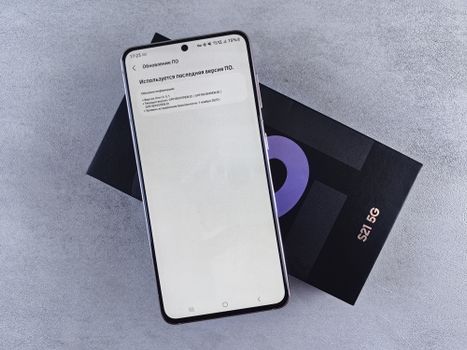 Photo: Andrey Matveev / Pexels
Latency and Reliability: Enabling Real-Time Applications
 Photo: panumas nikhomkhai / Pexels
Capacity and Connection Density: The IoT Enabler
 Photo: Anete Lusina / Pexels
Key Innovations and Future Implications: Beyond the Basics
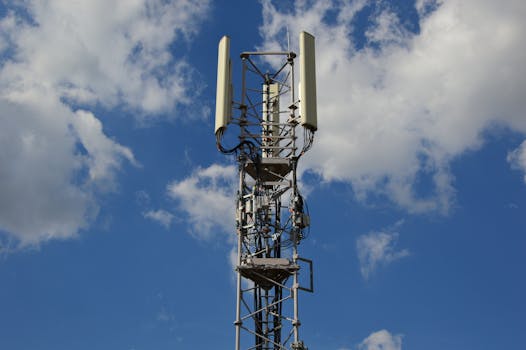 Photo: Ulrick Trappschuh / Pexels
Comparison
| Feature | 5G | 4G LTE | 3G (for context) |
|---|---|---|---|
| Peak Speed (Theoretical) | Up to 10 Gbps | Up to 300 Mbps | Up to 21 Mbps |
| Average Speed (Real-world) | 150 Mbps - 1 Gbps+ | 20-50 Mbps | 2-5 Mbps |
| Latency | 1 ms | 30-50 ms | 100-200 ms |
| Connection Density (per km²) | 1 million devices | 100,000 devices | 10,000 devices |
| Key Applications | AR/VR, IoT, autonomous vehicles, smart cities, remote surgery | HD video streaming, mobile gaming, social media, web browsing | Basic web browsing, email, voice calls |
| Network Architecture | Software-defined, distributed, network slicing | Centralized, monolithic | Centralized |
| Frequency Bands | Sub-6 GHz, mmWave | Sub-6 GHz | Sub-2 GHz |
What Readers Say
"The differences between 5G and 4G technology are night and day, especially for my work. Downloads that took minutes on 4G now finish in seconds on 5G. It's a game-changer for large file transfers."
Sarah J. · Austin, TX"I used to experience noticeable lag playing online games on my phone with 4G. With 5G, the latency is so low it feels like I'm on a wired connection at home. The improvement is truly remarkable."
David M. · Seattle, WA"Our smart home setup with dozens of devices used to occasionally struggle on 4G, especially during peak hours. Since upgrading to 5G-compatible hardware, everything runs flawlessly, demonstrating the increased capacity."
Emily R. · Miami, FL"While the speed differences between 5G and 4G technology are impressive, 5G coverage isn't as widespread as 4G yet, especially outside major city centers. Still, where it works, it's incredibly fast."
Michael T. · Denver, CO"As a developer working with AR applications, the low latency and high bandwidth of 5G are essential. It allows for a much more immersive and responsive user experience compared to what was possible with 4G."
Jessica L. · San Francisco, CAFrequently Asked Questions
What is the primary speed difference between 5G and 4G technology?
The primary speed difference is substantial: 5G offers theoretical peak speeds up to 10 Gbps, while 4G LTE typically peaks around 100-300 Mbps. In real-world scenarios, 5G averages 150 Mbps to over 1 Gbps, significantly faster than 4G's 20-50 Mbps average.
Is 5G safe for my health?
Numerous international and national health organizations, including the World Health Organization (WHO) and the FDA, have stated that current scientific evidence does not indicate any adverse health effects from exposure to 5G networks at levels below international guidelines.
How do I get 5G service?
To get 5G service, you need a 5G-compatible smartphone or device, a 5G-enabled plan from your mobile carrier, and to be in an area with 5G network coverage. Most newer smartphones support 5G, but check your device specifications.
Is 5G more expensive than 4G?
Initially, some 5G plans might have been priced higher, but as 5G becomes more widespread, many carriers are including 5G access in their standard plans without a significant price premium over 4G. Device costs for 5G phones have also become more competitive.
How does 5G compare to Wi-Fi 6?
While both 5G and Wi-Fi 6 are designed for faster speeds and better capacity, they serve different purposes. 5G is a cellular wide-area network for mobile devices, offering mobility and broad coverage. Wi-Fi 6 is for local area networks, providing high speeds within a limited range (e.g., home or office). They are complementary technologies.
Who benefits most from the differences between 5G and 4G technology?
Everyone benefits, but industries and applications requiring ultra-low latency (e.g., autonomous vehicles, remote surgery, industrial automation), massive device connectivity (e.g., smart cities, IoT), and extremely high bandwidth (e.g., AR/VR, 8K streaming) will see the most transformative impact.
Are there any risks or downsides to 5G?
Potential downsides include the need for extensive new infrastructure (especially for mmWave), which can be costly and time-consuming, and the initial limited coverage in some areas. There are also ongoing discussions about energy consumption and cybersecurity as the network becomes more complex.
What future trends will 5G enable that 4G couldn't?
5G will enable widespread adoption of autonomous systems, fully immersive AR/VR experiences, real-time smart city management, advanced telemedicine, highly automated factories, and entirely new forms of mobile computing and interaction that are currently only conceptual.
Understanding the fundamental differences between 5G and 4G technology is key to appreciating the transformative potential of our connected future. While 4G laid the groundwork, 5G is setting the stage for innovations that will redefine industries and our daily lives. Embrace the next generation of connectivity and explore how 5G can empower your digital world.