5G vs 4G: Unpacking the Key Differences for a Faster Future
differences between 5g and 4g networks

5G vs 4G: Unpacking the Key Differences for a Faster Future

Understand how 5G's revolutionary advancements are setting a new standard for mobile communication and digital experiences.

Discover the Future of Connectivity

Key Takeaways

  • ✓ 5G offers significantly higher peak speeds, potentially reaching 10 Gbps, compared to 4G's typical 100 Mbps.
  • ✓ Latency in 5G can be as low as 1 millisecond, crucial for real-time applications like autonomous vehicles and remote surgery.
  • ✓ 5G is designed to connect a massive number of devices simultaneously, enabling the true potential of the Internet of Things (IoT).
  • ✓ 4G relies on larger, more powerful cell towers, while 5G utilizes a dense network of smaller cells, especially for millimeter-wave bands.

How It Works

1
Spectrum Utilization

5G expands into higher frequency bands (millimeter-wave) in addition to sub-6 GHz, allowing for wider bandwidths and faster data transmission. 4G primarily operates within sub-6 GHz frequencies.

2
Antenna Technology

5G employs advanced antenna technologies like Massive MIMO (Multiple Input, Multiple Output) and beamforming to direct signals more efficiently. 4G uses MIMO but on a smaller scale.

3
Network Architecture

5G introduces network slicing, allowing operators to create virtual dedicated networks for specific use cases with tailored performance. 4G uses a more generalized network structure.

4
Edge Computing Integration

5G is designed to integrate seamlessly with edge computing, bringing data processing closer to the source to further reduce latency. 4G networks typically process data in more centralized data centers.

Understanding the Core Technological Leaps from 4G to 5G

Abstract futuristic cyber landscape with digital matrix and glowing lights. Photo: Pachon in Motion / Pexels
The transition from 4G LTE to 5G represents more than just a speed bump; it's a fundamental shift in how mobile networks are designed and utilized. While 4G laid the groundwork for the mobile internet revolution, enabling high-definition video streaming, online gaming, and widespread smartphone adoption, 5G is engineered to support an entirely new ecosystem of connected devices and applications. At its heart, the differences between 5G and 4G networks stem from several key technological advancements. One of the most significant is the expansion of spectrum utilization. 4G primarily operates on lower and mid-band frequencies, which offer good coverage but limited capacity and speed. 5G, on the other hand, leverages a much broader range of frequencies, including the high-band millimeter-wave (mmWave) spectrum. This mmWave spectrum, while offering incredibly high speeds and massive capacity, has a shorter range and is more susceptible to obstructions, necessitating a denser network of small cells. Another crucial differentiator is the network architecture. 4G networks are largely centralized, meaning data travels a considerable distance to core network servers for processing. 5G introduces a more distributed architecture, often incorporating edge computing. This means data can be processed closer to the source, dramatically reducing latency – the time it takes for a signal to travel from its source to its destination and back. For applications like autonomous vehicles, remote surgery, and industrial automation, where milliseconds matter, this low latency is not just an improvement but a necessity. Furthermore, 5G's ability to support network slicing allows network operators to create virtual, customized networks tailored to specific applications. Imagine a slice optimized for ultra-low latency for critical industrial control, another for high bandwidth for entertainment, and yet another for massive IoT connectivity. This flexibility is a game-changer that 4G simply cannot offer. These architectural changes, coupled with advanced antenna technologies like Massive MIMO (Multiple Input, Multiple Output) and beamforming, allow 5G to handle an unprecedented volume of data and connect a vastly greater number of devices simultaneously, paving the way for the true realization of the Internet of Things. The evolution from 4G to 5G is not merely incremental; it is foundational, poised to transform industries and redefine our digital interactions.

Speed, Latency, and Capacity: The Performance Divide
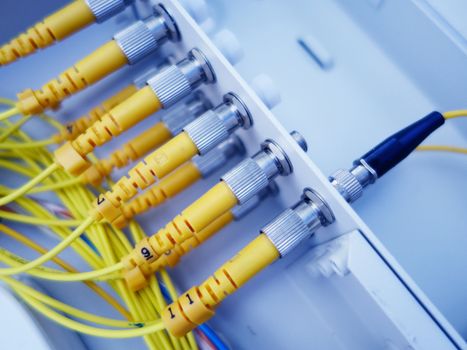
Close-up of yellow fiber optic cables in a network server, showcasing fast data transfer. Photo: panumas nikhomkhai / Pexels
When discussing the differences between 5G and 4G networks, the most frequently cited metrics are speed, latency, and capacity. These three pillars define the performance capabilities of any mobile network, and 5G offers a monumental leap forward in each. In terms of speed, 4G LTE typically delivers average download speeds ranging from 10 Mbps to 100 Mbps, with theoretical peaks around 300 Mbps in ideal conditions. While sufficient for most current mobile uses, this pales in comparison to 5G. 5G promises peak theoretical speeds of up to 10 Gigabits per second (Gbps), which is 100 times faster than average 4G speeds. Even real-world average 5G speeds are often in the hundreds of Mbps, making downloads of large files almost instantaneous and enabling seamless streaming of 8K video. This dramatic increase in speed opens doors for applications that were previously impractical on mobile networks. Latency, the delay between sending and receiving data, is another critical area where 5G shines. 4G networks typically have a latency of around 50-100 milliseconds. While this is fine for web browsing and video calls, it's too high for mission-critical applications. 5G aims for ultra-low latency, as low as 1 millisecond. This near real-time communication is vital for technologies such as autonomous vehicles, where immediate decision-making is paramount, or for remote surgical procedures where even a slight delay can have severe consequences. This low latency also significantly enhances augmented reality (AR) and virtual reality (VR) experiences, making them feel more immersive and responsive by eliminating perceptible delays that can cause motion sickness. Finally, capacity refers to the network's ability to handle multiple connected devices and a large volume of data traffic simultaneously. 4G networks, while robust, can become congested in crowded areas or during peak usage times, leading to slower speeds and dropped connections. 5G is designed with a massive capacity in mind, capable of connecting up to one million devices per square kilometer, compared to 4G's approximately 2,000 devices. This exponential increase in capacity is essential for supporting the burgeoning Internet of Things (IoT), where billions of sensors, smart devices, and industrial machinery will need reliable and efficient connectivity. From smart cities with interconnected infrastructure to factories utilizing thousands of automated robots, 5G's immense capacity is the backbone that will enable a truly connected world, overcoming the limitations that 4G networks would inevitably face with this scale of demand.

The Evolution of Infrastructure: From Macro Cells to Small Cells and Beamforming
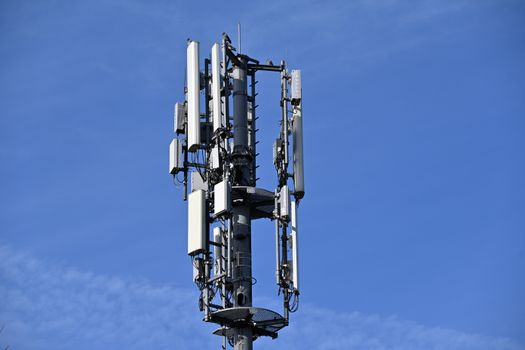
A modern cell tower with antennas against a clear blue sky, symbolizing connectivity. Photo: Edvin Gál / Pexels
The physical infrastructure underpinning mobile networks has undergone a significant evolution, marking another profound one of the differences between 5G and 4G networks. 4G networks largely rely on a system of large, high-powered macro cell towers strategically placed to cover broad geographical areas. These towers emit signals in a wide, relatively un-directed manner, aiming to provide blanket coverage. While effective for widespread connectivity, this approach has limitations. Signals can weaken over distance, and the broad broadcast can lead to interference, especially in densely populated urban environments where many users are competing for bandwidth. 5G, particularly in its higher frequency mmWave bands, requires a fundamentally different infrastructure strategy. Due to the shorter range and greater susceptibility to obstruction of mmWave signals, 5G necessitates a much denser network of smaller, lower-power base stations known as 'small cells.' These small cells can be mounted on lampposts, building facades, and bus shelters, effectively bringing the network closer to the end-user. This dense deployment is crucial for achieving the ultra-high speeds and low latency that 5G promises, especially in urban canyons and indoor environments. While 5G also utilizes existing 4G macro cells for broader sub-6 GHz coverage, the true potential of 5G is unlocked by this micro-network of small cells. Beyond just the physical placement of cells, the antenna technology itself has advanced dramatically. 4G uses MIMO (Multiple Input, Multiple Output) antennas to send and receive multiple data streams simultaneously, improving efficiency. 5G takes this to an unprecedented level with Massive MIMO. Instead of a few antennas, Massive MIMO arrays can contain hundreds of individual antenna elements, packed into a single base station. This allows for an incredible increase in spatial multiplexing, meaning more data can be transmitted and received concurrently. Coupled with Massive MIMO is beamforming, a sophisticated technique that allows base stations to direct radio signals precisely towards individual user devices, rather than broadcasting them broadly. Imagine a spotlight instead of a floodlight. Beamforming not only improves signal strength and quality for the user but also reduces interference for others, enhancing overall network efficiency and capacity. These infrastructural and antenna innovations are critical enablers for 5G's superior performance, overcoming the inherent physical limitations of higher frequency bands and marking a significant departure from the 4G paradigm.

Real-World Applications and Future Implications: What 5G Enables Beyond 4G

Intricate abstract visualization of digital circuit blocks with vibrant LED lights, showcasing technology and innovation. Photo: Pachon in Motion / Pexels
The true significance of the differences between 5G and 4G networks lies not just in technical specifications, but in the transformative real-world applications they enable. While 4G brought us the smartphone era, enabling mobile video, social media, and on-demand services, 5G is poised to usher in an era of pervasive connectivity and intelligent automation. Consider the smart city concept: 4G could connect traffic sensors and smart meters, but 5G can orchestrate a vast network of interconnected devices, from intelligent streetlights that adjust illumination based on traffic and pedestrian flow, to waste management systems that optimize collection routes, and public safety cameras with real-time AI analytics. The sheer volume of data and the low latency required for such complex urban ecosystems are beyond 4G's capabilities. In the industrial sector, 5G is a game-changer for Industry 4.0. Factories can deploy private 5G networks to connect thousands of robotic arms, automated guided vehicles (AGVs), and IoT sensors, enabling real-time monitoring, predictive maintenance, and highly flexible manufacturing lines. The ultra-reliable low-latency communication (URLLC) feature of 5G is critical here, ensuring that commands to machinery are executed instantly and without fail, a level of reliability that 4G cannot guarantee. This leads to increased efficiency, reduced downtime, and safer working environments. For healthcare, 5G's low latency and high bandwidth facilitate remote surgery, where specialists can guide robots in distant operating rooms with precision, and enable real-time transmission of high-resolution medical imaging, improving diagnostics and emergency response. Telemedicine, already bolstered by 4G, becomes even more robust with 5G, allowing for more interactive and data-rich virtual consultations. Beyond these industrial applications, 5G will profoundly impact consumer experiences. Enhanced mobile broadband will make cloud gaming indistinguishable from console gaming, as latency is virtually eliminated. Augmented reality (AR) and virtual reality (VR) will become mainstream, with devices that are lighter, more responsive, and untethered, offering immersive experiences for entertainment, education, and professional training. The future implications are vast: from more efficient transportation systems with connected vehicles communicating with each other and infrastructure, to personalized education experiences delivered through interactive AR/VR, and entirely new business models built around real-time data and automation. While 4G was about connecting people to information, 5G is about connecting everything to everything, enabling a truly intelligent and responsive world that was previously the stuff of science fiction. Understanding these capabilities is crucial to grasping the profound impact of 5G.

Comparison

Feature5G4G LTE
Peak Speed (Theoretical)Up to 10 GbpsUp to 300 Mbps
Average Speed (Real World)100s of Mbps to Gbps10-100 Mbps
Latency1-5 ms50-100 ms
Capacity (Devices/km²)1,000,000+2,000
Primary Use CasesIoT, AR/VR, Autonomous Vehicles, Industry 4.0Mobile Browsing, Video Streaming, Social Media
Network ArchitectureDistributed, Edge Computing, Network SlicingCentralized
Antenna TechnologyMassive MIMO, BeamformingMIMO
Spectrum UtilizationSub-6 GHz & mmWaveSub-6 GHz

What Readers Say

"The differences between 5G and 4G networks are immediately apparent when I'm downloading large files. On 5G, a movie downloads in seconds, while on 4G it could take several minutes. It's truly game-changing for productivity."

Sarah J. · Austin, TX

"I used to experience noticeable lag during online gaming on my mobile, even on 4G. With 5G, the latency is so low it feels like I'm on a wired connection. It's a much smoother and more enjoyable experience."

Mark T. · Seattle, WA

"For our remote diagnostic tools, the ultra-low latency of 5G is critical. The differences between 5G and 4G networks in terms of response time mean we can receive and analyze patient data in near real-time, which was simply not possible before."

Dr. Emily R. · Boston, MA

"While 5G speeds are incredible, I've noticed that coverage can still be spotty in some areas, especially indoors. It's definitely better than 4G in terms of raw performance, but the widespread availability isn't quite there yet for consistent experience."

David C. · Denver, CO

"As a content creator, uploading large video files on 4G was a chore. Now with 5G, the upload speeds are phenomenal, making my workflow so much more efficient. The differences between 5G and 4G networks here are night and day."

Lena M. · San Francisco, CA

Frequently Asked Questions

What are the primary differences between 5G and 4G networks?

The primary differences between 5G and 4G networks revolve around significantly higher speeds (up to 10 Gbps vs. 100 Mbps), ultra-low latency (1-5 ms vs. 50-100 ms), and vastly increased capacity (millions vs. thousands of devices per square kilometer). 5G also utilizes new spectrum bands and advanced antenna technologies like Massive MIMO and beamforming.

Is 5G safe for my health?

Reputable scientific organizations and regulatory bodies, including the World Health Organization (WHO) and the FCC, have stated that 5G technology, when operating within established guidelines, does not pose a health risk. The radio frequencies used for 5G are non-ionizing, meaning they don't have enough energy to damage DNA.

How can I get 5G service?

To get 5G service, you need a 5G-compatible device (smartphone, tablet, etc.) and a service plan from a carrier that offers 5G in your area. Ensure you are in a location with 5G network coverage, as 5G deployment is still expanding across the US.

Is 5G more expensive than 4G?

Initially, 5G plans might have been slightly more expensive or required specific premium tiers. However, as 5G becomes more widespread, many carriers are including 5G access in their standard unlimited data plans at no extra cost, making it comparable to 4G in terms of pricing for many consumers.

How does 5G compare to Wi-Fi?

5G often offers comparable or even faster speeds than many home Wi-Fi networks, especially when using high-band mmWave 5G. The key difference is mobility; 5G provides high-speed internet on the go, whereas Wi-Fi is typically limited to a fixed location. 5G can also serve as a viable alternative to traditional wired home internet in some areas.

Who benefits most from the differences between 5G and 4G networks?

Everyone benefits from the general speed and capacity improvements, but specific beneficiaries include gamers (low latency), professionals handling large files (high speed), businesses adopting IoT and automation (massive capacity, URLLC), and developers of AR/VR applications (low latency, high bandwidth).

Are there any drawbacks to 5G compared to 4G?

While 5G offers significant advantages, current drawbacks include potentially spottier coverage (especially for high-band 5G), higher power consumption for devices (leading to faster battery drain), and the need for new 5G-compatible hardware. The full realization of 5G's potential also requires extensive infrastructure build-out.

What is the future outlook for 5G technology?

The future of 5G is bright, with continued expansion of coverage, further integration with edge computing, and the development of new applications that fully leverage its capabilities. Expect more robust IoT ecosystems, widespread adoption of autonomous technologies, and increasingly immersive digital experiences as 5G matures and becomes ubiquitous.

Understanding the fundamental differences between 5G and 4G networks is key to appreciating the transformative power of this new technology. As 5G continues to roll out, it promises not just faster phones, but a foundation for a truly connected, intelligent, and automated world. Explore 5G today and experience the next generation of connectivity.

Topics: differences between 5g and 4g networks5G speed4G LTEnetwork latencymobile connectivity
Leo List
Brampton weed
Adultwork