Compare Samsung Galaxy S24 vs iPhone 15: Which Reigns Supreme?
compare samsung galaxy s24 vs iphone 15

Compare Samsung Galaxy S24 vs iPhone 15: Which Reigns Supreme?

Uncover the definitive differences between these flagship smartphones to make an informed decision on your next tech investment.

Choose Your Champion

Key Takeaways

  • ✓ The Galaxy S24 introduces advanced AI features like Circle to Search and Live Translate.
  • ✓ iPhone 15 boasts the powerful A16 Bionic chip, offering exceptional performance.
  • ✓ Both devices feature impressive camera systems, but with different photographic philosophies.
  • ✓ USB-C is now standard on both, but with varying data transfer speeds.
  • ✓ Battery life and display technology offer nuanced differences for users.

How It Works

1
Understand Your Priorities

Before diving into specs, consider what matters most to you: camera, battery, ecosystem, or AI features. This will guide your comparison effectively.

2
Analyze Core Specifications

Examine processor, RAM, storage, and display technologies. These fundamental elements dictate the overall user experience and long-term performance.

3
Evaluate Ecosystem and Software

Consider whether iOS or Android aligns better with your existing devices and preferred app functionalities. Both offer unique strengths and integrations.

4
Factor in Pricing and Longevity

Assess the initial cost, potential trade-in values, and expected software support lifespan for each device. This ensures a wise financial and technological investment.

Performance and Processing Power: A Head-to-Head Battle

Detailed view of RAM sticks and microprocessors on a motherboard. Photo: Sergei Starostin / Pexels
When you compare Samsung Galaxy S24 vs iPhone 15, one of the most critical aspects for many users is raw performance. This isn't just about how fast an app opens; it impacts everything from gaming fluidity to complex photo editing, and even the responsiveness of the user interface. The Samsung Galaxy S24, depending on the region, comes equipped with either Samsung's own Exynos 2400 chip or Qualcomm's Snapdragon 8 Gen 3 for Galaxy. In the US, most users will find the Snapdragon variant. This chip is a marvel of modern engineering, built on a 4nm process, and designed for peak efficiency and blistering speed. It boasts a powerful CPU and an Adreno GPU that can handle the most demanding mobile games and applications with ease. Samsung has also optimized its software, One UI, to take full advantage of this hardware, ensuring a smooth and responsive experience across the board. Furthermore, the S24 series places a heavy emphasis on AI capabilities, with the Snapdragon 8 Gen 3 featuring a significantly upgraded Neural Processing Unit (NPU) that accelerates on-device AI tasks, such as real-time language translation, advanced photo editing, and intelligent search functions. This dedicated AI hardware means these features run seamlessly and efficiently without relying solely on cloud processing. On the other side, the iPhone 15 houses Apple's A16 Bionic chip, which was first introduced with the iPhone 14 Pro models. While not the very latest A-series chip (that honor belongs to the A17 Pro in the iPhone 15 Pro), the A16 Bionic is still an incredibly potent piece of silicon. Also built on a 4nm process, it features a 6-core CPU (2 performance cores, 4 efficiency cores) and a 5-core GPU, alongside a 16-core Neural Engine. Apple's long-standing advantage has been its tight integration of hardware and software, allowing its chips to deliver exceptional performance even with seemingly lower core counts or clock speeds compared to some Android counterparts. The A16 Bionic excels in sustained performance, meaning it can maintain high levels of power for longer periods without significant throttling, which is crucial for intensive tasks like video rendering or extended gaming sessions. Its Neural Engine is equally adept at handling AI and machine learning tasks, powering features like Photographic Styles, Deep Fusion, and advanced Siri capabilities. For everyday use, both phones offer phenomenal speed, but for cutting-edge AI features and the absolute latest Android silicon, the S24 might edge out the base iPhone 15. However, for sheer raw processing power and graphics prowess in its class, the A16 Bionic in the iPhone 15 remains a formidable contender, showcasing Apple's continued dominance in chip design. Exploring mobile processor benchmarks can offer a deeper comparative look.

Camera Capabilities and Computational Photography

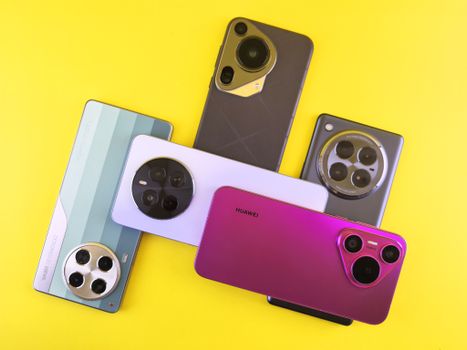
Extreme close-up of smartphone camera lenses with vibrant yellow background, showcasing modern technology. Photo: Monojit Dutta / Pexels
The camera system is often the single most important feature for many smartphone buyers, and when you compare Samsung Galaxy S24 vs iPhone 15, you're looking at two of the best in the business, each with its own philosophy. The Samsung Galaxy S24 continues Samsung's tradition of offering a versatile camera array. It typically features a triple-lens setup: a 50MP main wide-angle sensor with OIS, a 12MP ultrawide lens, and a 10MP telephoto lens capable of 3x optical zoom. Samsung's cameras are known for producing vibrant, punchy images that are ready for social media straight out of the camera. The 50MP main sensor utilizes pixel-binning technology to capture more light and detail, often outputting 12MP or 12.5MP images with superior clarity. The telephoto lens is a significant advantage over the base iPhone 15, allowing for true optical zoom without digital interpolation. Furthermore, the S24 introduces enhanced AI-powered editing tools, such as 'Generative Edit' which can fill in backgrounds or move subjects, and 'Edit Suggestion' which recommends optimal adjustments for your photos. Video capabilities are also robust, with up to 8K recording at 30fps and excellent stabilization. The front-facing camera is usually a 12MP sensor, delivering sharp selfies and clear video calls. Conversely, the iPhone 15 takes a different, often more naturalistic approach to photography. It features a dual-camera system on the rear: a 48MP main sensor and a 12MP ultrawide lens. The 48MP main sensor is a significant upgrade from previous base models, also using pixel-binning to produce stunning 24MP default images with incredible detail and improved low-light performance. A key innovation for the iPhone 15 is its ability to use the central 12MP of the 48MP sensor to create a 2x optical quality zoom, effectively giving users a telephoto-like experience without a dedicated telephoto lens. This 'optical quality' zoom is surprisingly good and a major benefit for those who want to get closer to their subjects without sacrificing quality. Apple's computational photography, powered by the A16 Bionic chip, includes features like Photonic Engine, Deep Fusion, and Smart HDR 5, which work together to optimize dynamic range, color accuracy, and detail in various lighting conditions. Portrait Mode has also seen improvements, allowing users to shift focus after the photo has been taken. Video recording is a strong suit for the iPhone, with 4K recording up to 60fps, Cinematic Mode, and Action Mode providing professional-grade stabilization. The 12MP TrueDepth front camera offers excellent selfie quality and supports Face ID. While Samsung offers more zoom flexibility with a dedicated telephoto, the iPhone 15's 48MP sensor and computational photography deliver exceptional results, particularly for those who prefer a more true-to-life color reproduction. The choice here often comes down to personal aesthetic preference and the importance of a dedicated optical zoom lens versus Apple's computational prowess.

Display, Design, and User Experience: A Tale of Two Ecosystems

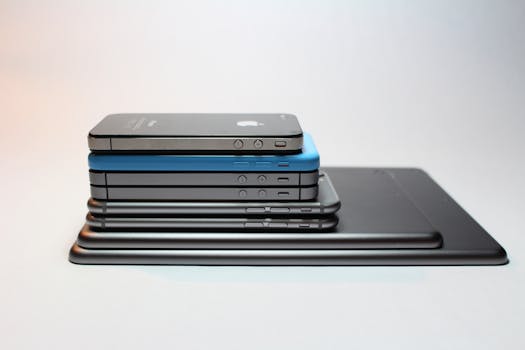
Stacked modern smartphones and tablets showcasing sleek design. Perfect tech background. Photo: Gabriel Freytez / Pexels
Beyond the internal hardware and camera prowess, the daily interaction with a smartphone is heavily influenced by its display, overall design, and the underlying user experience. When you compare Samsung Galaxy S24 vs iPhone 15, you're not just comparing phones; you're comparing entire ecosystems and design philosophies. The Samsung Galaxy S24 features a stunning 6.2-inch Dynamic AMOLED 2X display. This panel boasts a variable refresh rate of 1-120Hz, ensuring incredibly smooth scrolling and animations while also being power-efficient for static content. With a peak brightness that can reach up to 2,600 nits, it's exceptionally bright and viewable even under direct sunlight, making it one of the best displays on the market for media consumption and outdoor use. Samsung's displays are known for their vibrant colors and deep blacks, offering an immersive visual experience. The design of the S24 is refined, featuring flat edges similar to its predecessor but with a more premium feel, often incorporating an Armor Aluminum frame. The bezels are incredibly slim, maximizing screen real estate. The user experience is powered by Android 14 with Samsung's One UI 6.1 overlay. One UI is highly customizable, offering extensive personalization options, multi-tasking capabilities like pop-up view and split-screen, and a host of unique Samsung features. The new Galaxy AI suite, including Circle to Search, Chat Assist, and Live Translate, is deeply integrated into the OS, offering powerful and intuitive tools that enhance productivity and communication. Samsung also promises 7 years of OS updates and security patches, ensuring long-term usability and value. Understanding AMOLED display technology can provide context for its advantages. In contrast, the iPhone 15 sports a 6.1-inch Super Retina XDR OLED display. While its refresh rate is a standard 60Hz, Apple's optimization of iOS ensures that the user experience feels incredibly fluid. The display offers excellent color accuracy, contrast, and a peak brightness of 2,000 nits outdoors, which is still very impressive. The iPhone 15's design marks a significant departure from previous base models by introducing a Dynamic Island, previously exclusive to Pro models. This interactive pill-shaped cutout replaces the traditional notch and cleverly integrates alerts, activities, and notifications, transforming a hardware cutout into a dynamic software feature. The phone features a new contoured edge design, making it more comfortable to hold, and a color-infused glass back that is both elegant and durable. The frame is made from aerospace-grade aluminum. The user experience on the iPhone 15 is defined by iOS 17, known for its intuitive interface, robust security features, and seamless integration with Apple's ecosystem of devices and services. While iOS offers less customization than Android, its consistency and ease of use are highly valued by its users. Key features like Face ID, iMessage, and the App Store's vast selection remain central to the iPhone experience. The introduction of USB-C is a major change, offering universal compatibility for charging and data transfer, though the base iPhone 15 supports USB 2.0 speeds, unlike the faster USB 3 on the Pro models and the S24. The choice between these two largely boils down to preference for display refresh rate, level of software customization, and commitment to either the Android or Apple ecosystem. Samsung offers more advanced display tech and deeper AI integration, while Apple provides a refined, consistent, and highly integrated experience.

Battery Life, Charging, and Ecosystem Integration: Powering Your Digital Life

A smartphone charging from a power bank with an orange cable on a wooden table. Photo: Eleonora Vokueva / Pexels
Battery life and charging speeds are paramount for modern smartphone users, determining how long you can stay connected and productive throughout your day. When you compare Samsung Galaxy S24 vs iPhone 15, both offer commendable endurance, but with distinct approaches to charging and ecosystem integration. The Samsung Galaxy S24 typically houses a 4,000 mAh battery, a slight increase from its predecessor, which, combined with the efficient Snapdragon 8 Gen 3 chip and the adaptive 1-120Hz AMOLED display, allows for comfortable all-day use for most users. Samsung supports 25W wired fast charging, which can get the phone to about 50% in roughly 30 minutes, and 15W wireless charging. It also features 4.5W reverse wireless charging, allowing you to power up accessories like Galaxy Buds or another compatible phone. Samsung's ecosystem, SmartThings, provides a comprehensive platform for connecting and controlling a wide array of smart home devices, wearables like the Galaxy Watch, and other Samsung electronics. The tight integration extends to Windows PCs through features like Link to Windows, enabling seamless file transfer, messaging, and app mirroring. This open ecosystem approach provides flexibility and broad compatibility with various third-party devices and services, making it an attractive option for those who prefer a less walled garden experience. The introduction of Galaxy AI further enhances the user experience by intelligently managing power consumption for AI features, ensuring that these advanced capabilities don't unduly drain the battery, further solidifying its appeal for power users. The iPhone 15, while Apple rarely discloses exact battery capacities, is known to have a battery size that, when combined with the highly power-efficient A16 Bionic chip and iOS optimizations, also provides excellent all-day battery life. Apple's focus is on optimizing every aspect of the software and hardware to maximize endurance, rather than simply cramming in the largest possible battery. For charging, the iPhone 15 supports up to 20W wired fast charging, achieving around 50% charge in 30 minutes, and 15W MagSafe wireless charging, along with 7.5W Qi wireless charging. The new USB-C port brings greater convenience, allowing users to use a single cable for their iPhone, iPad, and Mac, reducing cable clutter. Apple's ecosystem, renowned for its seamless integration, is a major draw for iPhone users. Features like Handoff, AirDrop, Continuity Camera, and Find My work effortlessly across iPhones, iPads, Macs, Apple Watches, and AirPods, creating a cohesive and intuitive user experience. For those already invested in Apple's suite of products, the iPhone 15 offers unparalleled convenience and synergy. While the iPhone 15's charging speeds are competitive, they aren't class-leading, and its ecosystem, while powerful, is more closed off compared to Samsung's. The choice here often comes down to whether you prioritize faster theoretical charging and a more open device ecosystem (Samsung) or the highly optimized, seamlessly integrated, and user-friendly experience of Apple's closed ecosystem. Both phones promise to keep you powered through your day, but their methods and surrounding digital environments are distinctly different.

Comparison

FeatureSamsung Galaxy S24iPhone 15Best For
ProcessorSnapdragon 8 Gen 3 (US) / Exynos 2400A16 Bionic✓ Power Users (S24), ✓ Sustained Performance (iPhone 15)
Display6.2" Dynamic AMOLED 2X, 1-120Hz, 2600 nits peak6.1" Super Retina XDR OLED, 60Hz, 2000 nits peak✓ Smoother visuals (S24), ✓ Color accuracy (iPhone 15)
Main Camera50MP (OIS), 12MP Ultrawide, 10MP 3x Telephoto48MP (OIS), 12MP Ultrawide, 2x Telephoto (digital)✓ Versatility/Optical Zoom (S24), ✓ Natural colors/Computational (iPhone 15)
AI FeaturesGalaxy AI: Circle to Search, Live Translate, Generative EditSiri, Photonic Engine, Deep Fusion✓ Cutting-edge AI tools (S24), ✓ Integrated AI (iPhone 15)
Battery (Typical)4000 mAh, 25W Wired, 15W WirelessApprox. 3349 mAh, 20W Wired, 15W MagSafe Wireless✓ Slightly Larger Capacity (S24), ✓ Optimized Efficiency (iPhone 15)
Charging PortUSB-C (USB 3.2 Gen 1)USB-C (USB 2.0)✓ Faster Data Transfer (S24), ✓ Universal Convenience (iPhone 15)
Software Updates7 years OS + SecurityTypically 5-7 years OS + Security✓ Longer Guaranteed Support (S24), ✓ Consistent Experience (iPhone 15)

What Readers Say

"I was torn trying to compare Samsung Galaxy S24 vs iPhone 15, but the S24's AI features, especially Circle to Search, completely won me over. It's a game-changer for daily tasks and feels genuinely futuristic."

Sarah J. · Austin, TX

"Upgrading to the iPhone 15 was seamless. The camera is incredible, and the Dynamic Island is surprisingly useful. It just works perfectly with my other Apple devices."

Mark D. · Seattle, WA

"As a photographer, the 3x optical zoom on the S24 was the deciding factor. My pictures look phenomenal, and the display makes editing on the go a joy. Absolutely worth it!"

Jessica L. · Miami, FL

"The iPhone 15 is a solid upgrade, particularly the USB-C. I wish the screen had a higher refresh rate like some Androids, but the overall performance and battery life are excellent for my needs."

David P. · Chicago, IL

"I finally decided to compare Samsung Galaxy S24 vs iPhone 15 after years on Android. The S24's customization options and the vibrant display are fantastic. I particularly love the Live Translate feature for travel."

Emily R. · Denver, CO

Frequently Asked Questions

What are the biggest differences when I compare Samsung Galaxy S24 vs iPhone 15?

The main differences lie in their operating systems (Android vs. iOS), processor (Snapdragon 8 Gen 3/Exynos 2400 vs. A16 Bionic), camera setups (S24 has a dedicated telephoto lens), and AI features (S24 with Galaxy AI). The S24 also boasts a 120Hz adaptive display, while the iPhone 15 is 60Hz.

Is the Samsung Galaxy S24's AI a gimmick or genuinely useful?

The Galaxy S24's AI features, like Circle to Search and Live Translate, are genuinely useful and integrated deeply into the operating system. They offer practical benefits for communication, productivity, and photo editing, making daily tasks more efficient and intuitive.

How do the cameras compare for everyday photos and videos?

Both phones excel in everyday photography. The S24 offers more zoom versatility with its dedicated 3x optical telephoto lens and vibrant, social-media-ready photos. The iPhone 15, with its 48MP main sensor and computational photography, delivers incredibly detailed and color-accurate images with excellent video capabilities, including a 2x optical quality zoom. Your preference may depend on color science and zoom needs.

Which phone offers better long-term value and software support?

The Samsung Galaxy S24 now offers an impressive 7 years of OS and security updates, potentially surpassing Apple's typical 5-7 years of major iOS updates. This commitment from Samsung provides excellent long-term value and ensures your device remains current and secure for an extended period.

Should I switch from Android to iPhone, or vice versa?

Switching depends on your ecosystem preference. If you value deep customization, advanced multitasking, and a broader range of AI features, the S24 (Android) is compelling. If you prefer a simpler, highly integrated experience with seamless cross-device functionality and robust privacy, the iPhone 15 (iOS) is a strong choice. Both are premium devices, so consider which ecosystem aligns with your existing tech.

Who should choose the Samsung Galaxy S24?

The Samsung Galaxy S24 is ideal for users who want the latest AI innovations, a highly customizable Android experience, a vibrant 120Hz display, a versatile camera system with optical zoom, and a long software support lifespan. It's also great for those who prefer an open ecosystem.

Are there any security concerns with either phone?

Both Samsung and Apple prioritize security. Apple is renowned for its robust privacy and security features integrated into iOS, including Face ID and end-to-end encryption. Samsung's Knox security platform offers multi-layered protection for Android. Both devices receive regular security updates, making them very secure choices.

What's the future trend for these flagship phones?

The trend indicates a strong focus on AI integration, as seen with the Galaxy S24's advanced features, and continued improvements in computational photography. We can also expect further advancements in display technology, battery efficiency, and potentially more sustainable manufacturing practices from both brands in future iterations.

Choosing between the Samsung Galaxy S24 and the iPhone 15 boils down to your personal priorities and ecosystem preference. By thoroughly evaluating their camera, performance, AI, and user experience, you can confidently select the smartphone that best enhances your digital life. Make an informed decision and upgrade to the device that truly fits your needs.

Topics: compare samsung galaxy s24 vs iphone 15galaxy s24 reviewiphone 15 featuressamsung vs apple phonesbest flagship phone
Leo List
Brampton weed
Adultwork