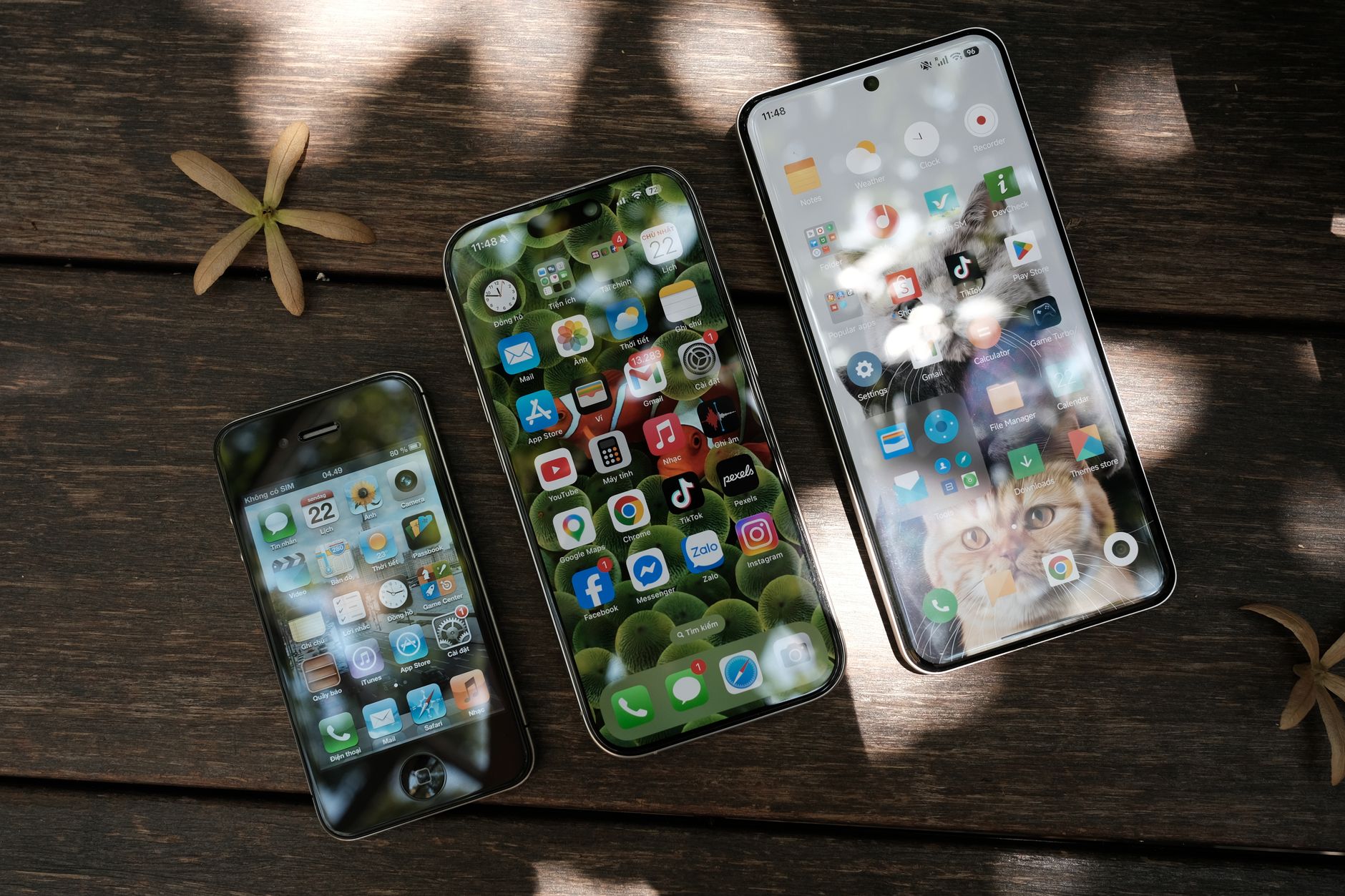
Compare iPhone 15 vs Samsung S24: Which Flagship Reigns?
compare iPhone 15 vs Samsung S24

Compare iPhone 15 vs Samsung S24: Which Flagship Reigns?

Uncover the definitive differences between Apple's and Samsung's latest standard bearers to make your informed choice.

Read the Full Comparison

Key Takeaways

  • ✓ iPhone 15 features A16 Bionic, Dynamic Island, and USB-C.
  • ✓ Samsung S24 boasts Exynos 2400 (or Snapdragon 8 Gen 3 for US), Galaxy AI features, and a brighter display.
  • ✓ Both offer exceptional camera systems, but with different processing philosophies.
  • ✓ Battery life varies by use case and model, with both providing all-day power.
  • ✓ iOS and Android present distinct user experiences and app ecosystems.

How It Works

1
Understand Your Priorities

Before diving into specs, consider what matters most to you: camera, battery, ecosystem, or specific features. This will help filter the overwhelming information.

2
Deep Dive into Core Specs

Examine the processor, display technology, camera specifications, and battery capacity. Look beyond marketing terms to understand real-world implications.

3
Evaluate Ecosystem Benefits

Consider your current devices (laptop, tablet, smartwatch) and preferred operating system. Switching ecosystems can be a significant undertaking.

4
Read Real-World Reviews

Supplement spec sheets with hands-on reviews and long-term user experiences. This provides crucial insight into daily performance and potential quirks.

Design, Display, and Ergonomics: First Impressions Matter
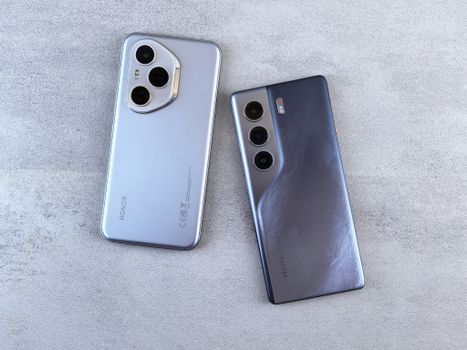
Two modern smartphones displayed on a concrete surface, showcasing different camera designs and styles. Photo: Andrey Matveev / Pexels
When you first pick up a new smartphone, its design, the quality of its display, and how it feels in your hand are immediate indicators of its premium status. The iPhone 15 and Samsung S24, both standard bearers for their respective companies, present distinct philosophies in these areas. Apple’s iPhone 15 continues the design language refined over several generations, featuring flat edges and an aerospace-grade aluminum frame. It maintains a familiar, elegant aesthetic that's instantly recognizable. The display is a Super Retina XDR OLED, offering vibrant colors, deep blacks, and excellent brightness, peaking at 2000 nits outdoors. Crucially, the Dynamic Island, introduced with the iPhone 14 Pro, now makes its way to the standard iPhone 15, integrating notifications and live activities seamlessly into the pill-shaped cutout. This not only enhances functionality but also gives the front a more modern, less intrusive appearance compared to the older notch. The Ceramic Shield front cover promises enhanced durability against drops and scratches. In terms of ergonomics, the iPhone 15 is relatively compact and lightweight, making one-handed use comfortable for most users. Its precise construction and premium materials contribute to a solid, high-quality feel. Exploring iPhone innovations over the years reveals Apple's consistent commitment to design evolution. On the other hand, the Samsung Galaxy S24 (standard model, not Ultra) evolves its design with a slightly flatter frame, moving closer to Apple's aesthetic but retaining its distinct curved corners and a more symmetrical bezel profile. Samsung's Dynamic AMOLED 2X display is renowned for its brilliance and vibrancy, and the S24 pushes this further with an even higher peak brightness of 2600 nits, making it incredibly legible even in direct sunlight. The adaptive refresh rate, ranging from 1Hz to 120Hz, ensures buttery-smooth scrolling and animations while conserving battery life when static content is displayed. The S24 also features Corning Gorilla Glass Victus 2 on both the front and back for enhanced durability. Samsung's approach often emphasizes a more expansive, immersive screen experience, and the S24 delivers on this. While slightly larger than the iPhone 15, the S24's refined dimensions and balanced weight distribution still make it comfortable to hold. The choice between the two often comes down to personal preference for screen curvature, bezel design, and overall hand-feel. Both devices offer IP68 water and dust resistance, assuring durability in everyday scenarios. The subtle differences in button placement, haptic feedback, and material finishes also contribute to the overall user experience, making a hands-on comparison invaluable for discerning users. The transition to USB-C on the iPhone 15 also marks a significant convergence in charging standards, simplifying cable management for users with multiple devices.

Performance and Software Experience: Powering Your Digital Life
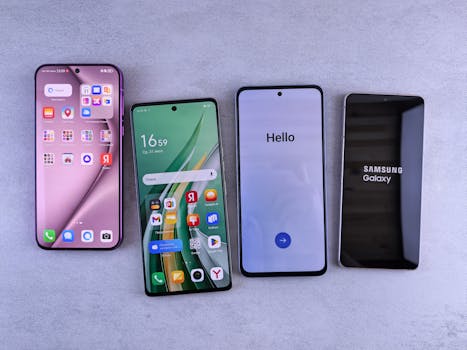
Four modern smartphones showcasing home screens, applications, and startup logos on a sleek surface. Photo: Andrey Matveev / Pexels
At the heart of any flagship smartphone lies its processor, dictating everything from app launch speeds to gaming performance and AI capabilities. The iPhone 15 is powered by Apple's A16 Bionic chip, the same silicon that debuted in the iPhone 14 Pro models. This 4nm chip features a 6-core CPU, 5-core GPU, and a 16-core Neural Engine. The A16 Bionic is an absolute powerhouse, offering industry-leading performance for demanding tasks, complex games, and advanced computational photography. Its efficiency cores ensure excellent battery life for everyday usage, while the performance cores kick in for intensive workloads. Apple's tight integration between hardware and software, specifically iOS 17, allows for unparalleled optimization. iOS 17 brings enhancements like StandBy mode, improved AirDrop, and personalized Contact Posters, further refining the user experience. The operating system is known for its intuitive interface, robust security features, and a vast ecosystem of high-quality apps. Software updates are consistently delivered for many years, ensuring longevity and access to the latest features and security patches. Conversely, the Samsung Galaxy S24's performance varies slightly by region. In the US, it typically features Qualcomm's Snapdragon 8 Gen 3 for Galaxy, a custom-tuned version of the latest Snapdragon flagship chip. In other regions, including Europe, it might utilize Samsung's own Exynos 2400. Both are incredibly powerful chips, designed to compete directly with Apple's A-series. The Snapdragon 8 Gen 3 for Galaxy boasts significant improvements in CPU, GPU, and NPU performance over its predecessor, excelling in AI tasks, gaming, and multi-tasking. The Exynos 2400 also represents a substantial leap for Samsung's in-house silicon, focusing on enhanced graphics and AI capabilities. These chips enable Samsung's flagship Galaxy AI features, such as Circle to Search with Google, Live Translate for calls, Transcript Assist, and advanced photo editing suggestions. These AI functionalities are a major differentiator for the S24 series, offering innovative ways to interact with your device and the world around you. The S24 runs One UI 6.1, based on Android 14. Samsung's One UI is highly customizable, offering a wealth of features, extensive theming options, and advanced multi-tasking capabilities like pop-up views and split-screen. It also boasts a strong commitment to software updates, promising seven generations of OS upgrades and seven years of security updates, matching Google's Pixel series and offering industry-leading support. The choice here often comes down to your preferred operating system – the streamlined, integrated experience of iOS versus the customizable, open nature of Android with its new AI-centric features. Both devices offer exceptional performance, but their approach to delivering that power and the software ecosystem built around it are fundamentally different.

Camera Capabilities and Multimedia Experience: Capturing Memories
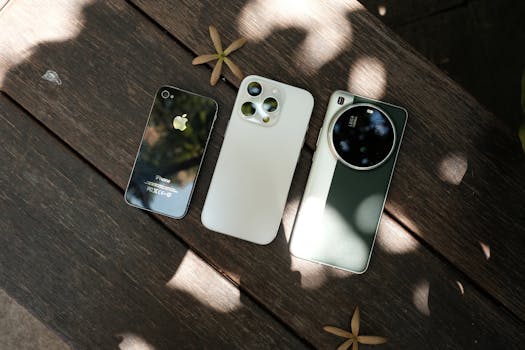
Three modern smartphones displayed on a wooden surface with natural lighting. Photo: Phong Thanh / Pexels
For many users, the camera is the most critical feature of a modern smartphone. Both the iPhone 15 and Samsung S24 offer sophisticated camera systems, but they approach image processing and feature sets with distinct philosophies. The iPhone 15 features a dual-camera system: a 48MP main sensor (with a larger sensor and faster aperture than its predecessor) and a 12MP ultrawide lens. Apple leverages pixel binning to output detailed 24MP photos by default, and the larger sensor allows for 2x optical quality zoom by cropping into the sensor's full resolution. The computational photography behind the iPhone 15 is exceptional, delivering consistent, true-to-life colors, excellent dynamic range, and strong low-light performance. New features like next-generation portraits automatically detect when a person or pet is in the frame, allowing you to adjust focus and depth of field after the shot. Video recording remains a strong suit for the iPhone, with 4K 60fps across all cameras, Cinematic Mode, and Action Mode providing professional-grade stabilization. Apple's video quality and ease of use are often considered benchmarks in the industry. The front-facing 12MP TrueDepth camera also benefits from improved low-light performance and autofocus. Understanding camera sensor technology can help appreciate these advancements. Samsung's Galaxy S24 also sports a versatile triple-camera setup: a 50MP main sensor, a 12MP ultrawide, and a 10MP telephoto lens offering 3x optical zoom. Samsung's cameras are known for their vibrant, punchy colors and high detail, often appealing to users who prefer a more saturated look. The S24 also excels in low-light conditions, with its Nightography features further enhanced by AI. The dedicated telephoto lens provides a native optical zoom, offering greater flexibility for capturing distant subjects without loss of detail. Video capabilities are equally impressive, with 8K 30fps recording and a host of stabilization options. A key differentiator for the S24 is its suite of Galaxy AI editing tools. Features like Generative Edit allow users to resize, reposition, or even remove objects from photos, with the AI filling in the background. Edit Suggestion provides instant recommendations for optimizing your shots. These AI-powered tools provide creative control that goes beyond traditional photo editing. In terms of multimedia, both phones offer excellent stereo speakers and support for high-resolution audio. The S24's brighter display can make for a more immersive viewing experience, especially outdoors. The choice between the two camera systems often comes down to preference for color science (natural vs. vibrant) and whether you prioritize Apple's video prowess and consistent computational photography or Samsung's versatile zoom and innovative AI editing features. Both are capable of capturing stunning images and videos, making the decision a matter of personal artistic preference and specific use-case needs.

Battery Life, Charging, and Ecosystem Integration: Daily Utility
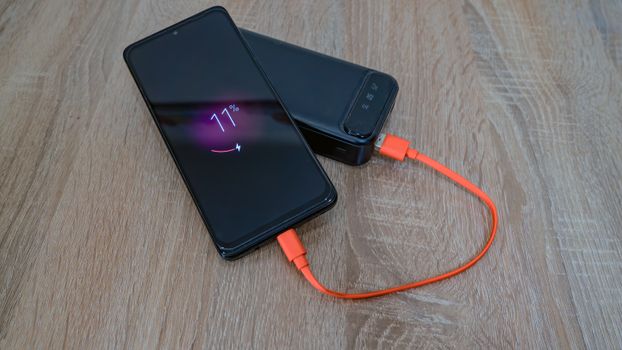
A smartphone charging from a power bank with an orange cable on a wooden table. Photo: Eleonora Vokueva / Pexels
Battery life and charging speeds are crucial for a device that's meant to be used all day, every day. The iPhone 15 comes with a 3,349 mAh battery, which, when combined with the efficient A16 Bionic chip and iOS 17 optimizations, provides excellent all-day battery life for most users. Apple typically quotes up to 20 hours of video playback. Charging speeds on the iPhone 15 are decent, supporting up to around 20-27W wired charging, allowing it to reach about 50% charge in 30 minutes with a compatible adapter (sold separately). It also supports 15W MagSafe wireless charging and 7.5W Qi wireless charging. The switch to USB-C is a major convenience, standardizing the charging port across many modern devices. Ecosystem integration is where Apple truly shines. If you own an Apple Watch, AirPods, MacBook, or iPad, the seamless handoff features, universal clipboard, Handoff, AirDrop, and iCloud integration create an incredibly cohesive and productive environment. This 'it just works' philosophy is a significant draw for many users, making the iPhone 15 the central hub of their digital life. The Samsung Galaxy S24, on the other hand, is equipped with a slightly larger 4,000 mAh battery. While raw mAh numbers don't tell the whole story, the combination of the efficient Snapdragon 8 Gen 3 (or Exynos 2400) and One UI's power optimizations generally delivers strong all-day endurance, often matching or slightly exceeding the iPhone 15 depending on usage. Samsung supports faster wired charging at 25W, also achieving around 50% charge in about 30 minutes. It also offers 15W wireless charging and 4.5W reverse wireless charging (Wireless PowerShare), allowing you to charge other Qi-compatible devices like earbuds or smartwatches directly from your phone. This reverse wireless charging feature is a notable convenience that the iPhone 15 lacks. Samsung's ecosystem, while perhaps not as tightly integrated as Apple's for some functions, is robust. Features like Quick Share (Samsung's AirDrop equivalent), SmartThings for home automation, and Samsung DeX for a desktop-like experience when connected to an external display offer significant utility. If you use Samsung tablets, smartwatches (like the Galaxy Watch), or earbuds, the S24 integrates well within that ecosystem. The choice here depends on your existing tech landscape; if you're heavily invested in one ecosystem, sticking with it often provides the most frictionless experience. If you're starting fresh, both offer compelling advantages in their respective ecosystems, with the iPhone focusing on seamless integration and the S24 on versatility and advanced features like reverse wireless charging and DeX. Both phones also boast excellent cellular connectivity, Wi-Fi 6E, and Bluetooth 5.3, ensuring fast and reliable connections.

Comparison

FeatureiPhone 15Samsung Galaxy S24
ProcessorA16 BionicSnapdragon 8 Gen 3 for Galaxy (US) / Exynos 2400
Display6.1" Super Retina XDR OLED, 2000 nits peak6.2" Dynamic AMOLED 2X, 2600 nits peak, 1-120Hz adaptive
Main Camera48MP (f/1.6) with 2x optical quality zoom50MP (f/1.8) with OIS
Telephoto Lens✗ (uses main sensor crop)10MP (f/2.4) with 3x optical zoom
Front Camera12MP (f/1.9) with autofocus12MP (f/2.2) with autofocus
Battery Capacity~3,349 mAh4,000 mAh
Charging Speed (Wired)~20-27W (50% in 30 min)25W (50% in 30 min)
Wireless Charging15W MagSafe, 7.5W Qi15W Qi, 4.5W Reverse Wireless Charging
Operating SystemiOS 17Android 14 with One UI 6.1
AI FeaturesSiri, Advanced Computational PhotographyGalaxy AI (Circle to Search, Live Translate, Generative Edit)
PortUSB-CUSB-C
DurabilityCeramic Shield, IP68Gorilla Glass Victus 2, IP68

What Readers Say

"I was torn between upgrading to the iPhone 15 or switching to the S24. This comparison really helped me see that the S24's AI features were exactly what I needed for work, especially the live translation during calls."

Sarah J. · Austin, TX

"As an existing Apple user, the iPhone 15's seamless integration with my MacBook and Apple Watch was a huge selling point. The camera upgrade is also noticeable, delivering incredibly consistent photos."

Mark T. · Seattle, WA

"I switched from an older iPhone to the S24 and haven't looked back. The display is absolutely gorgeous, and the customizability of Android combined with Samsung's One UI has been a breath of fresh air. My photos also look more vibrant now."

Emily R. · Chicago, IL

"Both are excellent phones. For me, the iPhone 15's video capabilities edge out the S24, but the S24's telephoto lens is a great addition. It really depends on what you value more in a camera."

David L. · Miami, FL

"I'm a heavy user, and battery life is key. While both phones do well, I found the S24 lasted just a bit longer on a single charge with my specific usage patterns, which sealed the deal for me."

Jessica M. · Denver, CO

Frequently Asked Questions

What are the primary differences when you compare iPhone 15 vs Samsung S24?

The primary differences lie in their operating systems (iOS vs Android), processors (A16 Bionic vs Snapdragon 8 Gen 3/Exynos 2400), camera processing styles (natural vs vibrant, with S24 having a dedicated telephoto and advanced AI editing), and unique feature sets (Dynamic Island vs Galaxy AI). Display brightness and adaptive refresh rates also differ.

Is one phone significantly better for gaming than the other?

Both the iPhone 15 and Samsung S24 offer exceptional gaming performance thanks to their powerful processors. The A16 Bionic in the iPhone 15 is incredibly efficient, while the Snapdragon 8 Gen 3 in the S24 brings advanced ray tracing capabilities. The S24's higher peak brightness and adaptive 120Hz display might offer a slightly more immersive visual experience for some games.

How do the cameras compare, especially for video?

The iPhone 15 generally excels in video recording, offering industry-leading stability, dynamic range, and color accuracy, especially with features like Cinematic Mode and Action Mode. The Samsung S24 offers a more versatile camera setup with a dedicated 3x optical telephoto lens and innovative AI editing features, making it great for stills and creative edits. Both produce excellent results, but with different strengths.

Which phone offers better value for money?

Value for money is subjective and depends on your priorities. Both phones are premium flagship devices with similar starting price points. The iPhone 15 offers long-term software support and deep ecosystem integration, while the S24 provides cutting-edge AI features, greater customization, and a versatile camera system. Consider which features you'll use most to determine personal value.

Should I switch from iOS to Android (or vice-versa) to get one of these phones?

Switching ecosystems is a significant decision. If you're heavily invested in one ecosystem (e.g., Apple Watch, AirPods, MacBook for iOS, or Galaxy Watch, SmartThings for Android), staying within that ecosystem often provides a more seamless and integrated experience. However, if specific features of the other platform (like Galaxy AI or Dynamic Island) are compelling enough, the transition can be managed with cloud services and cross-platform apps.

Who should choose the iPhone 15?

The iPhone 15 is ideal for users already in the Apple ecosystem, those who prioritize intuitive ease of use, long-term software support, best-in-class video recording, and a consistent, reliable user experience. Its compact size and Dynamic Island also appeal to many.

Are there any privacy concerns with the new AI features on the S24?

Samsung states that many of its Galaxy AI features, particularly those involving personal data like Live Translate, process information on-device for privacy. For features that require cloud processing, Samsung typically provides clear notifications and options for users to consent or opt-out. Always review privacy settings for any new AI features.

What's the future trend for these phone lines?

The trend for both iPhone and Samsung flagships points towards increasing integration of AI, enhanced computational photography, continued improvements in display technology (brighter, more efficient), and potentially further convergence in charging standards and durability. Expect more emphasis on personalized experiences and sustainability.

Choosing between the iPhone 15 and Samsung S24 comes down to your personal priorities and ecosystem preference. This comprehensive comparison aims to equip you with all the information needed to make the best decision for your next smartphone. Evaluate the features that matter most to you and confidently select the device that truly fits your digital lifestyle.

Topics: compare iPhone 15 vs Samsung S24iPhone 15 featuresSamsung S24 specsbest smartphone 2024iOS vs Android flagship
Leo List

IE Escorts NO Escorts US Escorts NZ Escorts AU Escorts
Brampton weed
Adultwork EstrelaBet Vai de Bet R7 Bet Betão Galera Bet Rainbet Bet9ja Shop SportyBet BetKing Sisal Loto Foot Hollywoodbets YesPlay Odibets RushBet Jugabet BetWarrior BetCity MSport betPawa Fortebet